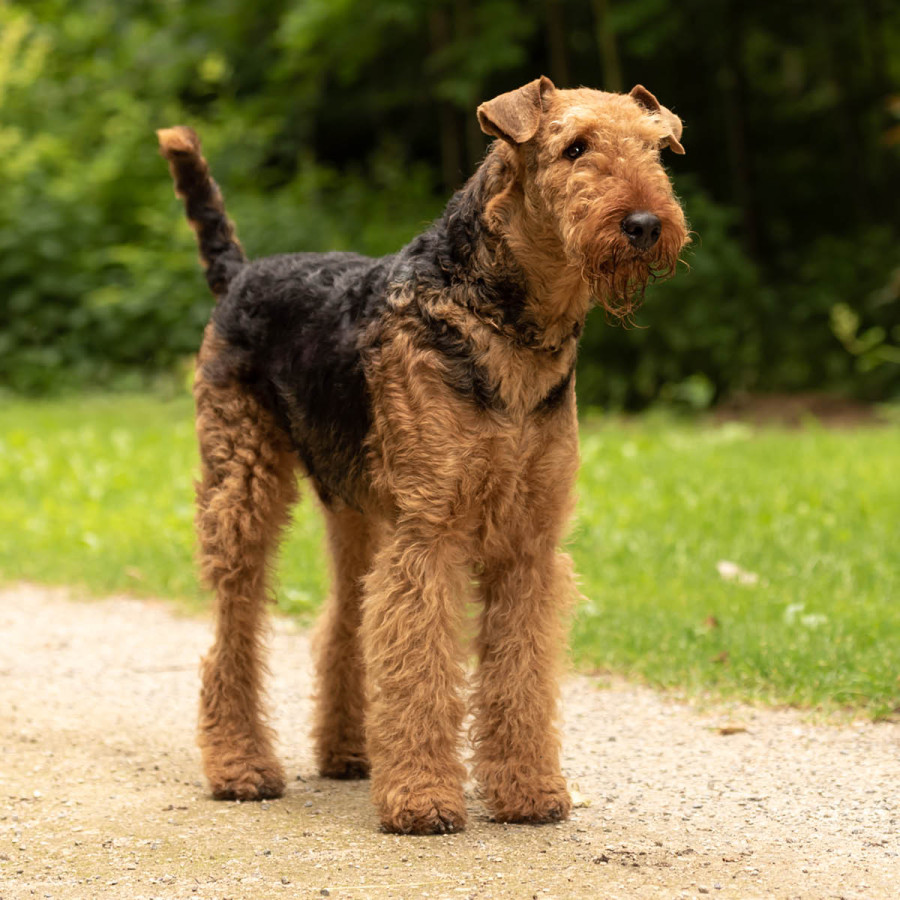
Airedale Terrier Dog Breed
The Airedale Terrier is known as the ‘King of Terriers’ because of their sheer size - they’re the biggest in their breed group!
The Airedale Terrier is known as the ‘King of Terriers’ because of their sheer size - they’re the biggest in their breed group!
This handsome breed was originally bred to hunt along riverbanks in the north of England. They’re full of life and energy, with a high chase drive.
These dogs need dedicated socialisation and habituation training – ensuring they become well-mannered, happy dogs.
Like most Terriers, the Airedale is alert, confident and courageous. Their tenacity can lead them to appear stubborn. So when it comes to training, patience and dedication are a must!
They’re super intelligent, full of energy and need a lot of physical and mental stimulation. This means they can easily get bored, and they’re certainly not suited to a couch potato lifestyle!
Being very alert, so they’re prone to a fair bit of barking. They’re also loyal and affectionate and partial to a snuggle – if you meet their needs, of course.
As a breed with hunting roots, you’ll need to be careful with them around small pets and wildlife.
Disclaimer
While these breed traits give a general idea of what to expect from a specific type of dog, it's important to remember that every dog is unique. Just like people, each dog comes with their own distinct personality, quirks, and characteristics!

The Airedale can be a good family dog if they’re socialised properly when young.
As youngsters, they’re incredibly energetic and rambunctious. Their excitement can sometimes get the better of them – like accidentally knocking over children!
This breed’s exercise needs can be difficult to fulfil if you want to involve very young children in the family. They may not be able to keep up and go out in all weathers. Older children should find it easier to take part in play and exercise activities.
Airedales need a home that provides them with enough space and opportunities for exercise.
You’ll need to think about the amount of time you have available for long walks, training, and playtime.
These dogs are naturally very protective. So if you have neighbours nearby, consider if the barking will lead to complaints.
This breed is best suited to families with older children who can cope with their boisterous, playful nature. While Airedales can live with other dogs or small pets, it’s essential they’re socialised early so they’re prepared – Terriers have a naturally high prey drive after all!
Airedales ideally need a home that has a decent sized garden, allowing them to play and run free to their heart’s content.
They’re not the ideal choice if you need to leave your dog at home alone for long periods of time.
Airedales are affectionate with their immediate family, if their needs are met.
Their affectionate nature doesn’t always extend to strangers who are yet to earn their trust. They can appear reserved or aloof when meeting new people but will usually warm up to them.
These dogs’ incredibly loyal nature means they can miss their owners when left home alone. This should be a consideration if you work full-time.
If you don’t work or you can work from home, we think the Airedale would make a great companion for you!
Airedales absolutely love playtime. These little comedians are always up for some fun!
Daily play sessions are key to keeping this breed happy and contented – especially activities that involve using their noses to find things. They’re also big fans of chase, running around with soft toys and games of tuggy.
It’s important to consider what it takes to keep these dogs fulfilled. You’ll need heaps of time and motivation for regular play sessions. Without enough stimulation they can develop attention-seeking behaviours, such as barking or stealing items.
If you’re looking for a chilled companion who only needs one walk a day, the Airedale probably isn’t the breed for you – but keep searching!
Most Airedales like the sound of their own voice. They’re incredibly alert and vigilant, which make them excellent watchdogs.
They’ll be sure to let you know when someone knocks on your door, or even if they think someone might knock on your door! They may also bark at any birds or cats that visit the garden.
A lack of mental and physical stimulation can have noisy consequences. They won’t be afraid to use their voices to let you know they’re bored or frustrated! For these reasons, it’s sensible to think about your neighbours. People coming and going could mean a lot of barking.
If you live in a more isolated place, this breed will make you feel safe by alerting you about any potential intruders.
Not keen on having a dog who will often make their presence known? It’s possible the Airedale may not be a good match for you.
Any breed or crossbreed can develop behavioural issues if their needs aren’t met.
The Airedale breed’s loyalty to their humans means they can be prone to separation related issues. This may happen if home alone training isn’t started from a young age.
This playful breed needs lots of attention. If they don’t get enough, they may start showing attention-seeking behaviours like barking, stealing items, barking or digging up your garden.
As ‘King of the Terriers’, Airedales have a high prey drive, so extra care must be taken with small pets or wildlife.
Socialisation with other dogs is essential when they’re young. This will help to prevent prickly behaviour around other dogs in adulthood.
Airedales need between one and two hours of physical and mental exercise a day.
These big Terriers have a strong prey drive, so making use of secure dog fields is recommended. But this comes with a financial commitment.
Meeting their physical needs is one thing, but don’t forget this breed is incredibly intelligent so they also need lots of daily mental stimulation too.
Toy play that involves games of retrieve and tuggy are firm favourites for an Airedale. They also love – and need – to play scent games. This fulfils their natural hunting behaviour instincts.
They enjoy problem solving too. Fun training sessions are another way of meeting their needs for mental stimulation.
With all this in mind, it’s important to think about whether you have the time to commit to this intelligent and energetic breed.
Airedales can turn their paw to pretty much anything. They have a long history of working, including vermin control, game retrieval, search and rescue, personal protection, and guarding.
As with every breed or type of dog, all puppies need socialisation and habituation training. This is essential for them to learn how to cope with and/or ignore everyday situations they will encounter.
Airedales can be very challenging as youngsters. They’re typically boisterous and rambunctious. Time and patience will be needed to help them become the best version of themselves.
This breed is incredibly bright and thrive in a home where kind, fair and effective training is provided. Adolescence may throw you some curveballs – but keep up with their training and you’ll be rewarded with a great companion.
Whether it’s obedience, agility, hoopers, or tracking, this versatile breed can do it all!
Although they don’t shed much, Airedales still need regular grooming. They have a soft under-coat and a wiry topcoat. The use of a slicker brush and comb will help remove the dead undercoat and prevent matting.
Airedales are famed for their beautiful beards. While it’s a big part of their distinctive look, it does need maintenance to keep it in tip top condition. A daily wipe with a warm damp cloth and a quick comb through will keep it looking and smelling great.
We recommend taking your Airedale to a professional groomer three or four times a year for clipping to keep them looking smart. Groomers will also clean their ears and cut their nails if needed. It’s worth factoring this into your ongoing costs.
Giving your companion a weekly groom is also an opportunity to check them over for any lumps, bumps, scratches or parasites that may need attention.
Like any other breed, Airedales can be prone to a number of health issues, including:
• Hip dysplasia. This is where the hip joint and socket are mis-shaped and cause pain.
• Allergies. This breed can be affected by different environmental factors such as dust mites.
• Hypothyroidism. An underactive thyroid gland.
• Dental disease. This can result in sore gums and tooth loss.
If you’re considering any pedigree puppy, it’s strongly recommended that you choose a breeder who carries out all the relevant breed- specific health tests.
Blot is another common health condition that affects Airedales. It’s also known as gastric torsion or dilation. All deep chested breeds are at risk from this life-threatening medical emergency. If your dog’s stomach becomes bloated or hard, they are lethargic, or salivating, contact a vet immediately.
I need at least one hour of free running exercise every day. I like to run around, jump over logs, paddle or swim in lakes and streams. Are you fit enough to keep up with me?
I have a very busy mind. I love to problem-solve and use my nose. I’d like you to hide treats or toys for me to find. I also love kong toys that are stuffed with my favourite food.
I need to run in big open spaces, so please teach me a solid recall. I also need to learn how to bring my toys to you so that you can throw or hide them again for me!
An Airedale puppy from a responsible breeder will cost between £1,300 and £2,000.
The general set-up costs for any puppy can run into several hundred pounds. This includes, food, bowls, toys, beds, crates, baby-gates, collar, lead, harness, longline etc.
Ongoing costs include insurance premiums, food, parasite control, vaccinations, grooming fees, training classes and the hire of secure exercise areas.
Take our quiz to discover which breed is right for you
Take our quizPlease call our pet support line on 0300 303 9333 (7 days a week – 8.30am - 4pm)