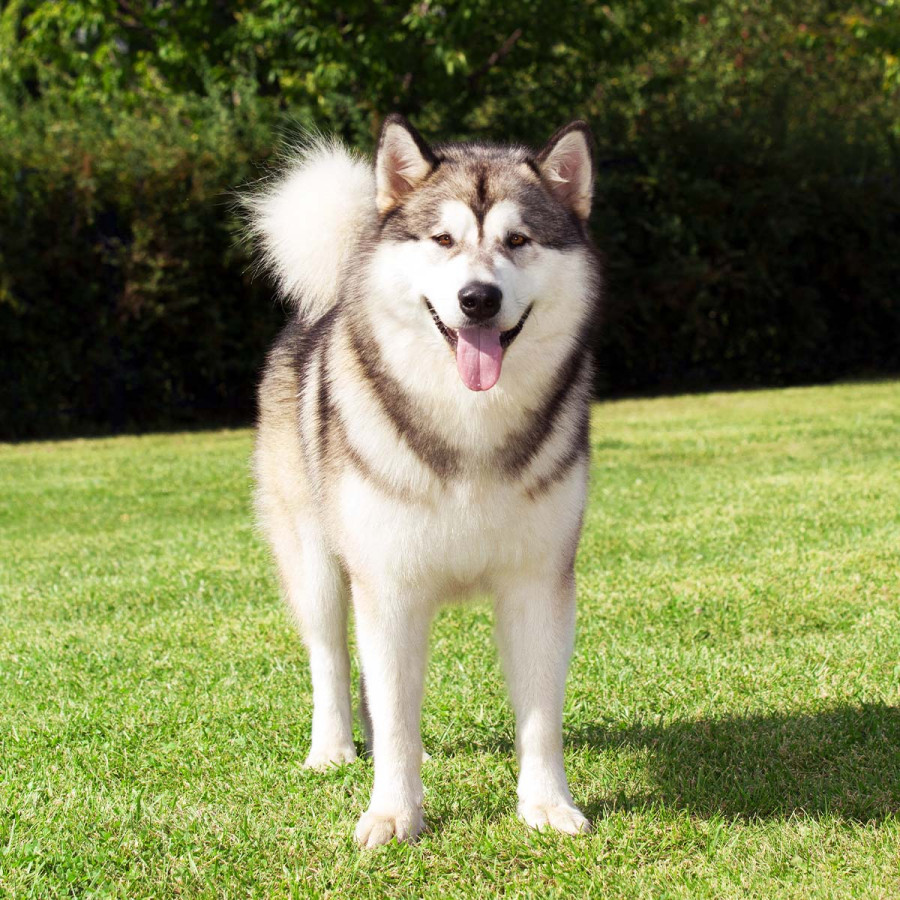
Alaskan Malamute Dog Breed
The Alaskan malamute is a friendly, robust dog originally bred to pull heavy sleds in the Arctic.
The Alaskan malamute is a friendly, robust dog originally bred to pull heavy sleds in the Arctic.
Alaskan malamutes are social, affectionate, and love being part of a family.
However, they're strong-willed, need lots of exercise, and can be challenging to train.
They're also well-known for escaping and have strong prey drives. But if you're active, love outdoor adventures, and have trained a dog of your own before, they could be perfect for you!
Alaskan malamutes are friendly, outgoing dogs with big personalities. Bred to work alongside humans in harsh Arctic conditions, they're very social and love being part of a team – whether that's alongside other dogs or their human family. Despite their wolf-like appearance, they're gentle giants who are friendly with their family and people they know. They’re usually indifferent towards strangers, so they won’t make a very effective guard dog.
Malamutes are intelligent but independent. They like to think for themselves and can be quite difficult to motivate when training. They're not the type to blindly follow commands – they need to see what's in it for them!
These dogs are playful, energetic, and keep their sense of fun well into their senior years. They can be quite vocal, howling and "talking" to express themselves.
You can be assured that life with a Malamute will never be boring – they're characterful, entertaining companions who will love to be part of your team.
Disclaimer
While these breed traits give a general idea of what to expect from a specific type of dog, it's important to remember that every dog is unique. Just like people, each dog comes with their own distinct personality, quirks, and characteristics!
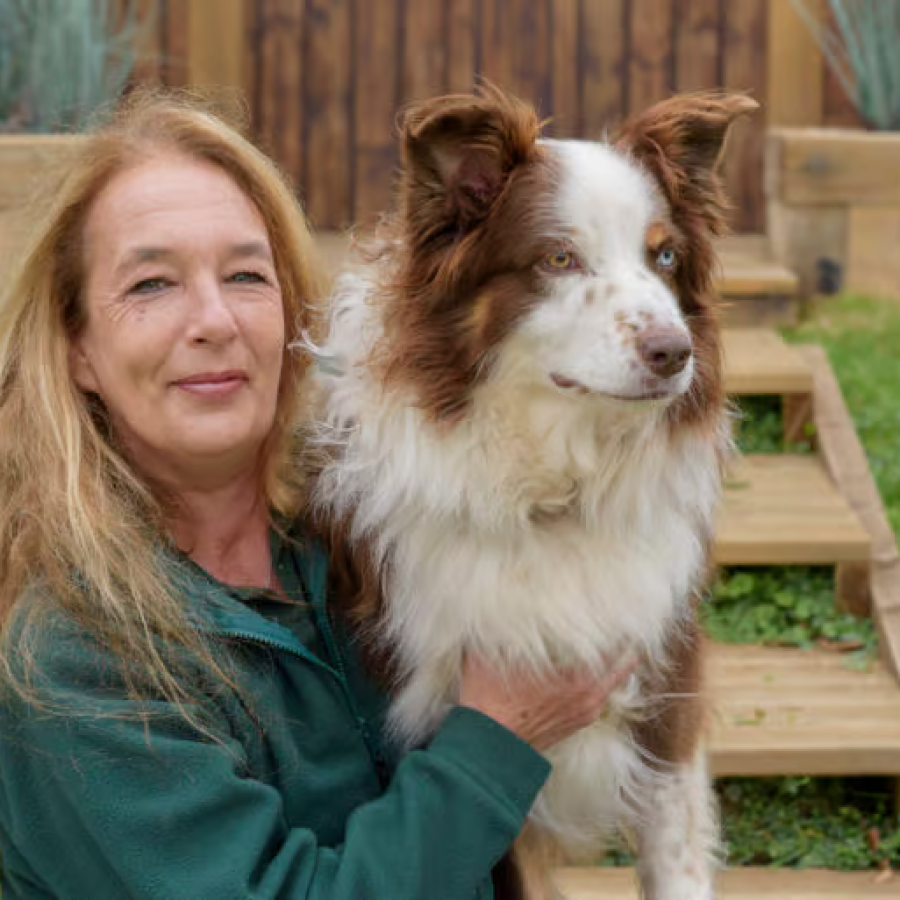
Alaskan malamutes can make wonderful family dogs for the right household, particularly active families with older children. They're generally gentle and patient with children they know well, and will happily play with them in the garden for hours on end! However, their size and strength mean they can accidentally knock over smaller children so any interaction should be closely supervised to ensure everyone is safe and happy.
These dogs aren't ideal for families with very young children or elderly family members who might struggle to control such a powerful dog. Malamutes need owners who can provide consistent training and clear boundaries from puppyhood. They don't cope well with being left alone for long hours, so if you work full-time this probably isn't the breed for you. The ideal Malamute family loves outdoor adventures, has had dogs before, and understands the commitment needed for this loving but demanding breed.
Alaskan malamutes need space and highly secure fencing! They're large, athletic dogs who need room to move and a garden they can't escape from. Their ability to climb, dig, and jump means standard fencing often isn't enough.
These dogs need active families who love the outdoors. They're happiest with people who enjoy hiking, camping, and outdoor adventures. Malamutes aren't suited to sedentary lifestyles or being left in the garden all day. To be happy, Alaskan Malamutes need 1-2 hours of vigorous exercise daily, brain games and training.
It’s important to note that this breed can’t be trusted to be off-lead in parks or open countryside, they must only be allowed off-lead in a secure outdoor space they can't escape from. If you’re hoping for a dog that can have off-lead adventures in lots of different settings then this breed might not be right for you.
It’s also essential that Malamutes have company throughout the day as they don’t cope well with being left alone for long periods of time. They need owners who are often at home and who are comfortable with their independent, single-minded nature.
Absolutely! Alaskan malamutes are deeply affectionate with their families. Despite their wolf-like appearance, they're very gentle and love nothing more than being with their people. They'll follow you from room to room and want to be involved in everything you do. Many Malamutes seem to think they're lap dogs, despite weighing up to 45 kilograms!
Although affectionate, they're not overly needy or clingy. Whilst they bond strongly with their families, they can also be quite independent and happy to entertain themselves. They aren’t really interested in strangers either, so are likely to greet visitors to your home with indifference.
Their affectionate nature for their families comes from their origins living closely with families in the Arctic. After a hard day's work, they'd sleep alongside their human families to keep everyone warm, which is why they're such devoted companions today.
Absolutely! Alaskan malamutes are energetic, fun-loving dogs who keep their playful streak well into old age. They love romping around the garden, playing chase, and entertaining their families with their big personalities. If you're looking for a dog who'll always be up for a game, a malamute will rarely disappoint!
That said, their size and boisterous nature means playtime needs to be managed carefully around smaller children or more vulnerable family members, as they can easily knock someone over in their excitement. They can also play rough with other dogs, so early socialisation is important to make sure they learn to read other dogs' signals.
Their playfulness is one of their most endearing qualities. Just make sure you channel it into positive activities, or they'll find their own (often mischievous!) ways to have fun.
Alaskan malamutes rarely bark. But they do howl. A lot. They're incredibly vocal dogs who love to "sing" and chat with their owners using an impressive range of sounds. Their howls can be quite operatic and carry across long distances, so if you have neighbours close bythis might be a problem!
They'll howl when they're excited, when they want attention, when they hear sirens, or sometimes just for the fun of it! Many Malamute owners find this charming, but it's not for everyone. The good news is they're not usually nuisance barkers in the traditional sense. With proper training and enough exercise, you can manage when and how much they vocalise. But it’s important to accept you'll never completely stop a Malamute from expressing themselves – it's part of their character!
Without proper exercise and training, Alaskan malamutes can develop several challenging behaviours. Digging is hardwired into them as they were bred to dig dens in the snow. Many will dig up your garden with enthusiasm if not given another outlet for this behaviour. They're also well-known for escaping, given their talent for climbing and digging under fences.
Separation-related issues are also common in Malamutes who aren't gradually taught to be comfortable alone. They may howl excessively, destroy furniture, or try to escape. Their high prey drive means they may chase cats, small dogs, rabbits, and other small animals. This can be dangerous if not managed.
Malamutes are prone to guarding their food and bones, and some Malamutes can show aggression towards other dogs, particularly same-sex dogs. Early socialisation and habituation are crucial to avoid this behaviour. Puppies need to meet different dogs and people, and get used to everyday sights and sounds. With proper training and exercise, most issues can be managed.
Alaskan malamutes are working dogs bred to pull heavy sleds over long distances. As such, they have incredible stamina and need at least 1-2 hours of vigorous exercise every day. A gentle walk around the block won't cut it! They need proper physical activity like running, hiking, swimming, or pulling activities like canicross (running with a dog) or bikejoring (where the dog pulls a bike as if it were a sled).
Malamutes were bred to work in cold climates, so they can overheat easily in warm weather. Avoid exercising them in hot temperatures and always provide plenty of water.
Keeping their minds busy is equally important,these clever dogs get bored easily! Use training sessions, puzzle toys, scent work, and problem-solving games to help keep their brains active.
Without enough physical and mental activity, Malamutes can become frustrated and develop unwanted behaviours like digging, howling, or destructiveness. A Malamute that’s well-exercised in both their body and brain will be a happy, content companion.
Alaskan malamutes are intelligent but can be challenging to train. They're independent thinkers who were bred to make their own decisions whilst working in harsh conditions. This means they can be fairly strong-willed! Unlike other breeds who live to please their owners, Malamutes need motivation and rewards to cooperate. As such, Malamutes are best for people who’ve had dogs before and understand the patience and confidence that training requires.
Positive, reward-based training works best. Use high-value treats, toys, and praise to encourage them. Keep training sessions short and fun as Malamutes can get bored with repetition. Harsh methods don't work and will damage your relationship with your dog.
Early socialisation and habituation are absolutely essential. Puppies need to meet different people, dogs, and animals in positive ways. They also need to get used to everyday sights and sounds like traffic, household appliances, and busy environments. Training doesn't stop at puppyhood, it’s essential to continue training your Malamute to avoid common behavioural issues like pulling on the lead, digging, escaping, poor recall, howling, and separation-related issues.
Alaskan malamutes have thick, double coats that need regular grooming. They shed moderately year-round and heavily twice a year when they "blow their coat." During these shedding periods, you'll find fur everywhere! Daily brushing during shedding seasons will help to manage the fur and keep their coat healthy.
The rest of the year, brush them several times a week using a slicker brush or undercoat rake to get through their thick fur. It’s important to start grooming routines when your Malamute is still a puppy as this helps them learn to tolerate being brushed and handled.
Despite the shedding, Malamutes don't need frequent bathing – only when they're genuinely dirty. Their coats are naturally water-resistant and self-cleaning to a fair extent. Regular nail trimming, ear cleaning, and dental care are also important. Because they're large dogs, grooming can be physically demanding, so be sure you’re up to the task of this beautiful (but big!) breeds’ grooming needs.
Alaskan malamutes typically live 10-12 years. Like all breeds, they're prone to certain health conditions. Taking out insurance will help cover vet costs throughout your dog's life.
Common health conditions include:
• Hip dysplasia: where the hip joints don't develop properly, leading to arthritis and pain. Responsible breeders should have their breeding dogs hip-scored.
• Eye problems: including cataracts, day blindness (sensitivity to bright light), and progressive retinal atrophy. Responsible breeders should have breeding dogs eye-tested.
• Hypothyroidism: an underactive thyroid that can cause weight gain, tiredness, and skin issues. This is manageable with medication.
• Bloat: a life-threatening stomach condition requiring immediate vet attention. Feed smaller, frequent meals to reduce the risk of bloat.
• Alaskan Malamute Polyneuropathy (AMPN): a genetic nerve disorder. Responsible breeders should DNA test for this condition.
You can help keep your Malamute healthy with regular vet check-ups, a balanced diet, appropriate exercise, and maintaining a healthy weight. Remember to avoid exercising your Malamute in hot weather as their thick coats can cause them to overheat.
I was born to run, pull, and explore. A stroll around the block just won't cut it! I need at least 1–2 hours of proper exercise every day, think hiking, swimming, or canicross. I'm your perfect adventure buddy, as long as you're ready to keep up!
My brain needs as much of a workout as my body! Puzzle toys, scent work, and training games all help keep me happy and out of mischief. A bored malamute is a destructive malamute.
I'm smart, but I like to do things on my own terms. I need an experienced owner who'll use reward-based training and keep things fun and consistent. Harsh methods won't wash with me. Start early, keep at it, and we'll get there together!
When considering costs, it’s important to remember that price doesn't always equal quality. What matters most is finding a responsible breeder who health tests their dogs, raises puppies in a home environment, and breeds for temperament as well as appearance. We have guidance on finding a responsible breeder on our website. You might also want to look into the Puppy Contract for further information.
We also recommend considering adoption or rescue. Rescuing an Alaskan malamute is often much more affordable than buying a puppy. Many rescue dogs are already trained, and plus you'll be giving a dog in need a loving home!
An Alaskan malamute puppy typically costs between £1,200 and £2,500. Avoid "giant" Malamutes – these are usually unhealthy and overpriced. You'll also need basic equipment (beds, collars, leads, bowls, toys, crate) which will cost around £150-£250, and initial vet costs (vaccinations, microchipping) which come to around £100-£150. Ongoing costs include food (£60-£90 monthly for a large dog like a Malamute), pet insurance (£40-£70 monthly), regular vet care, grooming supplies, and training classes.
Alaskan malamutes are expensive to own, but they're worth it for the right family!
Take our quiz to discover which breed is right for you
Take our quizPlease call our pet support line on 0300 303 9333 (7 days a week – 8.30am - 4pm)