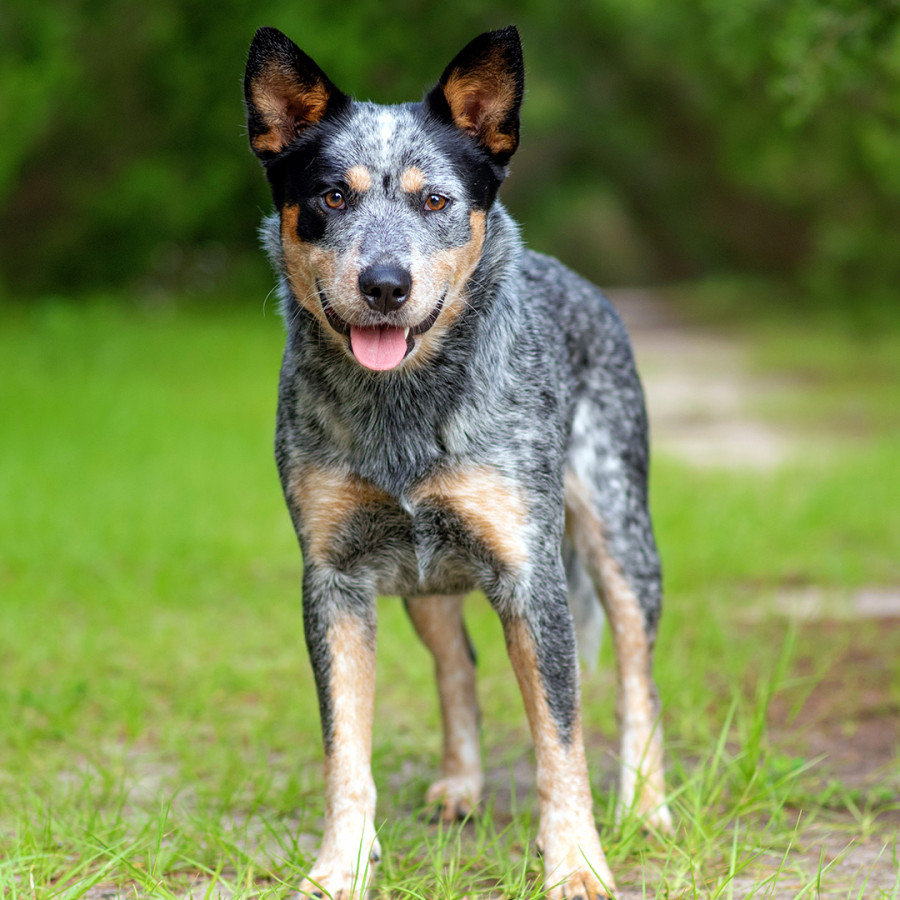
Australian Cattle Dog Dog Breed
The Australian Cattle Dog, also known as the Blue Heeler or Red Heeler, is an energetic herding breed built for hard work and quick thinking.
The Australian Cattle Dog, also known as the Blue Heeler or Red Heeler, is an energetic herding breed built for hard work and quick thinking.
Australian Cattle Dogs need an experienced, active owner who can provide structured exercise and mental challenges. Without enough to do, they will find their own jobs – and you may not like the results.
The Australian Cattle Dog is a sharp, driven breed with a strong work ethic and personality. They're loyal and devoted to their family. Their herding background means they're always watching their surroundings, and quick to react to movement, sound or anything unusual.
They are quite cautious around strangers and protective of their home and people. This makes them excellent watchdogs.
Being a highly intelligent and independent breed, their ideal owner is someone who can provide calm, confident guidance rather than relying on the dog to make all the decisions.
Disclaimer
While these breed traits give a general idea of what to expect from a specific type of dog, it's important to remember that every dog is unique. Just like people, each dog comes with their own distinct personality, quirks, and characteristics!
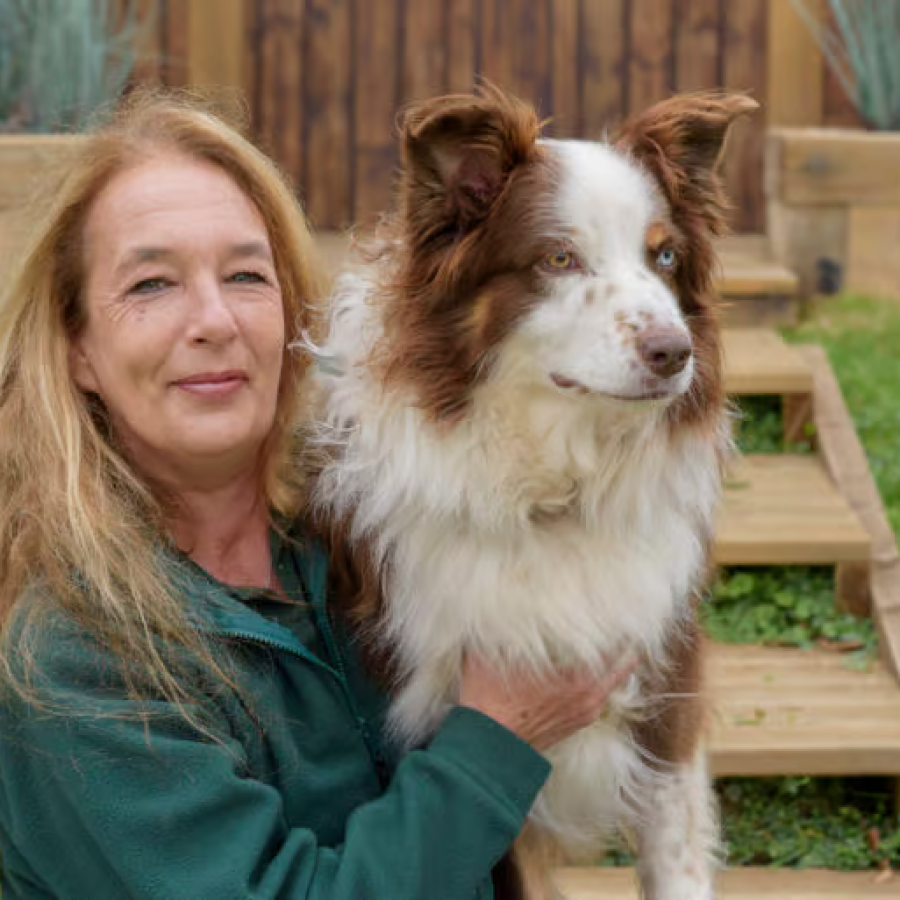
Australian Cattle Dogs are great for active families that can meet their extensive exercise and training needs.
Their herding instincts mean they may try to nip at the heels of running children, so supervision and early training around this behaviour are essential.
As puppies, ACDs are notorious for their sharp, persistent mouthing and often described as a "land shark". This can be alarming for children who don't understand that this is a normal (if intense) stage of development.
They tend to suit families with older children who can engage with the dog's need for structured activity, rather than very young children whose unpredictable movements can trigger herding behaviour.
This is not a breed suited to a less active lifestyle or a first-time dog owner.
Australian Cattle Dogs need an active home with access to a secure outdoor space.
A secure garden with a sturdy fence is a must for this intelligent breed. They’re known to find their way past any gaps or weak boundaries, especially if they’re bored.
Their energetic ways and working drive doesn't work for apartment living or sedentary households.
They can live with other dogs and pets when introduced and managed carefully, though their herding instinct means supervision is needed.
If you’re exploring which breed best suits your home and lifestyle, try the Discover the Right Dog for Me quiz to find your match.
Australian Cattle Dogs are deeply affectionate towards their own family and will form a close bond to one particular person.
They want to be involved in everything their owner does and will often follow them closely from room to room.
With strangers, they are generally more reserved and watchful, taking time to decide whether someone can be trusted.
This loyalty is part of what makes them such devoted companions, but it also means they can struggle when separated from their owner for long periods.
Australian Cattle Dogs are playful with people they know well, and playtime for them often reflects their working background. Chasing, herding-style games and problem-solving activities tend to bring out the best in this breed.
They have high energy levels and thrive when getting involved in structured games. Games should be physically and mentally challenging, such as agility or trick training.
Without an appropriate outlet, their play instincts can turn into nipping at heels or chasing moving objects, including children or other pets.
Australian Cattle Dogs will bark to alert their owner or when they're bored or under-stimulated.
Their sharp, high-pitched bark is well suited to their watchdog instincts, and they spot any activity very quickly. Excessive barking is often a sign that the dog’s exercise or mental needs are not being fully met.
With consistent training and enough daily activity, barking can usually be kept to a reasonable level for this naturally alert breed.
Any breed can develop behavioural issues if their needs are not met, for the Australian Cattle Dog, their working drive makes this particularly true.
Without enough physical and mental stimulation, they are known to find their own entertainment. Digging, destructive chewing and excessive barking are all common behaviours in under-exercised dogs of this breed.
Their herding instinct can also lead to nipping at heels, particularly around children or other fast-moving animals.
They're cautious around unfamiliar people and other dogs without thorough early socialisation. With a structured day of activity and confidence training, these behaviours can be well managed.
Bred to herd cattle across rugged Australian terrain, the Australian Cattle Dog has impressive stamina and a genuine need for daily exercise. At least two hours of engaging activity a day is recommended for this breed.
They benefit from structured tasks like training games, agility or scent work alongside physical exercise. A simple walk around the block isn't enough.
All dogs benefit from regular access to green space, but for this breed in particular, mental engagement matters just as much as physical exertion.
Australian Cattle Dogs are highly intelligent and quick learners. They also have an independent streak, so they need a confident, consistent trainer rather than a passive one.
Positive, reward-based training works well and should begin as early as possible – a Cattle Dog puppy that misses out on structure and socialisation can develop strong-willed, tricky-to-manage habits as it grows.
This breed benefits from ongoing training even into adulthood. They need boundaries and guidance.
Five common behavioural issues to watch out for:
• Nipping at heels, rooted in their herding instincts.
• Excessive barking when bored or under-exercised.
• Destructive digging or chewing if mental stimulation needs aren’t met.
• Wariness or reactivity towards strangers and unfamiliar dogs without thorough socialisation.
• Resource guarding, which can develop in any breed without early, positive handling around food and toys.
The Australian Cattle Dog has a short, dense, weather-proof double coat that is relatively easy to maintain day to day.
Weekly brushing will keep the coat in good condition and remove loose hair. This should increase during their twice-yearly heavier shedding periods, when daily brushing helps manage the volume of fur.
Bathing is rarely needed unless the dog gets particularly dirty. Nail trimming, ear checks and teeth cleaning should be part of a regular grooming routine. Getting puppies used to this type of handling early will make this easier for you as they grow.
A healthy lifestyle, balanced nutrition and regular vet check-ups all support a long, active life for this hardy breed. Responsible breeders carry out health tests on their breeding dogs – always ask for evidence before taking on a puppy.
Conditions this breed can be predisposed to include:
• Hereditary deafness – this breed has an elevated risk of partial or complete hearing loss, particularly in dogs with less coat pigmentation. A BAER hearing test can confirm this from a few weeks of age.
• Progressive retinal atrophy (PRA) – an inherited eye condition that causes gradual vision loss, eventually leading to blindness. There is no cure, though most affected dogs adapt well.
• Hip and elbow dysplasia – abnormal joint development that can lead to pain and arthritis over time.
• Primary lens luxation – dislocation of the lens within the eye, which can be painful and may require urgent surgery.
• Progressive degenerative myelopathy – a rarer but serious neurological condition affecting older dogs, leading to gradual loss of coordination in the hind limbs.
I need at least two hours of exercise every day. Without it, I’ll find my own jobs – and that usually means digging, chewing or redesigning your garden myself!
I need a job to do! Training games, puzzle toys and agility all keep my busy brain satisfied. A walk alone isn’t enough – I need to think as well as move.
I’m clever and I learn fast, but I need a confident, consistent guide. My herding instincts mean I may nip at heels – please redirect this early and often.
Buying an Australian Cattle Dog puppy from a responsible breeder in the UK typically costs between £700 and £1,500. Rehoming from a rescue is around £150–£250. We’d always encourage you to explore dogs available through Woodgreen or other reputable rescues first.
Start-up costs for essentials typically come to around £250–£400.
Ongoing monthly costs include food (£35–£50), insurance (£25–£45), and routine vet care including vaccinations, boosters and parasite control. Grooming costs are low given their easy-care coat, though training classes are worth budgeting for given the breed’s structured exercise needs.
Total estimated monthly cost: £80–£140.
Take our quiz to discover which breed is right for you
Take our quizPlease call our pet support line on 0300 303 9333 (7 days a week – 8.30am - 4pm)