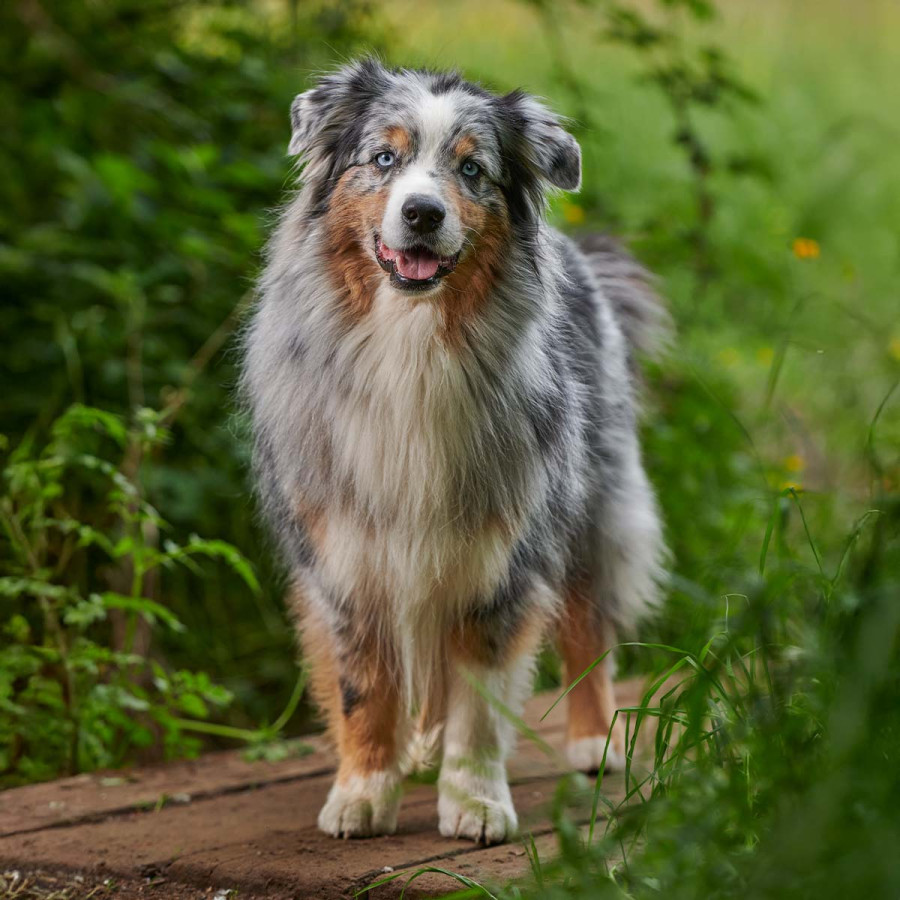
Australian Shepherd Dog Breed
The Australian Shepherd is an intelligent and energetic dog, originally bred for herding livestock in (despite what their name suggests!) the Basque regions of Spain.
The Australian Shepherd is an intelligent and energetic dog, originally bred for herding livestock in (despite what their name suggests!) the Basque regions of Spain.
Australian Shepherds are incredibly loyal and form strong bonds with their families. They need an active lifestyle and plenty of mental stimulation to thrive. If you like keeping active outdoors they could be the perfect companion!
Australian Shepherds are working dogs through and through. Originally bred to herd sheep and cattle across vast ranches, they're athletic, driven, and always ready for action. They’re also highly intelligent and seem to understand what you want even before you ask! This makes them quick learners who are easy to train and brilliant at dog sports, but it also means they need a job and a purpose to avoid boredom or problem behaviours.
“Aussies” are incredibly loyal to their families and can be slightly reserved with strangers at first. Once they feel more comfortable though, they're affectionate and playful. Aussies can have strong herding instincts, so pet owners should avoid working lines and opt for pet or show lines instead (where herding instincts aren’t as strong). They might try to herd children or other pets by nipping at heels or circling, but with proper training this behaviour can be redirected.
Disclaimer
While these breed traits give a general idea of what to expect from a specific type of dog, it's important to remember that every dog is unique. Just like people, each dog comes with their own distinct personality, quirks, and characteristics!
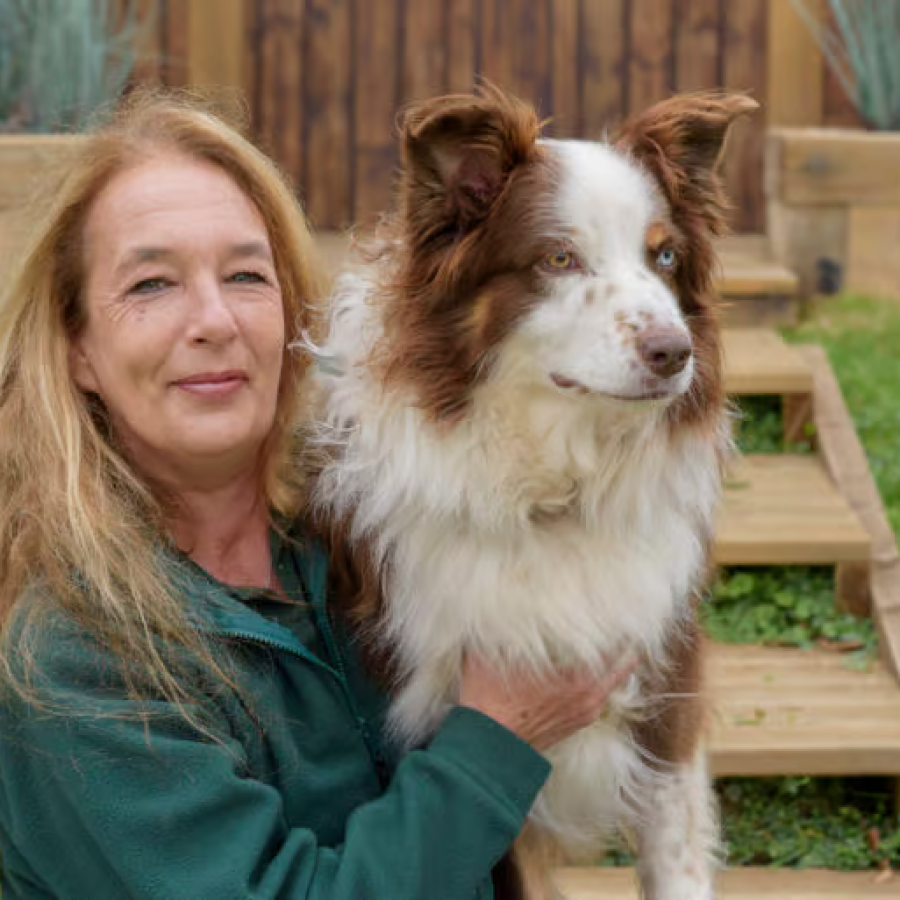
Australian Shepherds can make wonderful family dogs for the right household – particularly those with older children who understand how to behave respectfully with dogs. They're generally gentle and patient, and many form especially close bonds with the children in their family. Their playful nature means they'll happily join in with garden games and outdoor adventures.
However, Aussies from pet and show lines may still have slight herding tendencies, which can be a challenge around young children. They may try to "herd" children by nipping at their heels, especially during boisterous play. This isn't aggression, it's just their natural instinct kicking in. As with all dogs, interactions with children should always be supervised.
Australian Shepherds need active families who can meet their high exercise needs. So, if you're an outdoorsy family who loves hiking and getting stuck into activities together, an Aussie could be brilliant for you.
Australian Shepherds need active homes with people who have time and energy to dedicate to them. They're not a breed that will be happy being left in the garden or only walked around the block. They do best with access to outdoor space – ideally a secure garden where they can play and burn off energy. However, a garden alone isn't enough. They need regular walks, runs, and activities beyond the home.
They're generally good with other pets if properly socialised. To thrive, Australian Shepherds need at least 1-2 hours of daily vigorous exercise, mental stimulation through training and games, a job or purpose, time with their people, and early socialisation.
Australian Shepherds are deeply affectionate with their families. They form incredibly strong bonds and are often happiest when they're by your side. Many Aussies are "velcro dogs" – meaning they'll follow you from room to room and want to be involved in everything you do. They're not the type to lie quietly in a corner, they want to be part of the action!
After a busy day of activity, they'll happily curl up with you for cuddles and downtime. That said, Australian Shepherds aren’t affectionate with everyone and can be reserved around strangers. Their affection also comes with responsibility. These dogs need a lot of time, attention, and interaction. If you work long hours, an Australian Shepherd might not be the right match.
Absolutely! Australian Shepherds have energy to spare and love playing games with their favourite people. Fetch, frisbee, tug-of-war, hide-and-seek – they'll throw themselves into any game with enthusiasm.
Their athletic build makes them naturals at dog sports like flyball, agility, and obedience competitions. They also love learning tricks and showing off their skills. Because their play style can be so energetic, they might be too boisterous for very young children or elderly owners. It's important to teach them to play appropriately, so that they don’t accidentally overwhelm or upset their play partners.
Play is very important to Australian Shepherds; without enough play and mental stimulation they can become frustrated and may develop destructive behaviours.
Australian Shepherds can be vocal dogs. They were bred to work outdoors on ranches, where barking was useful for herding livestock and alerting handlers to potential problems. They'll often bark to let you know someone's at the door, if they hear unusual noises, or if something catches their attention.
Some Aussies also bark when they're excited, during play, or when they want your attention. Without proper training and enough exercise, this barking can become excessive. The good news is that Australian Shepherds are smart and trainable. With consistent, positive training from puppyhood, you can teach them when barking is appropriate. Making sure they get enough exercise throughout the day will also help reduce unnecessary barking. An Aussie who’s had their exercise and mental needs met is usually a quieter, more content Aussie!
Australian Shepherds are wonderful dogs, but their working heritage means they can develop challenging behaviours if their needs aren't met. Herding behaviours are common and they may try to herd children, other pets, cyclists, or cars by chasing, circling, or nipping. This needs redirecting early through training.
Separation-related behaviours (like anxiety) can be an issue for Aussies who are very attached to their families. They’re usually fine when left for a few hours, but if they’re alone for longer periods they may become destructive, bark excessively, or show other signs of distress.
Their high energy levels mean that without sufficient exercise, they can become bored and frustrated. If they’re not properly socialised, their herding ancestry can cause them to develop controlling behaviours towards other dogs or moving objects. With proper training, socialisation, and meeting their needs, most issues can be prevented. If you're struggling, call our free behaviour helpline for expert advice and guidance.
Australian Shepherds are high-energy dogs, bred to work long days herding livestock. They need significant daily exercise to stay happy and healthy. As a minimum, aim for 1-2 hours of vigorous exercise each day. This should include walks, but also more energetic activities like running, swimming, or playing fetch. A gentle stroll around the block won't be enough for most Aussies.
Mental stimulation is just as important. Training sessions, puzzle toys, scent work, and learning new tricks help tire out their active minds. Australian Shepherds excel at dog sports like agility, flyball, herding trials, disc dog, and hiking. Without enough exercise and mental work, they can become frustrated, destructive, or develop other behavioural problems. If you're not able to commit to this level of daily activity, an Australian Shepherd probably isn't the right breed for you.
Australian Shepherds are one of the most trainable breeds you'll find. Their intelligence and eagerness to work make them quick learners who thrive on training sessions. They respond brilliantly to positive, reward-based methods. Use treats, toys, and praise to motivate them and keep sessions fun.
However, their cleverness can be challenging. They're smart enough to work out shortcuts or develop their own ideas about how things should be done!
Consistency is key, and early training and socialisation are essential. All puppies need to learn how to interact appropriately with other dogs and people. But training doesn't stop at puppyhood, behavioural issues can emerge during adolescence and later in life. Common issues include herding behaviours, separation-related issues, reactivity, excessive barking, and destructive behaviours when bored. If you're struggling, call our free behaviour helpline to get expert advice and guidance.
Australian Shepherds have beautiful, medium-length double coats that need regular grooming to keep them in good condition. They shed moderately year-round and have two heavier shedding periods in spring and autumn when they "blow" their coat. During these times, you'll find fur everywhere!
You’ll need to brush your Aussie several times a week, and daily during shedding seasons to remove loose fur, prevent matting, and keep their coat healthy. Be sure to use a slicker brush or undercoat rake to get through their thick fur, and watch out for tangles, especially behind their ears, under their legs, and around their tail.
Australian Shepherds don't need frequent baths – only when they're genuinely dirty. Don't forget about nail trimming, ear cleaning, and dental care to keep them healthy and looking presentable. Starting grooming routines when they're puppies helps them learn to tolerate being brushed and handled throughout life.
Australian Shepherds are generally healthy dogs with a lifespan of around 12-15 years. However, like all breeds, they're prone to certain health conditions. Taking out insurance will help ensure you're covered for illness and injury throughout your dog's life.
Common health conditions include:
Hip dysplasia: a genetic condition where the hip joint doesn't develop properly, leading to arthritis and mobility problems. Responsible breeders should have their breeding dogs hip-scored.
Elbow dysplasia: similar to hip dysplasia but affecting the elbow joints. This can cause pain and lameness.
Progressive Retinal Atrophy (PRA): an inherited eye condition that leads to gradual sight loss and eventually blindness. Breeding dogs should be tested for this.
Epilepsy: some Aussies develop seizures that need to be managed with medication.
MDR1 gene mutation: some Australian Shepherds carry this gene mutation, which makes them sensitive to certain medications. Testing for this gene is available, ask your vet for further information.
You can help your Australian Shepherd stay healthy with regular vet check-ups, a balanced diet, appropriate exercise, and maintaining a healthy weight. Keeping up with vaccinations, flea and worm treatments, and dental care is also important.
I need at least 1-2 hours of serious exercise daily. Walks are great, but I need to really stretch my legs with hiking, swimming, chasing balls or frisbees! Mix it up to keep me happy!
My brain needs exercise too! I'm one of the smartest breeds, so keep me engaged with training sessions, puzzle toys, scent games, and learning new tricks. If I'm bored, you might not like how I entertain myself!
I'm eager to learn and love having a job to do! Training comes naturally to me, whether that's obedience, agility, or herding. I need consistent, positive training from when I'm young to help me become well-mannered.
Cost doesn’t always equal quality. A more expensive puppy isn't necessarily healthier or better behaved than a less expensive one. What matters most is finding a responsible breeder who health tests their dogs, raises puppies in a home environment, and breeds for temperament as well as appearance. Read our guidance on finding a responsible breeder, and look into the Puppy Contract, which helps ensure you're getting a healthy, well-bred puppy.
An Australian Shepherd puppy typically costs between £800 and £2,000, depending on the breeder's reputation and the puppy's pedigree. Basic equipment (beds, collars, leads, bowls, toys, crate) will cost £150-£250, and initial vet costs (vaccinations, microchipping) will be around £100-£150. Ongoing costs include food (£40-£70 monthly), pet insurance (£30-£60 monthly), regular vet care, grooming, training classes, and toys. Australian Shepherds can be expensive because of their high exercise and activity needs, but they're worth every penny for the right family!
Take our quiz to discover which breed is right for you
Take our quizPlease call our pet support line on 0300 303 9333 (7 days a week – 8.30am - 4pm)