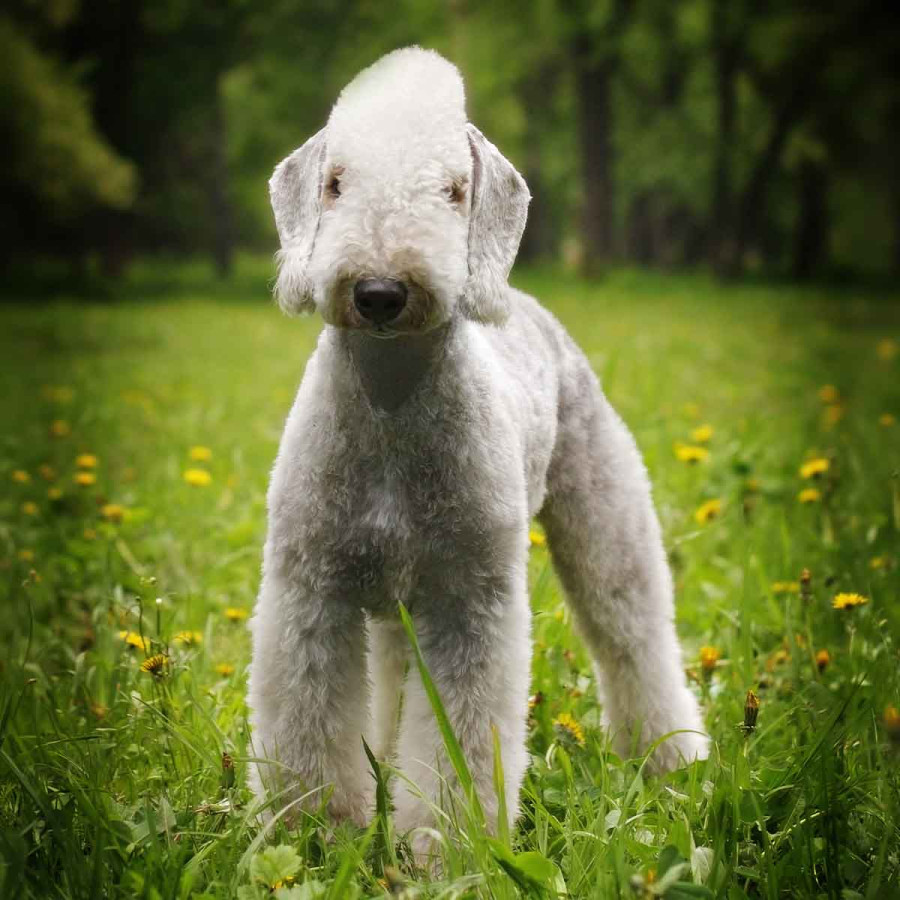
Bedlington Terrier Dog Breed
The Bedlington Terrier is a one-of-a-kind breed with a soft, cute lamb-like look – but they don’t always act like them!
The Bedlington Terrier is a one-of-a-kind breed with a soft, cute lamb-like look – but they don’t always act like them!
Originally from Northumberland, The Bedlington Terrier are loyal, playful and full of character, with a quick, lively mind.
They need regular grooming, a garden with secure fencing, and owners who can give them plenty of company and mental stimulation.
There are many layers to this breed. At home, they are usually calm and affectionate – snuggling up with their family. Outside, they switch to a different mode – alert, agile and extremely aware of their surroundings. They form strong bonds with the people they live with and prefer company over time alone.
Their Terrier instincts make it difficult being around small animals, who will often trigger a chase response. They can also become quite vocal when excited!
With good socialisation and habituation from an early age, this breed can get on well with children and other dogs. Socialisation is teaching a puppy to interact in an appropriate way with people and other dogs. Habituation is teaching a puppy to ignore some people, other dogs, traffic, noises, and livestock, etc.
Disclaimer
While these breed traits give a general idea of what to expect from a specific type of dog, it's important to remember that every dog is unique. Just like people, each dog comes with their own distinct personality, quirks, and characteristics!
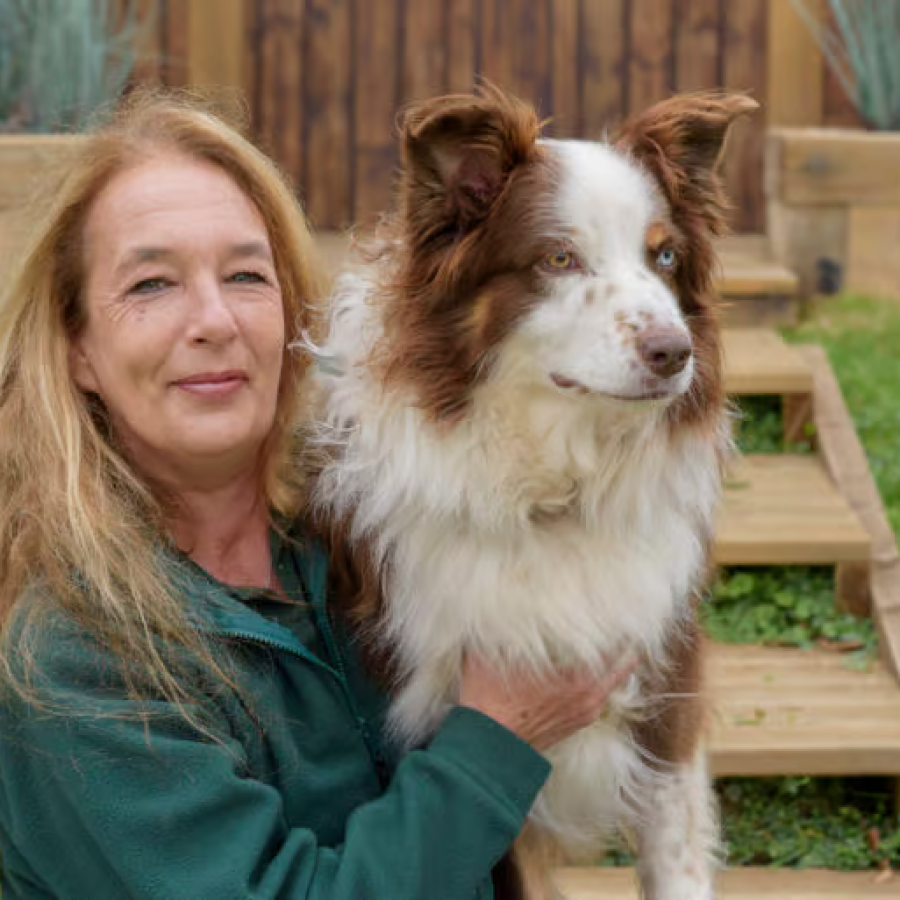
Bedlingtons can make good family dogs – if their needs are met and they’ve been well socialised from an early age.
They’re a good match for families with older children who understand how to interact with dogs calmly and respectfully. Younger children who are unpredictable or boisterous may find a Bedlington’s quick reactions and vocal nature a bit much!
As with any breed, all interactions between dogs and children should always be supervised.
Bedlingtons are best suited to a home where someone is around for much of the day. A fully enclosed garden with secure fencing is essential. This breed is fast and will follow a chase instinct without hesitation. Homes with cats or other small animals are unlikely to be a good fit.
They suit active owners who enjoy regular walks. You’ll also need to be happy to invest time in training and enrichment. Because of their needs for exercise and access to a secure outdoor space, they’re not well suited to living in a flat.
If you’re not sure whether this breed is right for you, please try our dog breed explorer quiz. Already taken it? Have a look at some of the other breeds which may be a good match.
Yes, Bedlingtons are affectionate and loyal with the people they know well. They form close bonds with their family and often seek out physical closeness – settling nearby or leaning in for attention after a walk or play session.
They’re not as quick to show their affection to strangers. At first, they’re usually more reserved, but most will warm up once they feel comfortable.
As a loyal breed, they prefer not to spend long periods of time alone. So they wouldn’t suit a home where this is likely to happen.
Bedlingtons have a playful side which can catch some people off guard because of their elegant, calm exterior.
They enjoy interactive games, short, fun training sessions and activities that give them a chance to use their nose. Scent work and hide-and-seek style games are right up their street. They love to mix things up and stay most engaged when play is varied. Repeating the same game too often can lead to boredom!
Bedlingtons can be vocal dogs. They usually bark when they get excited or spot something that triggers them, or when a stranger approaches. This makes them reasonable watchdogs, but they’re unlikely to scare anyone off!
Boredom and a lack of mental stimulation can also increase their barking. With consistent training from an early age, this can be kept under control. But this is a breed that likes to make themselves heard!
Any breed can develop behavioural issues if their needs aren’t met. The Bedlington’s instincts mean a strong chase response is common. Small animals and fast-moving objects will often trigger it, so secure fencing and keeping a close eye when they’re off-lead is a must!
Bedlingtons can also experience separation-related issues when they’re left alone regularly or for long periods. Without enough mental stimulation and exercise, they may resort to digging or chewing. Consistent training, early socialisation and good daily routines help to prevent these behaviours.
Bedlingtons were originally bred in Northumberland to hunt and chase vermin, and that working heritage means they still need outlets to get plenty of exercise.
Around 30–45 minutes of exercise a day, split across two walks, suits most Bedlingtons. Mental stimulation is just as important as physical exercise – without it, they can quickly get bored.
Like all dogs, they benefit from regular access to green space for walks, sniffing and free movement. Always used a fully enclosed area for any off-lead time. And remember, their chase instinct can override their recall, no matter how good it is!
Bedlingtons are intelligent and pick things up quickly. But their independent Terrier nature can make them hard to motivate at times. Positive, reward-based training works best.
All puppies need training from day one – without it, unwanted habits become much harder to tackle. Behavioural challenges often appear during adolescence. Consistent, ongoing reinforcement throughout their first two years makes a real difference.
Here are five common behavioural issues to watch out for:
• Poor recall, especially around small animals or when off the lead
• Excessive barking when bored or under-stimulated
• Digging, driven by Terrier instincts
• Separation-related distress if left alone without a gradual introduction to alone time
• Chasing cats, wildlife or small pets
The Bedlington has a distinctive curly, woolly coat – a mix of soft and harder hair. They don’t shed much but they do need consistent care to prevent matting.
We recommend brushing two to three times a week, along with a professional groom every six to eight weeks to maintain the breed’s classic shape.
Not all groomers are familiar with the Bedlington clip, so it’s worth finding one with experience of the breed. Getting puppies used to grooming and handling from an early age makes the process much easier throughout their life.
A healthy lifestyle, good nutrition and regular vet check-ups are key to reducing the risk of health problems.
There are a few conditions this breed is prone to:
• Copper toxicosis – an inherited condition where copper builds up in the liver, leading to hepatitis and, in serious cases, cirrhosis. The Kennel Club runs a health testing scheme. Always ask breeders for test results.
• Patellar luxation – where the kneecap slips out of position, causing pain or lameness.
• Progressive retinal atrophy – an eye condition that can affect vision over time.
• Retinal dysplasia – abnormal development of the retina.
• Kidney conditions – seen in some dogs; regular vet check-ups help with early detection.
I need 30-45 minutes of exercise a day, split across two walks. I’m fast and love to run – but please keep me on a lead unless the space is fully fenced!
Please keep my brain busy! Puzzle feeders, scent games and short training sessions work brilliantly for me. Variety is key – I get bored quickly if we do the same thing every day.
I’m bright and learn fast, but I do have a mind of my own. Keep sessions short, fun and positive. And please work hard on my recall – I really need it!
Buying a Bedlington Terrier puppy from a responsible breeder typically costs between £1,000 and £2,000. Rehoming from a rescue is usually around £150–£250 and often includes initial health checks. We encourage you to check the dogs looking for a home at Woodgreen or other reputable rescues first.
Start-up costs for essentials such as a bed, crate, lead, collar and initial vet care typically come to around £300–£500.
Ongoing monthly costs include food (£25–£40), insurance (£30–£55 – premiums tend to be higher due to copper toxicosis risk), and professional grooming every six to eight weeks (£50–£70 per session).
Routine vet care, including vaccinations, boosters and parasite control, averages £150–£250 per year. The total estimated monthly cost: £120–£200.
Take our quiz to discover which breed is right for you
Take our quizPlease call our pet support line on 0300 303 9333 (7 days a week – 8.30am - 4pm)