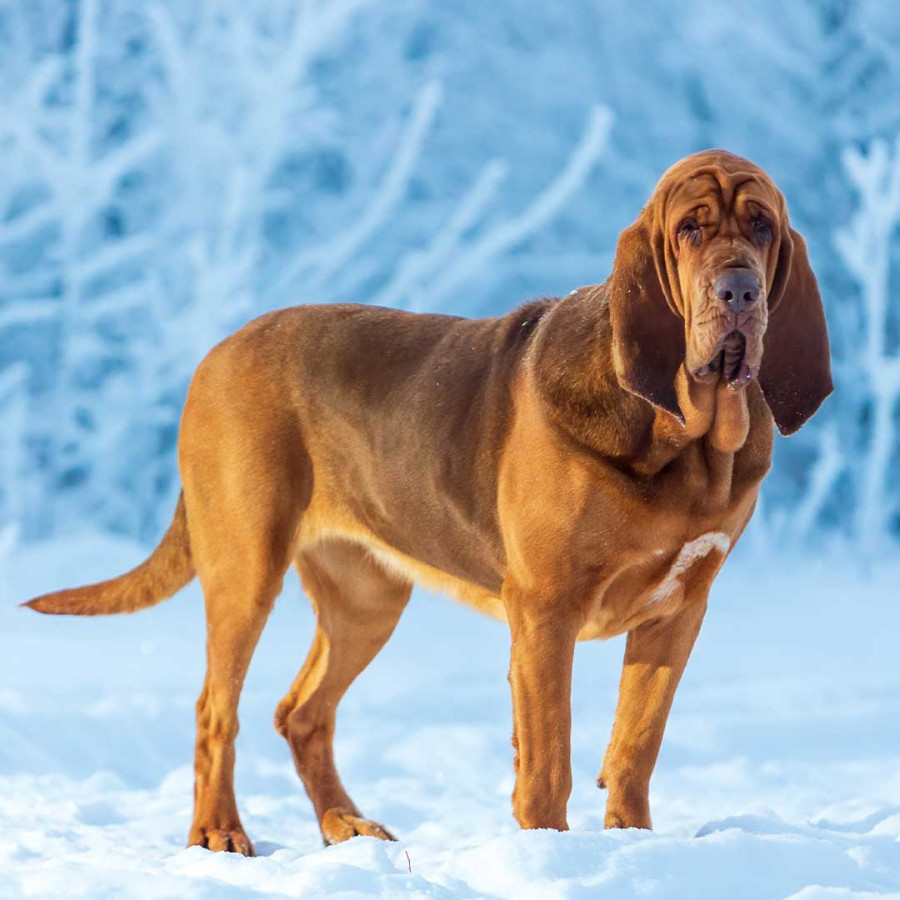
Bloodhound Dog Breed
Bloodhound dogs are known not only for their large size, but also for their big hearts too!
Bloodhound dogs are known not only for their large size, but also for their big hearts too!
These gentle giants are scent hounds which were originally bred to track people and animals over long distances. And it really shows when they get a whiff of something interesting!
While they’re patient and affectionate, their nose can override their recall. You should also be prepared for drooling and shedding.
Bloodhounds are gentle, friendly, easy-going dogs. They’re usually calm and laid back at home – quite content lounging near their humans. But underneath that relaxed exterior is one of the most capable noses in the dog world. In fact, once a Bloodhound picks up a scent, very little else matters to them!
This single-mindedness can show up in different ways in the home. While they’re rarely aggressive, the lure of a smell can make them determined to the point of appearing to ignore their owner! Despite this, they form deep bonds with their families and generally don't like being left alone.
If you like affectionate, sociable dogs and you’re prepared for the quirks that come with a Bloodhound, this breed could be a great match for you!
Disclaimer
While these breed traits give a general idea of what to expect from a specific type of dog, it's important to remember that every dog is unique. Just like people, each dog comes with their own distinct personality, quirks, and characteristics!
Bloodhounds can make good family dogs because of their gentle, patient nature around children. Many will form close bonds with every member of the household. They’re usually tolerant of the noise and activity that comes with family life, which is a bonus!
Their calm nature means they usually cope well with a busy household, but only if their exercise and scenting needs are met. When it comes to play with young people, it’s important to supervise due to the breed’s size. They could easily knock over a small child without meaning to!
The Bloodhound’s scent powers can lead them to wander if given the chance, so they need a home with a secure garden fencing.
Bloodhounds need homes with secure garden fencing. Their tracking instincts can lead them to follow a scent well beyond the garden if given half a chance!
They’re a good match for owners who have time for daily walks, ideally including scent-based activities that let them use their nose. Socialisation and habituation are important from an early age. This will help them grow into confident adults who cope well with new people, places, and experiences.
Although they’re affectionate and easy-going, you’ll need to be prepared for the strength needed to manage a large scent hound on a lead. As a dog that’s prone to drooling a fair amount, a home with easy-to-clean surfaces is useful too!
Bloodhounds are affectionate dogs who enjoy close contact with their humans. They bring a steady, easygoing presence to the home, with many leaning against their owners or settling nearby rather than seeking constant attention. They’re also known for welcoming visitors warmly and rarely show the wariness seen in some guarding breeds.
As a dog which thrives on human company, Bloodhounds can experience separation-related issues if they're often left alone for long periods. But there are other ways you can help, including gradual training to build independence. Socialisation and habituation from puppyhood can also help them learn to settle when their owners are out. Socialisation is teaching a puppy to interact in an appropriate way with people and other dogs. Habituation is teaching a puppy to ignore some people, other dogs, traffic, noises, livestock, etc.
Remember: there’s no substitution for human company, which these dogs need every day.
Bloodhounds love play, but not always in the same way as many other breeds. They usually prefer more relaxed scent-based activities over repetitive fetch games. Tracking games or finding hidden treats around the home and garden is more their sort of thing!
This breed enjoys the company of other dogs and can be playful with familiar canine companions. But, remember, their size and enthusiasm mean they should always be supervised around small children or smaller dogs.
As puppies, Bloodhounds can be boisterous and clumsy. So, focus on gentle, structured play to help protect their fast-growing bodies.
Bloodhounds are typically quiet at home, but this isn’t always the case outside! They can really find their voice in the great outdoors, especially when following a scent or ‘chatting’ with other dogs.
This breed’s distinctive baying bark travels far and wide, which is perfect for their job of tracking a hound's location over long distances.
Some Bloodhounds may also bark or howl when left alone. This can be tackled with consistent training and gradually building up alone time from puppyhood. Bloodhounds who get enough scent work and exercise will usually settle more easily and bark less at home.
Bloodhounds form close bonds with their families, which means they are prone to separation-related issues. They generally dislike being left alone for long periods.
But there are ways you can prevent these issues from turning into bigger problems. This includes building up alone time gradually, alongside proper socialisation and habituation from puppyhood. Their powerful tracking instinct also means their recall can be unreliable once they pick up an interesting scent. That’s why secure fencing and lead work in open spaces are important.
Bloodhounds can be difficult to redirect once a scent has got their attention, which can be challenging during training. If you're finding these behaviours difficult to manage, call our free behaviour helpline for advice and guidance.
Bloodhounds aren’t for the faint-hearted. They need around one to two hours of exercise each day as adults, ideally split across more than one walk.
This large breed matures slowly, which means their joints stay soft for longer. So, exercise should be built up gradually over their first 12 months rather than given at full adult levels too soon.
Given their background in tracking scents over long distances, they benefit hugely from activities that let them go wild with their nose. Trailing games or scent trails laid around the garden go down well!
It’s fine to let your Bloodhound off the lead, but only in secure, enclosed areas. When they lock in on a scent, they’re not always great at coming back when called!
You should also be mindful of this breed's risk of bloat (where the stomach fills with gas and twists) and avoid vigorous exercise close to mealtimes.
Bloodhounds need regular, varied exercise to maintain a healthy weight and keep their brain busy.
Sometimes yes, sometimes no! Bloodhounds are gentle and willing to learn, but their powerful scenting instinct can make recall and focus challenging, especially outdoors.
Training is usually most effective when they’re able to use their nose as motivation, like scent-based games alongside basic obedience. Reward-based methods with tasty treats, and plenty of patience, are the key to success. They can be slow to respond compared with some working breeds.
Socialisation and habituation from an early age are vital. It’s very easy for them to be easily distracted once they latch onto an interesting scent. Stick with consistent, positive training from puppyhood to help build good manners and reliable recall in secure areas. If you're struggling, call our free behaviour helpline for tailored advice and guidance.
Bloodhounds have a short, dense coat that’s quite low maintenance. It usually only needs a weekly brush to remove loose hair and keep the skin healthy.
Their loose, wrinkled skin, particularly around the face, needs more attention. This should be checked and cleaned regularly to prevent infection in the folds. Their long, drooping ears also need regular checking and cleaning. They can trap moisture and debris, increasing the risk of ear infections.
Bloodhounds are known for drooling, so you’ll need to be prepared to wipe their face regularly, especially after eating or drinking. As for their other grooming needs, nail trimming and dental care should also form part of their routine.
Bloodhounds have a shorter lifespan than many breeds, typically around eight to ten years. Like all breeds, they can be prone to certain health conditions. So, insurance is recommended as this can help cover the cost of potential treatment throughout their life.
Bloodhounds are classed by The Kennel Club as a Category Three breed. This is because their loose facial skin can cause problems that need monitoring.
Common conditions include:
Gastric dilatation volvulus (bloat): a life-threatening emergency where the stomach fills with gas and twists. This is the leading cause of death in the breed, so owners should learn to recognise the signs and seek veterinary help as soon as possible.
Hip and elbow dysplasia: genetic joint conditions that can lead to arthritis and reduced mobility. Responsible breeders should have breeding dogs screened.
Ectropion and ear infections: their loose facial skin and long ears can lead to eye irritation and recurring ear infections, if not checked regularly.
Skin fold infections: the loose skin around their neck and face can trap moisture, leading to infection if not kept clean.
Regular vet check-ups, a balanced diet and maintaining a healthy weight are key to helping your Bloodhound thrive.
I need one to two long walks a day, and I love following an interesting scent. It’s best to keep me on a secure lead in open spaces, as my nose can sometimes take over!
My nose is my greatest asset, so I adore scent games and trailing activities. Hiding treats around the garden keeps me busy and satisfied for a good while.
I'm gentle and eager to please, though I can get distracted by a tantalising smell. Patient, reward-based training from an early age gets the best results.
How much does it cost to own a Bloodhound?
Purchase or adoption cost: Buying a Bloodhound puppy from a responsible breeder typically costs between £900 and £1,700. If you're considering adoption, rehoming fees are usually around £150 to £300. This often includes initial health checks and vaccinations. We’d always encourage you to explore dogs available through Woodgreen or other reputable rescues first.
Start-up costs: Before bringing your dog home, budget for essentials such as a bed, crate, lead, collar, bowls and initial vet costs, including vaccinations and microchipping. This typically comes to around £350 to £550, reflecting the larger equipment this breed needs.
Ongoing monthly costs:
Food: £55 to £85 per month, given their large size.Insurance: £45 to £75 per month, with premiums often higher due to breed-related conditions such as bloat.
Grooming: minimal professional grooming is needed, though skin fold and ear cleaning products should be budgeted for as well.
Routine vet care: flea and worming treatments, boosters and check-ups average around £180 to £250 per year.
Other costs: cleaning supplies for drool are a small but ongoing cost for this breed.
Total estimated monthly cost: £120 to £190 per month, depending on your dog's needs and the products and services you choose.
Take our quiz to discover which breed is right for you
Take our quizPlease call our pet support line on 0300 303 9333 (7 days a week – 8.30am - 4pm)