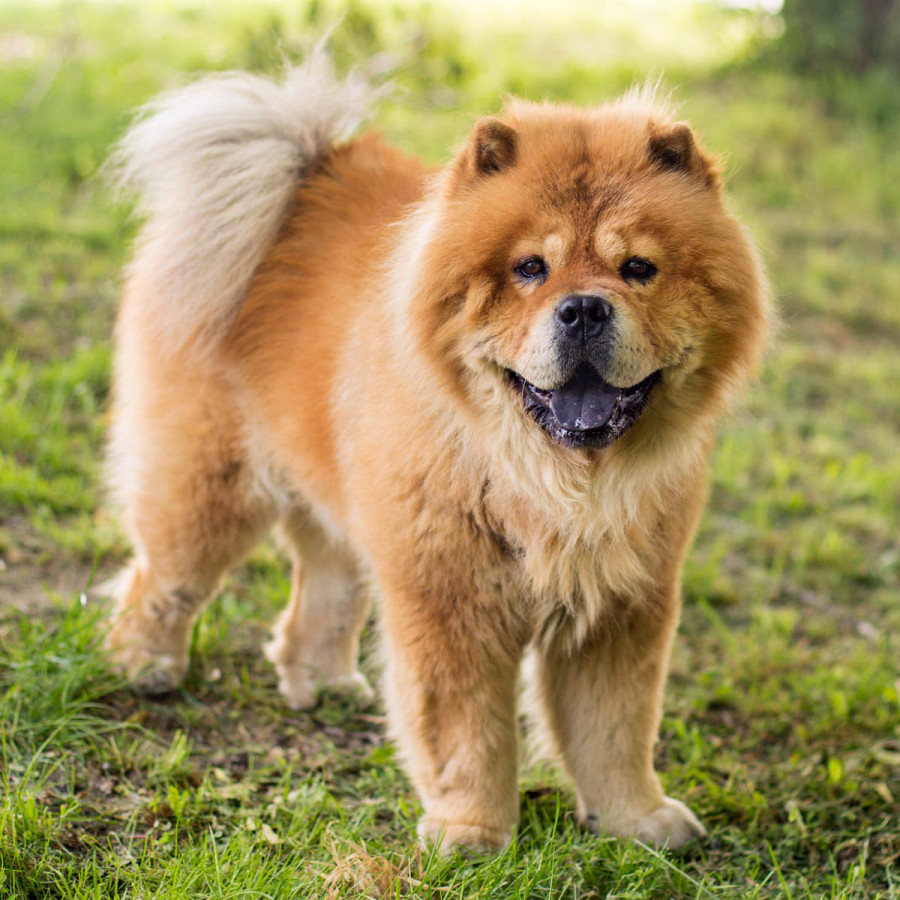
Chow Chow Dog Breed
The Chow Chow is an ancient Chinese breed, originally used for hunting and guarding.
The Chow Chow is an ancient Chinese breed, originally used for hunting and guarding.
Stop and think before getting a brachycephalic flat-faced dog
Breeds like this have extreme conformation, including exaggerated body features or a flat face and shorter nose (brachycephalic). These characteristics can negatively affect their health and welfare, and you may face higher insurance and veterinary costs. For these reasons, we wouldn’t recommend buying this type of dog. See here for more information.
If you decide to go ahead, please consider rescuing a dog in need rather than buying a puppy.
Chow Chows are a medium-sized, heavy coated dog with a distinctive black tongue.
These dogs have an independent and aloof nature, combined with a strong guarding instinct. So they’re not ideal for first-time dog owners or families with very young children. But they can still be a great addition to the right home!
Chow Chows may be independent but they’re also incredibly loyal to their immediate family. They’re not overly affectionate but that doesn’t mean they don’t love the humans in their lives!
They can be reserved, even aloof, with strangers. This can escalate to very protective behaviour if you don’t socialise them. You’ll need to be careful in situations when they’re around people they don’t know.
While they’re not the most active or playful type, they still need regular daily physical and mental exercise. They’re an intelligent breed but you may find it hard to motivate them sometimes.
These dogs have a dignified air about them – it’s almost like they know it too! Although they look like a cuddly teddy bear, it’s important to remember they’re not ones for lots of affection.
Disclaimer
While these breed traits give a general idea of what to expect from a specific type of dog, it's important to remember that every dog is unique. Just like people, each dog comes with their own distinct personality, quirks, and characteristics!
Chow Chows can make good family dogs, but they’re best suited to homes with older children. Their ‘teddy bear’ appearance makes them a magnet to young children. This isn’t ideal as they’re not the most tolerant of breeds!
These dogs like a lot of quiet time on their own. They aren’t particularly playful, so they don’t really have a lot to offer a young family. But they can live happily in a home with older children who understand their need for space and respect their boundaries.
Their protective nature must be taken into consideration when children enter your home. The dog’s reaction may not be the most welcoming of greetings!
Chow Chows can be a great match for a mature person or couple who have the time available to meet their needs.
While the Chow Chow can make a great companion, we don’t recommend them for first-time dog newbies. Ideally, the Chow Chow should only be considered if you have experience with similar breed types.
When it comes to training, this breed needs an owner with plenty of patience and persistence. They suit any size of home but would benefit from a secure garden to play in. They’re known for having selective hearing when let off the lead!
These dogs are best suited to being the only pet in the home, unless they’re introduced to another dog at a young age. For a household with more than one dog, opposite sex pairings are a good idea.
If you’re thinking about taking on a Chow Chow, you’ll need to have enough time available for exercise, play and grooming.
Chow Chows can cope home alone for a few hours, if it’s built up gradually. This makes them ideal if you work part-time, or you work from home a lot. It’s also means you don’t have to give up your social life!
Chow Chows can be affectionate, but not always in the most obvious ways. They’ll often show their love by following you around, lying in the same room, or near you.
Depending on their individual personality, some may enjoy a snuggle on the sofa, but this isn’t guaranteed! They may also gently lean against your legs to show they feel comfortable with you.
If you’re looking for a full-on snuggle buddy, we think the Chow Chow probably isn’t the breed for you.
While not as playful as many other breeds, Chow Chows do like the odd game of fetch, tuggy or seek and find. If they’re shown how much fun they can have with toys at a young age, they’re more likely to want to play in later life.
Chow Chows enjoy playtime on their terms. It’s more likely to happen when they’re in the mood – rather than when you want to play with them. Young children might find them not fun enough to live with.
This breed is an excellent choice for adults who work from home.
Chow Chows are a fairly quiet breed compared to others. But when they do bark, you should pay attention!
They’re great watchdogs and will certainly let you know when someone approaches your home. Like all breeds, they will also bark if they feel bored, frustrated or stressed.
If you live alone or in a remote area, the Chow Chow will make an excellent canine home security system. On the other hand, if you have a busy household with lots of comings and goings, their bark may become slightly annoying!
Any dog can develop behavioural issues if their needs aren’t met, or if they don’t get the right amount of socialisation and basic training.
The Chow Chow’s territorial nature served them well back in the day when they were guarding temples and valuable treasures. But this isn’t ideal in a modern home environment! If not managed carefully, this breed can become aggressive towards visitors to your home. This can also happen with strangers who approach them outside.
Chow Chows are prone to guarding their food and other prized possessions. They’re often not tolerant of other dogs, especially those of the same sex. Their hunting background means they can’t be trusted with wildlife or small pets.
With the right amount of physical exercise, mental stimulation and training, these issues can be prevented or reduced.
An adult Chow Chow will need around one hour of exercise a day. This can be split into two 30-minute walks.
They’re not ones for long hikes, and extra care should be taken in warmer temperatures. Their thick coat and short noses causes them to quickly overheat!
This breed’s independent nature can make recall training challenging. So it’s best to keep them on a lead in rural areas to protect local wildlife. If possible, we recommend getting access to a secure exercise area two or three times a week so they can run around safely if they want to.
A Chow Chow’s brain will also need a workout to keep them mentally satisfied. They love interactive toys and puzzle feeders, along with short, positive training sessions.
The Chow Chow’s strong, independent nature can be make them seem very stubborn, especially when it comes to training or responding to cues. The key to success, in most cases, is finding out what really motivates them.
All puppy’s brains are like sponges, so the best time to start training is as soon as you get them home! Chow Chows need extensive socialisation and habituation training so they can cope with all the sights and sounds they’ll encounter throughout their life. This provides a great foundation for basic training.
Socialisation is teaching a puppy to interact in an appropriate way with people and other dogs. Habituation is teaching a puppy to ignore some people, other dogs, traffic, noises, livestock, etc.
Always use kind, fair, reward-based training for the best results. This approach will help build a bond and trust between you and your dog.
Adolescence is a challenging time for all breeds and their owners. Hang in there – your patience and persistence will pay off once they reach maturity.
The Chow Chow has a thick double-coat with a moderate length.
This will need brushing at least twice a week.
Special attention needs to be given to the mane area. This is slightly longer than the rest of the coat and it’s also prone to matting and knots. A rake will help remove the dead undercoat and a slicker brush is ideal for the topcoat. For finer hair around the ears, a comb is your best option.
Staying on top of your Chow Chow’s coat is important because of the risk of overheating in warmer temperatures. Regular grooming also gives you the opportunity to check your dog’s body for any lumps, cuts or parasites that might need attention.
Like all pedigree breeds, Chow Chows can be prone to certain health conditions. This is why it’s advised that you find a responsible breeder who carries out all the relevant health checks on their breeding stock.
Conditions that affect Chow Chows include.
• Hip dysplasia – malformed hip joint/socket.
• Elbow dysplasia – malformed joint/socket.
• Entropion – eye lashes rubbing against the eyeball.
• Hypothyroidism – underactive thyroid gland.
• Cruciate disease – a condition that can lead to the rupture of the cruciate ligament.
• Patellar luxation – slipping kneecap.
A healthy lifestyle, exercise, nutritious diet and regular veterinary care will help to ensure your Chow Chow lives a long, happy life.
I need two walks a day, around thirty minutes long would be great. I don’t really like long hikes. And I struggle in warm weather too!
Please let me sniff and follow my nose on my walks. I also enjoy puzzle feeders and long-lasting chews.
I really need socialising and habituation, so please don’t rush this. I love doing anything thing that involves my nose!
The price of Chow Chow puppies varies greatly –from £600 to £4,000.
Please don’t be tempted to pay a lot of money for a pup that’s not a recognised colour within the breed standard. People who breed for unusual colours are not responsible breeders.
The set-up costs for any puppy can lead to several hundred pounds. This includes, food, bowls, collar, lead, harness, longline, baby gates, toys etc.
The ongoing costs include vaccinations, parasite control, insurance premiums, food and field hiring.
Take our quiz to discover which breed is right for you
Take our quizPlease call our pet support line on 0300 303 9333 (7 days a week – 8.30am - 4pm)