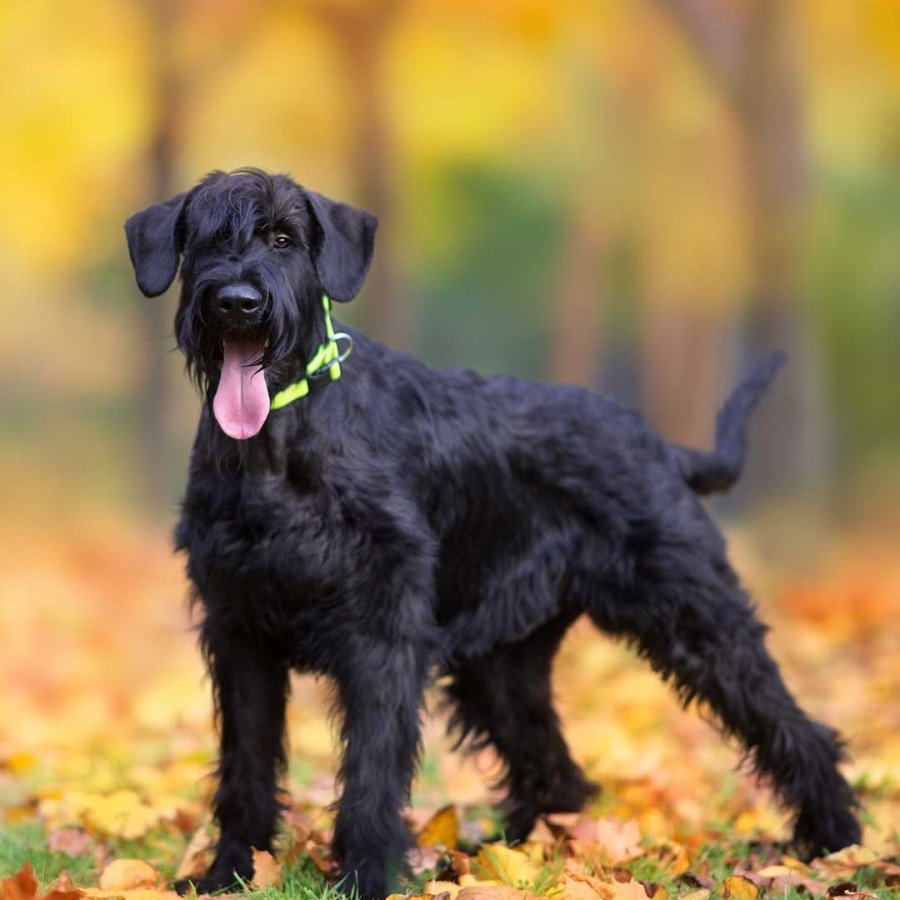
Giant Schnauzer Dog Breed
Large, powerful, and striking, the Giant Schnauzer certainly lives up to its name! This breed was originally bred to herd cattle and guard farms in Germany, and it shows – they're intelligent, loyal and protective.
Large, powerful, and striking, the Giant Schnauzer certainly lives up to its name! This breed was originally bred to herd cattle and guard farms in Germany, and it shows – they're intelligent, loyal and protective.
Giant Schnauzer's best suited to active households with experienced dog owners who can provide consistent training, plenty of exercise, and daily mental stimulation.
If you like a canine with confidence, the Giant Schnauzer might be the one for you. They're very protective of their family and constantly on alert for danger – always sizing up new people or situations with a watchful eye.
Once you’ve earned their trust, it doesn’t take long for them to reveal their warm and affectionate side, with some goofiness thrown in for good measure!
This breed’s working background gives them a sharp mind, with an independent streak. This means they can also be stubborn, which can test boundaries – especially during adolescence. That’s why consistent handling from puppyhood is key.
Giant Schnauzers bond closely with their families, and they’re not fans of being left alone for long periods, so you’ve got to be able to give them the companionship they need. With the right exercise, routines, and company, these dogs can make a wonderful companion.
Disclaimer
While these breed traits give a general idea of what to expect from a specific type of dog, it's important to remember that every dog is unique. Just like people, each dog comes with their own distinct personality, quirks, and characteristics!
Yes! Giant Schnauzers can make excellent family dogs. They thrive best in active households with older children who understand how to behave calmly around a large, powerful dog.
Protecting their family is second nature to them, and they form very close bonds with their humans. But, due to their size and strength, it’s important to supervise play with children, even if they’re usually gentle with dogs.
The perfect home for a Giant Schnauzer is one where they’ll receive positive, consistent training, and enough daily exercise to keep boredom at bay. If you’re looking for a low-maintenance dog who doesn’t need ongoing training, they’re probably not a good fit for you. But if you’re looking for a companion who will keep you busy, they’re definitely worth considering!
The ideal home for a Giant Schnauzer is one that gives them an active lifestyle. They need owners who have the time, confidence, and experience to meet the needs of a large, intelligent working breed.
These dogs ideally need access to a secure garden for outdoor time whenever the mood takes them. They also need plenty of vigorous exercise beyond the garden as it’s not a substitute for walks and other outdoor activities.
Socialisation and habituation early on can help these dogs grow into confident, well-mannered adults who cope well with visitors, other dogs, and everyday situations.
Giant Schnauzers are affectionate with their families, but not always in the most obvious way. These dogs like to show their adoration through loyalty and closeness rather than constant demands for attention.
When they’re not on alert for danger, they’re happy to let their hair down and get playful and silly with people they trust. They’re more reserved with strangers and wary of visitors to the home, before eventually warming up.
As a breed which forms a close attachment to their family, they can experience separation-related issues if left alone regularly without anything to keep them busy. So it’s important to put time into gradual training to build independence, alongside proper socialisation and habituation. Socialisation is teaching a puppy to interact in an appropriate way with people and other dogs. Habituation is teaching a puppy to ignore some people, other dogs, traffic, noises, livestock, etc.
These efforts will help them learn to settle when their owners are out. Being a sociable breed, they’re best suited to owners who can give them lots of company every day.
Giant Schnauzers are playful dogs with impressive stamina for games and activities. Whether it’s retrieving, tug or interactive play with their owners, they’re keen to get involved. And it’s no surprise, as their working heritage means they love having a job to do.
This breed’s playful streak often remains just as strong into adulthood, with a continued love for games and problem-solving activities. But their size and strength mean play should be supervised around small children or other small pets.
It’s also important to know that Giant Schnauzers can easily get bored of repetitive games quickly, so variation of challenges is key to keeping them engaged. Without enough stimulation to satisfy them, playfulness can quickly evolve into mischief around the home!
These dogs have a bark to match their size. Giant Schnauzers can be very vocal, especially when it comes to alerting their owners to visitors or any unusual activity.
Watchfulness and barking come naturally to this breed – it’s in their blood to stay on full alert. But, once a visitor is welcomed into the home, most will settle and become friendly.
Without the right training, barking can become excessive, especially in dogs who aren't given enough physical and mental outlets for their energy. To avoid this, teach them a reliable 'quiet' cue from puppyhood, alongside consistent daily exercise. A well-exercised, mentally stimulated Giant Schnauzer will usually bark less, so try not to give them something to shout about!
As a breed that forms close bonds with their humans, Giant Schnauzers can be prone to separation-related issues. So leaving them alone for long periods isn’t something they’ll like!
However, there are things that can help like building up alone-time gradually from puppyhood. Socialisation and habituation to a wide range of situations also help.
This breed is highly intelligent and has an independent streak. Consistent reward-based training to keep behavioural boundaries in place is essential.
Their protective instincts can sometimes develop into over-guarding if not socialised from a young age – another reason to get on top of their training early on.
If you ever find yourself struggling with these behavioural issues, call our free behaviour helpline for advice and guidance.
Giant Schnauzers have lots of energy to burn, so a lot of daily exercise is a must! We recommend at least an hour to two hours a day to keep them happy and healthy.
As a breed developed to herd cattle and work alongside farmers all day, they have great stamina, so a gentle stroll won’t be enough to keep them satisfied. The perfect exercise for this breed should include a mix of walking, off-lead activity in secure areas, and games that allow them to use their strength and energy.
It’s equally important to keep these dogs mentally stimulated. Training sessions, scent work, and problem-solving toys will help to keep boredom at bay.
Without the right amount of exercise and mental engagement, Giant Schnauzers can easily become frustrated, destructive or difficult to manage at home. And that’s not a great situation, especially with a large dog!
Yes, in a way, but not so much in other ways! Let us explain…
Giant Schnauzers are intelligent and capable dogs, but their independent streak means training can be more of a partnership than a straightforward process. While they learn quickly and respond well to reward-based methods, they’re quick to notice when rules aren’t consistent and may test boundaries as a result. That’s why early socialisation and habituation to a wide range of people, places and situations is essential, given their naturally protective instincts.
Training should not end after puppyhood. This will need to continue into adolescence, which often brings a more determined, testing phase in this breed.
Focus on kind, calm and consistent handling to bring out the best in a Giant Schnauzer. If you're ever struggling, call our free behaviour helpline for tailored advice and guidance.
This breed typically has a dense, wiry double coat that needs regular grooming to keep it looking fabulous. Their coat doesn't shed in the way many breeds do, but it still needs brushing several times a week to prevent matting, particularly around the beard, legs, and ears.
We recommend professional clipping every 8 to 10 weeks to keep the coat manageable and comfortable. Don’t forget about their distinctive beard and eyebrows – these can trap food and moisture, so they need checking and cleaning regularly.
Grooming your Giant Schnauzer should also include nail trimming, ear cleaning and dental care. It’s always best to start grooming early during puppyhood. This will help Giant Schnauzers learn to tolerate being handled throughout their life.
Giant Schnauzers will typically live for around 10 to 12 years. Like all breeds, they’re prone to certain health conditions. Getting insurance can help cover the cost of treatment throughout their life.
Common conditions in this breed include:
Hip dysplasia: a genetic condition where the hip joint doesn't develop properly, which can lead to arthritis and reduced mobility over time. Responsible breeders should have breeding dogs hip-scored.
Gastric dilatation volvulus (bloat): a life-threatening emergency where the stomach fills with gas and twists. Deep-chested breeds like the Giant Schnauzer are more at risk, so it’s important to recognise the signs and seek veterinary help when necessary.
Hereditary cataracts: cloudiness of the eye lens that can affect vision and, in some cases, lead to blindness. Eye screening is available for breeding dogs.
Hypothyroidism: an underactive thyroid gland, which can cause low energy, weight gain and skin problems.
Regular vet check-ups, a balanced diet and maintaining a healthy weight are key to helping your Giant Schnauzer thrive.
Keeping up with vaccinations, parasite treatments, and dental care is also important for their long-term health.
I need a serious amount of exercise every day, at least an hour or two of walking, running or play. Don’t underestimate my stamina – a short walk around the block won't cut it!
I’ve got a busy brain. My mind needs stimulating as much as my body! I love training, scent games and puzzle toys. If I get bored, I'll find my own entertainment, and you might not like the results.
I'm clever and independent, if I say so myself. So I need consistent, confident training from puppyhood. I respond best to reward-based methods, but I do like to test the rules sometimes. Are you up for a challenge?
How much does it cost to own a Giant Schnauzer?
Purchase or adoption cost: Buying a Giant Schnauzer puppy from a responsible breeder typically costs between £900 and £1,800. If you're considering adoption, rehoming fees are usually around £150 to £300 and often include initial health checks and vaccinations. We’d always encourage you to explore dogs available through Woodgreen or other reputable rescues first.
Start-up costs: Before bringing your dog home, budget for essentials such as a bed, crate, lead, collar, bowls and initial vet costs, including vaccinations and microchipping. This typically comes to around £350 to £550, reflecting the larger equipment this breed needs.
Ongoing monthly costs:
Food: £50 to £80 per month, given their large size and activity levels.
Insurance: £40 to £70 per month, with premiums often higher due to breed-related conditions such as bloat.
Grooming: £40 to £60 per session, every 8 to 10 weeks, for professional hand-stripping or clipping.
Routine vet care: flea and worming treatments, boosters and check-ups average around £180 to £250 per year.
Other costs: training classes are worth budgeting for, given this breed's need for ongoing, structured training.
Total estimated monthly cost: £130 to £210 per month, depending on your dog's needs and the products and services you choose.
Take our quiz to discover which breed is right for you
Take our quizPlease call our pet support line on 0300 303 9333 (7 days a week – 8.30am - 4pm)