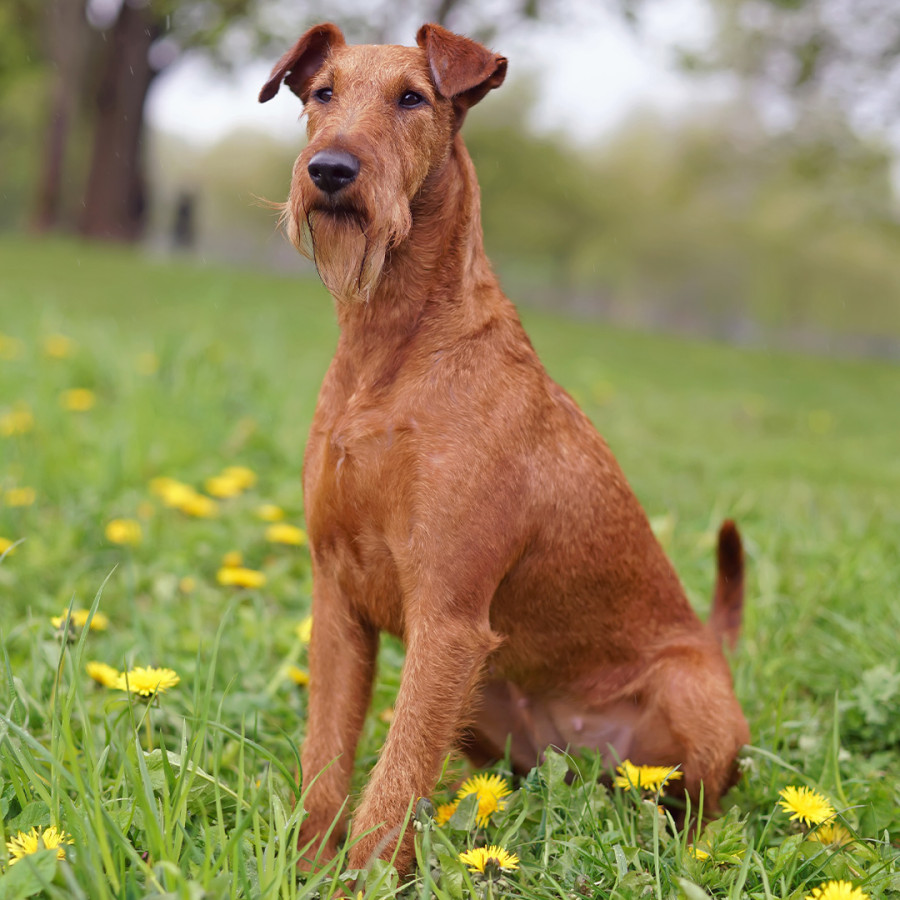
Irish Terrier Dog Breed
Nicknamed the 'Red Devil', the Irish Terrier is a fearless, devoted companion with bags of character.
Nicknamed the 'Red Devil', the Irish Terrier is a fearless, devoted companion with bags of character.
Irish Terriers bond closely with their family and can be feisty with other dogs, so socialisation from an early age is essential. They suit owners who enjoy an active, characterful dog and have some terrier experience.
The Irish Terrier is a bold, lively breed with a fearless streak and a genuine warmth towards the people they love.
They're devoted to their family and tend to be gentle and loving at home, despite their reputation for being cheeky outdoors.
Their confident, plucky nature means they rarely back down from a challenge, whether that's an unfamiliar dog or an interesting hole in the garden.
They can be argumentative with other dogs, particularly of the same sex, and tend to have a strong prey drive towards smaller animals.
Early, thorough socialisation makes a real difference to how well they cope with these instincts as adults, though some watchfulness around unfamiliar dogs often remains part of their character.
Disclaimer
While these breed traits give a general idea of what to expect from a specific type of dog, it's important to remember that every dog is unique. Just like people, each dog comes with their own distinct personality, quirks, and characteristics!
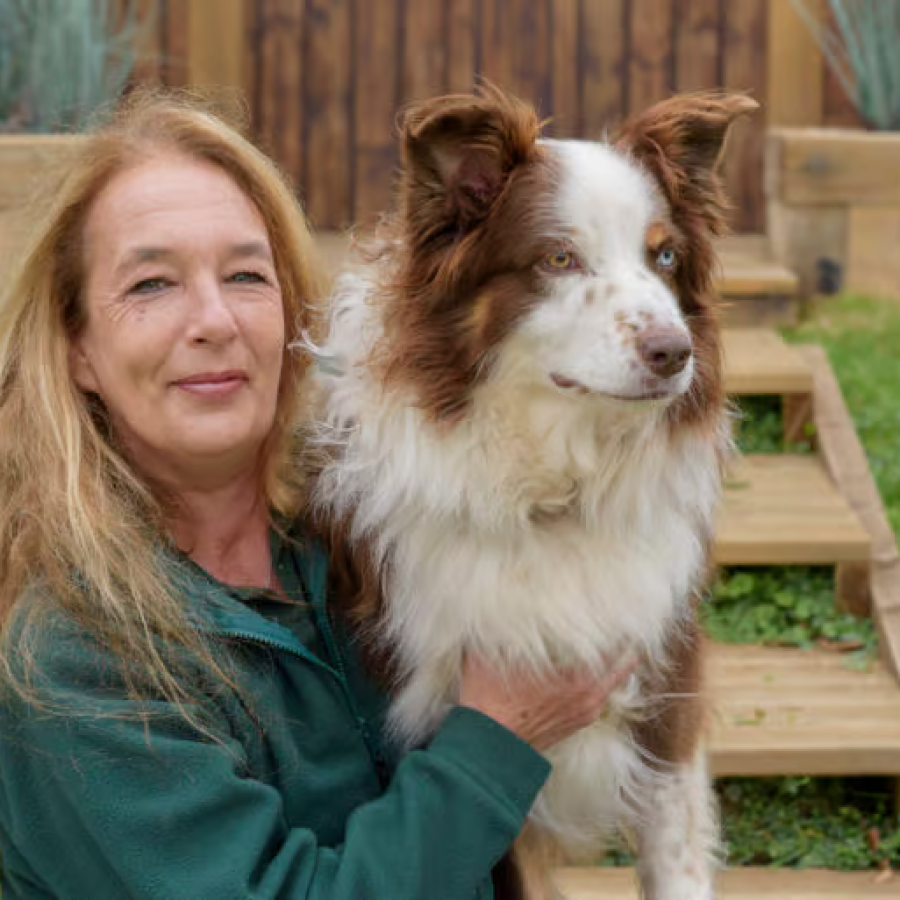
Irish Terriers can make excellent family dogs and are typically gentle and affectionate with the children in their own household.
They tend to suit families with older, dog-aware children, as they can lack patience if handled roughly or grabbed unexpectedly.
Supervision is always recommended during interactions between dogs and children, regardless of breed.
Their fun-loving, energetic nature means they're often more compatible with families who enjoy an active lifestyle and can match their enthusiasm for daily adventures.
Irish Terriers can adapt well to a range of homes, including smaller properties, as long as they have access to open spaces for regular exercise. A secure garden allows them to get a bit of daily exercise and provides an outlet for their natural desire to dig.
Due to their strong prey drive, homes with cats or small pets are unlikely to be a good match unless introductions are managed very carefully from puppyhood.
They can be selective about which dogs they get on with, so households with other dogs need thoughtful introductions. If you’re exploring which breed best suits your home and lifestyle, try the Discover the Right Dog for Me quiz to find your match.
Irish Terriers are deeply affectionate towards their family, often described as having a heart far bigger than their own bodies.
They tend to be devoted companions who genuinely enjoy human company and like to be included in daily life.
While bold and sometimes reckless outdoors, many have a calm, settled attitude at home.
Their loyalty runs deep, and they typically prefer to be close to their people rather than left to entertain themselves for long periods.
Irish Terriers are playful, energetic dogs with a genuine sense of fun. They enjoy games that let them use their nose and natural curiosity, including scent work and hide-and-seek style activities. Many also love a good dig given the chance.
Like most terriers, they tend to adore squeaky toys, so be prepared for some noise! Their confident, daring nature means they have a real enthusiasm when it comes to playtime which can be quite entertaining to watch.
Interactive games and short, varied training sessions tend to hold their attention best, as repetitive activities can quickly lose their appeal.
Giving their history, Irish Terriers are alert dogs that will typically bark to let their owners know about anything unusual or unfamiliar.
They're known for excessive or nuisance barking, there would always be reason for it. Boredom or a lack of mental stimulation will make this breed bark more.
With consistent training and plenty of daily engagement, barking can usually be kept to a reasonable, purposeful level.
Any breed can develop behavioural issues if their needs are not met. The Irish Terrier’s confident, fearless nature can translate into reactivity towards other dogs, particularly of the same sex, if not carefully socialised from puppyhood.
Their strong prey drive is triggered by small animals, so secure environments and careful management around cats or other pets is important.
Without enough mental stimulation, they will get bored and start digging or showing destructive behaviour. With thorough early socialisation, consistent training and enough daily engagement, these tendencies can be well managed.
Originally bred as an all-round working terrier for guarding, pest control and even retrieving, the Irish Terrier is an active breed with great stamina.
At least an hour of exercise a day is recommended, combined with games, enrichment toys and opportunities to dig and use their nose.
They love to explore across different terrains, especially open spaces where they can be let off the lead safely. Recall isn't always a reliable way of getting this breed back when something interesting catches their attention.
Irish Terriers are intelligent and respond well to training, however their independent, confident nature makes them more determined to do things their own way at times.
Positive, reward-based methods work well, with short and varied sessions holding their attention best. Training and socialisation should start as early as possible – without it, their natural confidence around other dogs can develop into genuine reactivity.
Training is an ongoing commitment rather than something that should be done when they're a puppy. Challenges around recall and dog-to-dog manners often need continued management into the teenage years and beyond.
Five common behavioural issues to watch out for:
• Reactivity towards other dogs, particularly of the same sex, without thorough early socialisation.
• Chasing small animals, driven by a strong prey drive.
• Digging, rooted in their working terrier instincts.
• Selective recall, especially when something interesting has caught their attention.
• Destructive behaviour at home if mental stimulation and exercise needs aren’t met.
The Irish Terrier has a dense, wiry double coat that needs regular maintenance to stay in good condition.
Brushing a couple of times a week helps to manage loose hair and keep the coat tidy. Many owners choose to have the coat clipped every couple of months by a professional groomer to keep it manageable.
Eyes, ears and mouth should be checked weekly, and getting puppies comfortable with handling early makes ongoing grooming much easier.
Their beards can also collect food and moisture after meals, so a quick wipe helps prevent stickiness or odour.
The Irish Terrier is generally a robust, healthy breed, but a balanced diet, regular exercise and routine vet check-ups all support a long, fulfilled life.
Responsible breeders should carry out relevant health checks on their breeding dogs – always ask for evidence before taking on a puppy.
Conditions this breed can be predisposed to include:
• Hereditary footpad hyperkeratosis – an inherited condition causing cracked, thickened footpads that can become painful, particularly on uneven ground. Symptoms typically appear from four to five months of age.
• Bladder stones – formed from a build-up of cystine crystals, which can cause discomfort and may require dietary management or surgery in some cases.
• Hip dysplasia – though less common in this breed than in many others, abnormal joint development can still occur and lead to discomfort over time.
• Allergies and skin sensitivities – some Irish Terriers can be prone to skin irritation, which may require dietary or veterinary management.
• Cataracts – a clouding of the eye lens that can affect vision, sometimes seen in older dogs of this breed.
I need at least an hour of exercise a day, plus time to explore. Without it, I get bored – and a bored terrier like me will find my own adventures!
I love using my nose! Scent games, puzzle toys and a digging patch of my own all keep me happy. Variety matters – I get bored if we do the same thing daily.
I’m clever and a quick learner with a fearless streak. Please socialise me thoroughly with other dogs early – I can be a little bossy if I haven’t learned good manners.
Buying an Irish Terrier puppy from a responsible breeder in the UK typically costs between £1,000 and £2,000. This is reflective of the breed and their status on the Kennel Club’s vulnerable native breed list.
Rehoming from a rescue is usually around £150–£250. We’d always encourage you to explore dogs available through Woodgreen or other reputable rescues first.
Start-up costs for essentials come to around £250–£400.
Ongoing monthly costs include food (£30–£45), insurance (£25–£40), and grooming, including occasional professional hand-stripping a few times a year (£30–£50 per session).
Routine vet care averages £150–£250 per year. Total estimated monthly cost: £90–£150.
Take our quiz to discover which breed is right for you
Take our quizPlease call our pet support line on 0300 303 9333 (7 days a week – 8.30am - 4pm)