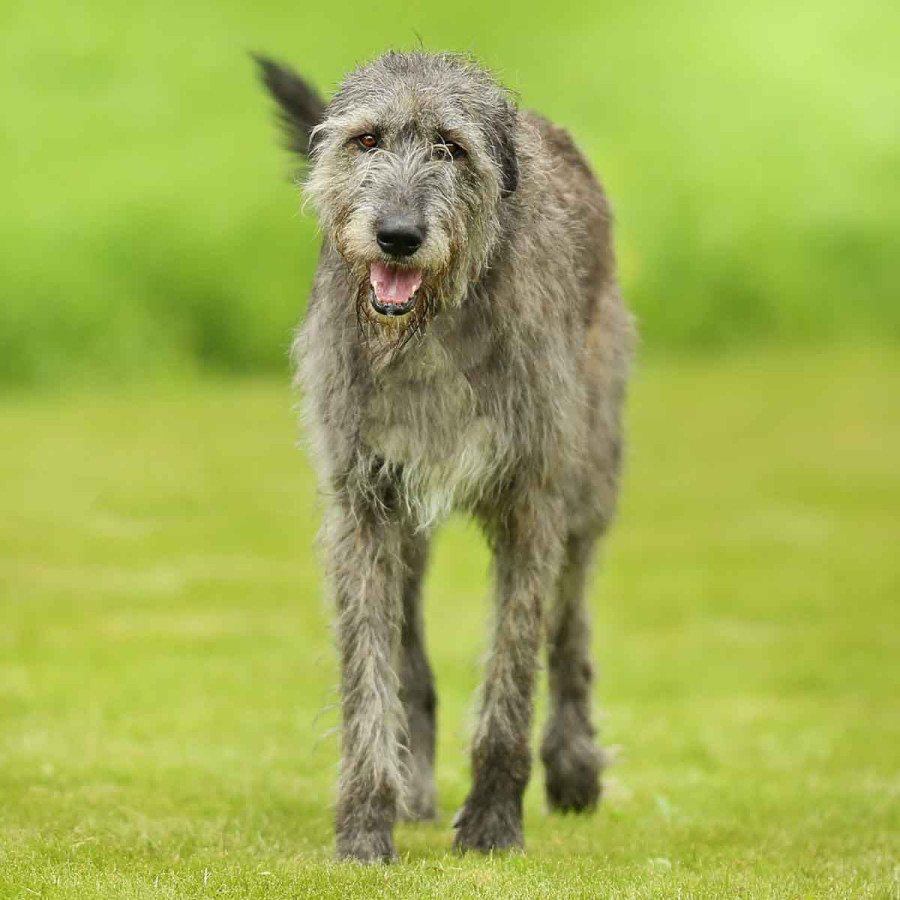
Irish Wolfhound Dog Breed
The Irish Wolfhound is the tallest dog breed in the world, but what really sets them apart is their calm, gentle nature.
The Irish Wolfhound is the tallest dog breed in the world, but what really sets them apart is their calm, gentle nature.
Irish Wolfhounds are loyal, patient companions who need space, regular exercise and lots of company. It’s important to know this breed also has a shorter lifespan than most.
The Irish Wolfhound is a gentle giant with lots of affection for the people they know. These easy-going dogs will move around your home a relaxed manner. They’re usually patient and tolerant, which makes them well suited to family life.
This breed forms deep bonds with their families and genuinely enjoy company – human and canine alike!
Beneath that chilled exterior lies the instinct of a Sighthound. Outdoors, they can be drawn to chase absolutely anything that catches their eye, so a good recall and secure environments are important.
They’re not natural watchdogs and usually greet most people warmly, but their sheer presence is often enough to stop people in their tracks!
Disclaimer
While these breed traits give a general idea of what to expect from a specific type of dog, it's important to remember that every dog is unique. Just like people, each dog comes with their own distinct personality, quirks, and characteristics!
Irish Wolfhounds can make wonderful family dogs. They’re patient, gentle and generally good with children. But this doesn’t mean they skip the excitable puppy phase – and their big legs at an early age can make things even trickier.
Due to this breed’s size, it’s important that interactions with very young or small children are always supervised. An accidental knock from a Wolfhound is enough to easily topple a toddler!
As you can imagine, Irish Wolfhounds need a home with a lot of space. They’re best suited to families who can offer the time and company they need to live their best lives.
Because they form close bonds and prefer not to be alone, these dogs need a home where someone is always around.
Irish Wolfhounds need space. And lots of it. A large home with a securely fenced garden is strongly recommended – both to give them room to move and to allow safe off-lead time.
They’re not suited to living in a flat. Their size alone makes smaller spaces impractical, and they need regular outdoor access. You may even want to consider getting them their own sofa!
They generally get on well with other dogs and can live with cats if introduced carefully from an early age.
If you’re not sure whether this breed is right for you, why not try our dog breed explorer quiz?
Irish Wolfhounds are very affectionate dogs. They form strong, loyal bonds with their families and enjoy showing love to their humans – which can easily startle you, given their size!
Many Wolfhound owners describe their dogs as blissfully unaware of their large size – lap-sitting attempts are not unheard of!
These sensitive souls respond best to warmth, affection and calmness. And they’ll give you just as much love back.
Yes!, Irish Wolfhounds have a playful side, especially as puppies and young adults. Despite this, they’re not exactly a high-energy breed and usually settle into a calmer rhythm as they mature.
These dogs enjoy gentle play and short bursts of activity. But they’re equally content to simply be in the same space as their humans.
Play sessions should be kept appropriate for their size and age. Young Wolfhounds are still developing their joints and bones, so rough play or over-exertion need to be avoided until they’re fully grown. We reccomend that you don’t allow them off the lead for free running exercise until they’re two years old.
Irish Wolfhounds aren’t known for being vocal. They’re a quiet, calm breed, so it usually takes a good reason for them to bark.
When they do make noise, it’s usually to alert their owners to something specific. Their size alone can be enough to scare off possible home intruders, which may be why they have little need to rely on their voice.
They’re a good choice for owners who prefer a quieter dog. But if you don’t take care of their needs, that quietness won’t last long!
Any breed can develop behavioural issues if their needs aren’t met. The Irish Wolfhound’s Sighthound instincts mean they can be prone to chasing. Their recall can also be unreliable once they’ve locked onto something that’s moving. Access to secure, enclosed spaces for off-lead exercise are essential.
These dogs can also experience separation-related issues if regularly left alone. With consistent training, early socialisation and habituation, most of these tendencies can be managed effectively. Socialisation is teaching a puppy to interact in an appropriate way with people and other dogs. Habituation is teaching a puppy to ignore some people, other dogs, traffic, noises, and livestock, etc.
These dogs were originally bred to hunt wolves and elk across open terrain, so they’re built for speed and endurance!
As adults, they need around 40–60 minutes of exercise each day, but the quality of that exercise matters as much as the duration. Free running in a safely enclosed space is ideal.
Puppies and young Irish Wolfhounds should not be over-exercised, as their bones and joints are still developing. Breeders can advise on a suitable routine, and we can help too.
Like all dogs, they benefit from regular access to green space for walks, movement and mental stimulation.
Irish Wolfhounds are willing and sensitive dogs that generally respond well to positive, reward-based training.
They’re not the quickest when it comes to commands – usually doing things in their own time. But they’re not difficult to train when handled with patience and consistency.
Starting training early is important. Puppies who miss out on basic guidance can develop habits that are a lot harder to tackle once they’re fully grown!
Training should continue through adolescence, as challenges with recall and lead walking often crop up again during this time.
Here are five common behavioural issues to watch out for in this breed:
• Pulling on the lead – especially important to tackle early, given their size and strength.
• Unreliable recall due to Sighthound chase instincts.
• Jumping up, which can be hazardous given the breed’s height and weight.
• Separation-related distress if left alone without a gradual introduction to alone time.
• ‘Selective listening’ outdoors when something has caught their attention.
The Irish Wolfhound has a rough, wiry double coat that’s relatively low maintenance compared to many long-coated breeds.
Brushing two to three times a week is usually enough to keep the coat free from tangles and to remove loose hair. The beard and eyebrow area may need more regular attention as they can trap dirt and food.
Professional grooming isn’t essential, but it can be helpful for tidying the coat a few times a year. It’s a good idea to get puppies comfortable with grooming and handling from an early age. This makes the process much easier as they grow into a much bigger size.
A nutritious diet, appropriate exercise and regular vet check-ups are especially important for this breed. Unfortunately, they’re prone to some serious health conditions you need to know about, including:
• Dilated cardiomyopathy (DCM) – a serious heart condition in which the heart muscle weakens and enlarges, reducing its ability to pump blood effectively. Annual heart screening is strongly recommended by the Irish Wolfhound Club.
• Gastric dilatation-volvulus (bloat/GDV) – a life-threatening emergency in which the stomach fills with gas and can twist. Immediate veterinary attention is needed. Feeding smaller meals and avoiding vigorous exercise around mealtimes can help reduce the risk.
• Osteosarcoma – bone cancer, which is more common in giant breeds. Early signs include lameness or swelling around a limb.
• Hip and elbow dysplasia – abnormal joint development that can lead to pain and reduced mobility over time.
• Progressive retinal atrophy (PRA) – a hereditary eye condition that causes gradual vision deterioration. The Kennel Club runs a health screening scheme; always ask breeders for test results.
I need around 40–60 minutes of good exercise each day to avoid getting restless. A safely enclosed space where I can stretch my legs properly is ideal for me!
I’m usually calm a lot of the time, but I still need gentle mental engagement. Short training sessions, sniffy walks and the chance to explore new environments are great. These help to keep me happy and settled.
I’m a keen learner and gentle in nature, so I respond well to kind, consistent training. Please start my recall early – once I spot something to chase, it can be hard for me to stop!
Buying an Irish Wolfhound puppy from a responsible breeder in the UK typically costs between £2,000 and £3,500. Rehoming from a rescue is usually around £150–£250. We encourage you to check the dogs looking for a home at Woodgreen or other reputable rescues first.
Start-up costs for essentials – bearing in mind this breed requires larger beds, crates and equipment than most – typically come to around £400–£600.
Ongoing monthly costs include food (£60–£80 due to their size), insurance (£60–£100 – premiums are higher given the breed’s serious health predispositions and shorter lifespan), and routine vet care including vaccinations, boosters and parasite control. The total estimated monthly cost is £150–£250.
Take our quiz to discover which breed is right for you
Take our quizPlease call our pet support line on 0300 303 9333 (7 days a week – 8.30am - 4pm)
