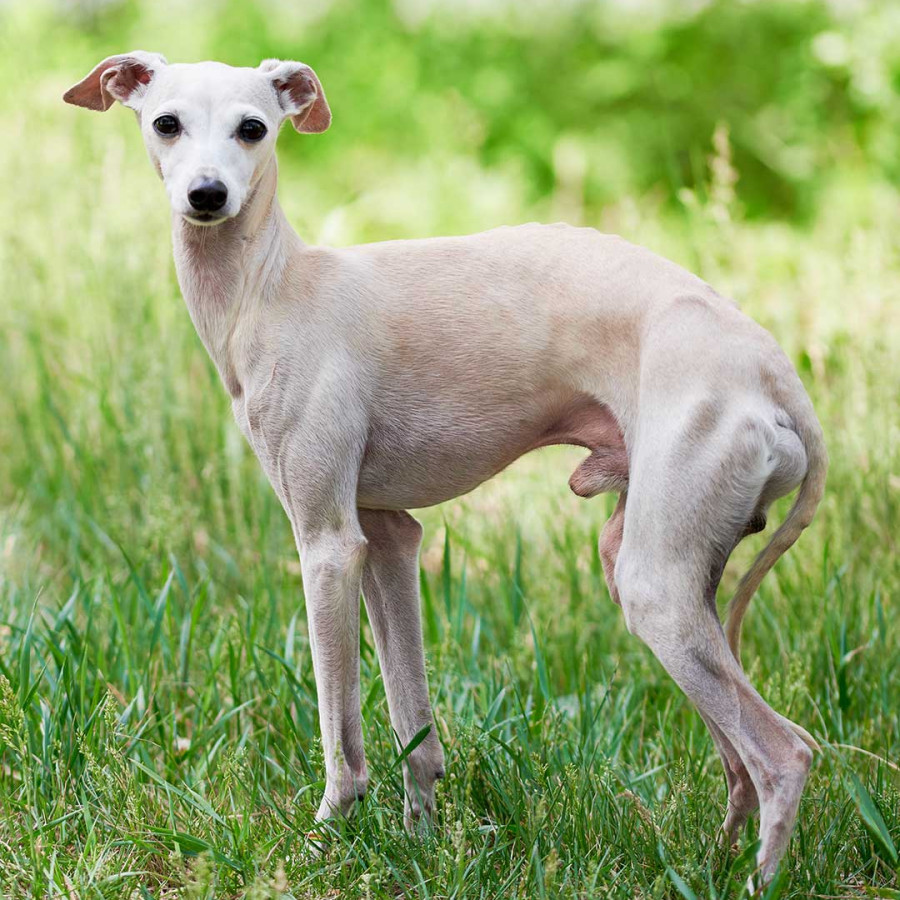
Italian Greyhound Dog Breed
The Italian Greyhound is a small, slender Sighthound breed with a sleek coat and a gentle, affectionate nature.
The Italian Greyhound is a small, slender Sighthound breed with a sleek coat and a gentle, affectionate nature.
Italian Greyhounds usually bond closely with one person in the household and prefer calm homes over families with young children.
These delicate dogs feel the cold easily, and their fine bones are prone to fractures.
Italian Greyhounds are gentle, sensitive dogs who become especially close to one member of the family. They’ll hold back with strangers at first, and warm up once they feel secure. Underneath their delicate appearance is a genuine athlete. Many owners are surprised by the speed of this small Sighthound in open spaces.
Despite their energetic side, Italian Greyhounds can't go for too long without a rest. You'll often find them relaxing in the warmest spot of the house or seeking a lap to curl up on.
This breed can be sensitive to changes in routine and tone, so a calm, patient approach suits them well. They also make affectionate companions with gentle handling, consistent socialisation and a secure environment.
Disclaimer
While these breed traits give a general idea of what to expect from a specific type of dog, it's important to remember that every dog is unique. Just like people, each dog comes with their own distinct personality, quirks, and characteristics!
Italian Greyhounds are good companions in calm households. They're not suited to homes with very young or boisterous children. This is due to their fine bone structure making them prone to fractures. Rough handling or accidental knocks can cause serious injury.
They're best around older children who understand how to be gentle around a small, delicate dog. This breed often forms a particularly close bond with one person rather than spreading their affection across the family. Quiet, gentle environments with careful supervision tend to suit this breed well.
Italian Greyhounds need accessible, careful homes to reduce the risk of fractures. Jumping down from furniture and surfaces awkwardly is a common cause of injury in this breed.
A secure garden allows safe off-lead time. Fences and access need to be escape-proof given their speed and prey drive.
Owners should provide warmth in colder weather through coats or jumpers to cover their thin coats. Early socialisation and habituation help Italian Greyhounds grow into confident adult dogs. They thrive in quieter households with time for gentle exercise and plenty of close companionship.
An affectionate dog, the Italian Greyhound will seek affection from one particular person in the whole household. Many enjoy close physical contact and will turn to a warm lap, for comfort and warmth given their thin coat.
This strong attachment means Italian Greyhounds don't cope well on their own for long periods. Home alone time should be built gradually, alongside proper socialisation and habituation.
This will help them learn to settle when their owners are out. They suit owners who can offer plenty of company and happy to have a dog as a shadow.
They may be small, but playful in short bursts. They show great speed and agility before settling down. Coming from the sighthound group of dogs, chasing games come naturally to the Italian Greyhound.
Physical activity should be managed carefully given the breed's fragile bones. Rough play, jumping from furniture and playing with larger dogs can risk a fracture, so supervised play is important.
Many Italian Greyhounds enjoy toys they can carry around or gentle games of chase in a secure, soft-surfaced space. Play and rest is usually balanced, since they have modest stamina compared with their energetic bursts.
Italian Greyhounds can be vocal when alerting their owners to strange sounds or visitors. Their sensitive, watchful nature means they often notice environmental changes quickly.
Some Italian Greyhounds bark when anxious or left alone, owing to the breed's separation-related issues.
Consistent, gentle training and gradual home alone time from puppyhood helps manage this. Secure and well socialised Italian tend to settle more easily and bark less overall.
With their close bond to their person, the Italian Greyhound struggles on their own without preparation. They need proper socialisation and habituation from puppyhood to prevent this becoming a problem. Gradual training to build independence will help them cope better.
They have a sensitive nature and may be nervous or reactive, especially if they're not exposed to different people, places and experiences while young. Given their sighthound instincts, they have a strong prey drive and will be tempted to chase small animals.
If you're finding these behaviours tricky to manage, call our free behaviour helpline for advice and guidance.
Italian Greyhounds need around 45 minutes to an hour of exercise each day. This can be made up of walks with some safe off-lead time to let them run. Originally bred to hunt hare and rabbit by sight, they exhibit bursts of speed. They may look energetic, but their stamina is generally modest. Exercise should be introduced gradually in puppies and young dogs while their bones are still developing. They are particularly vulnerable to injury during this period. Running should always take place in secure, enclosed areas, given their desire to catch small animals at speed.
Their thin coat and low body fat offer little protection from the cold, so a well-fitted coat is worth considering. Many Italian Greyhounds don't like to walk in the rain, so owners may need to adapt in wet weather. Gentle, regular exercise helps maintain a healthy weight and supports good muscle tone around their delicate joints.
Italian Greyhounds are intelligent with a sensitive nature, so gentle, patient training works best for them. They respond well to reward-based methods using treats and praise.
Short, positive sessions work better than repetitive training. Housetraining can take extra patience with this breed, particularly in cold or wet weather. This is due to Italian Greyhounds being reluctant to go outside when it’s uncomfortable.
Early socialisation and habituation to a wide range of experiences help prevent nervousness developing later in life. Harsh handling or a raised voice can set training back, so calm consistency works best. If you're struggling, call our free behaviour helpline for tailored advice and guidance.
Italian Greyhounds have a low-maintenance, short, fine coat. They only need a weekly brush with a soft mitt to remove loose hair and keep the skin healthy.
Their teeth need special attention, since their small jaws and crowded teeth make them prone to dental disease. Regular tooth brushing and vet check-ups help catch problems early.
Nail trimming should be done regularly, and their thin skin means care is needed to avoid nicks or scrapes during grooming.
Italian Greyhounds have a good lifespan of between 13 and 15 years. Like all breeds, they can be predisposed to certain health conditions. Taking out insurance helps cover the cost of treatment throughout their life.
Common conditions in this breed include:
Leg fractures: their fine bone structure makes them particularly prone to breaks, often from jumping off furniture or awkward landings. This is one of the most common reasons Italian Greyhounds need veterinary treatment. Prevention through managed furniture access is important.
Periodontal disease: their small mouths and crowded teeth make them prone to plaque build-up and gum disease.
Luxating patella: the kneecap can slip out of place, causing lameness or an abnormal gait.
Progressive retinal atrophy: an inherited eye condition causing gradual vision loss, which can eventually lead to blindness. A DNA test is available for breeding dogs.
Epilepsy: some Italian Greyhounds develop seizures, which usually need to be managed with ongoing medication.
Regular vet check-ups, a balanced diet, careful management of furniture access and maintaining a healthy weight all help support an Italian Greyhound's wellbeing throughout their life.
I need about an hour of exercise a day, including time off-lead to really stretch my legs. Please keep me secure, as I'm quick and love to chase.
I enjoy gentle training games and sniffing on my walks. I'm sensitive, so calm, positive attention helps me feel settled and happy.
I respond best to gentle, reward-based training and a calm voice. Please handle me carefully, as my bones are delicate and can be easily startled.
Purchase or adoption cost: Buying an Italian Greyhound puppy from a responsible breeder typically costs between £1,200 and £2,500. If you're considering adoption, rehoming fees are usually around £150 to £300 and often include initial health checks and vaccinations. We'd always encourage you to explore dogs available through Woodgreen or other reputable rescues first.
Start-up costs: Before bringing your dog home, budget for essentials such as a bed, crate, harness, coats for cold weather and initial vet costs, including vaccinations and microchipping. This typically comes to around £350 to £550, reflecting the coats and ramps this breed often needs.
Ongoing monthly costs:
Food: £20 to £30 per month, reflecting their small size.
Insurance: £25 to £45 per month, with premiums often higher given the breed's fracture risk.
Grooming: minimal professional grooming is needed, given their short coat.
Routine vet care: flea and worming treatments, boosters, dental checks and check-ups average around £180 to £250 per year, reflecting their dental and orthopaedic needs.
Other costs: ramps, pet stairs and coats are worth budgeting for.
Total estimated monthly cost: £90 to £140 per month, depending on your dog's needs and the products and services you choose.
Take our quiz to discover which breed is right for you
Take our quizPlease call our pet support line on 0300 303 9333 (7 days a week – 8.30am - 4pm)