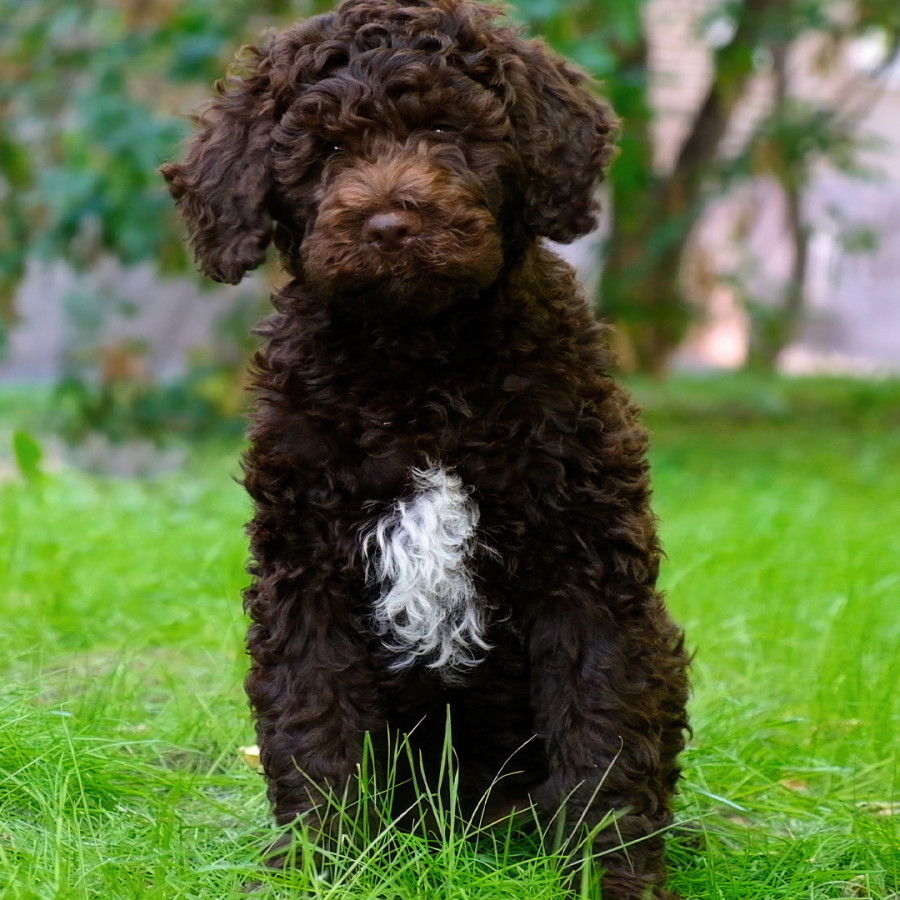
Lagotto Romagnolo Dog Breed
The Lagotto Romagnolo (also known as the Italian Water Dog) is an intelligent, affectionate breed best known as the world's only dedicated truffle-hunting breed.
The Lagotto Romagnolo (also known as the Italian Water Dog) is an intelligent, affectionate breed best known as the world's only dedicated truffle-hunting breed.
The Lagotto Romagnolo bond closely with their families and need plenty of physical and mental exercise to stay content. Their curly coat needs regular professional grooming, and they can be prone to separation-related issues if left alone too often.
Lagotto Romagnolos are lively dogs with strong working instincts behind their cheerful exterior. They're deeply connected to their families and want to be involved in everything.
Their famous nose drives much of their behaviour – they love to sniff, dig and search, and will happily turn your garden upside down if they're not given an effective way to use their natural instincts.
They can be wary of strangers at first and will alert their owners if anything unusual is happening outside. Some Lagottos have a more sensitive nature, especially to certain noises or social activity. Building their confidence in a calm manner from an early age is important for this breed.
Disclaimer
While these breed traits give a general idea of what to expect from a specific type of dog, it's important to remember that every dog is unique. Just like people, each dog comes with their own distinct personality, quirks, and characteristics!
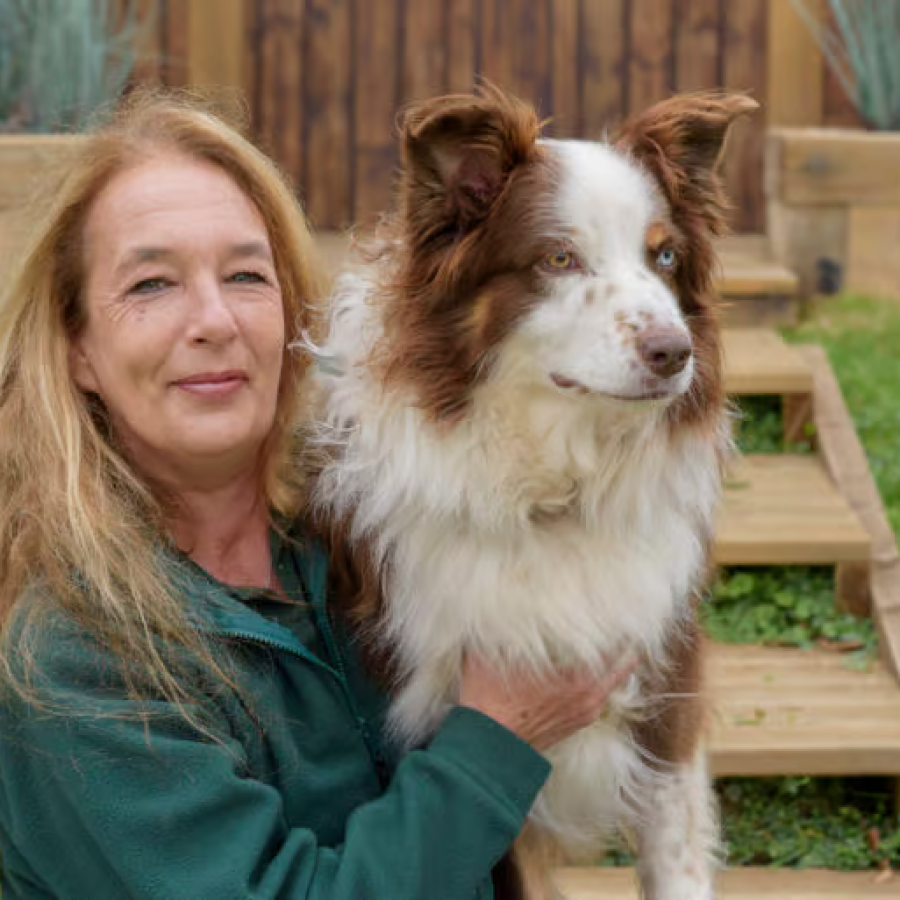
Lagotto Romagnolos make excellent family dogs. They're generally patient and gentle with children and typically bond well with everyone.
As with any breed, interactions between dogs and young children should always be supervised. Children should be taught not to bother the dog while eating or resting.
Their sensitive nature makes them best suited to calm, predictable households.
Lagotto Romagnolos thrive in the company of their owners who can be around for much of the day, as they can struggle for long periods alone.
A secure garden is a real benefit, both for exercise and as an assigned space to satisfy their natural urge to dig.
They can adapt to apartment living if their exercise and mental stimulation needs are consistently met. This does require real commitment from their owner.
They can get along with other dogs when introduced properly. If you’re unsure whether this breed suits your home and lifestyle, try the Discover the Right Dog for Me quiz to explore your options.
Lagotto Romagnolos are people-oriented dogs. They form close bonds with their owners and want to be near them whenever possible, whether that's following them around the house or relaxing with them.
While this closeness is all part of their charm, they can struggle on their own. Building up alone time gradually from puppyhood is important for this breed.
Once bonded, they are loving, loyal companions who give a great deal of affection in return.
Lagotto Romagnolos are playful, energetic dogs with a strong desire to use their nose. They enjoy scent-based games, retrieving and puzzle activities that tap into their working background as truffle hunters and water retrievers.
Given their history as water dogs, many enjoy swimming. Their intelligence means they learn new games quickly.
Without enough mental stimulation, the Lagotto can become a determined digger, so giving them structured activities to use their energy is better than leaving them to find their own entertainment.
Lagotto Romagnolos aren't known to be yappy dogs, but they will bark to let their owners know about strangers or unusual activity nearby.
Their sharp hearing means they tend to notice things well before their owners do.
Some can be prone to noise sensitivity, including fear of fireworks or thunderstorms, so they may bark more in certain situations.
With early socialisation, habituation and consistent training, barking can usually be kept to a minimum.
Any breed of dog can develop behavioural issues if their needs are not met.
The Lagotto Romagnolo has a strong urge to dig, rooted in their truffle-hunting heritage, and without a suitable way to satisfy this need, they may dig up gardens, furniture or carpets.
They can also be more prone than other breeds to separation-related issues and to noise sensitivity or wariness around unfamiliar people and situations.
Providing a designated digging area, plenty of scent-based activities and gradual, positive socialisation from an early age all help to prevent these tendencies becoming established problems.
Originally bred as a water retriever and later as a truffle hunter, the Lagotto Romagnolo is an active working breed.
They need around two hours of exercise a day, split into a shorter morning walk and a longer, more exciting session that includes scent work, play or training.
Many Lagottos enjoy swimming given their background and like all dogs, they benefit from regular access to green space for exploring and sniffing.
Puppies should not be over-exercised while their joints are still developing.
Lagotto Romagnolos are intelligent and generally respond well to training as long as it's calm and gentle.
Positive, reward-based methods bring out the best in this breed. Training and socialisation should begin as early as possible – without it, their natural wariness of strangers can develop into fear, and unsupervised digging or destructive behaviour can become troublesome.
Training should be ongoing rather than a task just in puppyhood; many Lagottos benefit from continued confidence-building work well into adulthood.
Five common behavioural issues to watch out for:
• Digging, driven by their truffle-hunting instincts.
• Separation-related distress if alone time isn’t built up gradually.
• Wariness or fearfulness around unfamiliar people if socialisation is lacking.
• Noise sensitivity, particularly around fireworks and thunderstorms.
• Excessive barking when alerting to strangers or unusual activity.
The Lagotto Romagnolo has a dense, curly, woolly coat that does not shed but mats easily if left unattended.
Regular brushing at home, a few times a week, helps to keep tangles under control, but professional grooming every six to eight weeks is essential to keep the coat in good condition.
The face, whiskers and beard often need extra attention as they can become messy after eating.
A puppy’s soft coat takes two to three years to develop its full adult curl, and getting them comfortable with grooming and handling early makes the process far easier as they grow.
A healthy lifestyle, balanced nutrition and regular vet check-ups all support a long, fulfilling life for this breed.
Responsible breeders carry out health tests on their breeding dogs – always ask for evidence before taking on a puppy. Conditions this breed can be predisposed to include:
• Hip and elbow dysplasia – abnormal joint development that can lead to pain and arthritis over time.
• Juvenile epilepsy – a condition affecting young dogs that can cause seizures. A DNA test is available to check whether a dog carries the relevant gene.
• Lagotto storage disease – a hereditary condition that can cause neurological symptoms. DNA testing is recommended for breeding dogs.
• Cerebellar abiotrophy – an inherited condition affecting the brain that can cause neurological symptoms, including loss of coordination.
• Noise sensitivity and anxiety-related traits – not a physical health condition, but a well-documented tendency in this breed that benefits from early, structured socialisation.
I need around two hours of exercise a day, including time to use my nose. Without enough activity, I can get bored and may start digging up your garden instead!
I love using my nose, so scent games and puzzle feeders are perfect for me. Give me a digging spot of my own – it satisfies an urge I simply can’t ignore.
I’m clever and eager to learn, but I can be sensitive too. Please be patient and consistent and help me feel confident around new people and places from an early age.
Buying a Lagotto Romagnolo puppy from a responsible breeder in the UK costs between £1,400 and £3,000, reflecting the breed’s rarity.
Rehoming from a rescue is usually around £150–£250. We’d always encourage you to explore dogs available through Woodgreen or other reputable rescues first.
Start-up costs for essentials come to around £200–£300.
Ongoing monthly costs include food (£40–£50), insurance (£25–£55), and professional grooming every six to eight weeks (£35–£60 per session – a notable ongoing cost for this breed).
Routine vet care averages £150–£250 per year. Total estimated monthly cost: £100–£160.
Take our quiz to discover which breed is right for you
Take our quizPlease call our pet support line on 0300 303 9333 (7 days a week – 8.30am - 4pm)