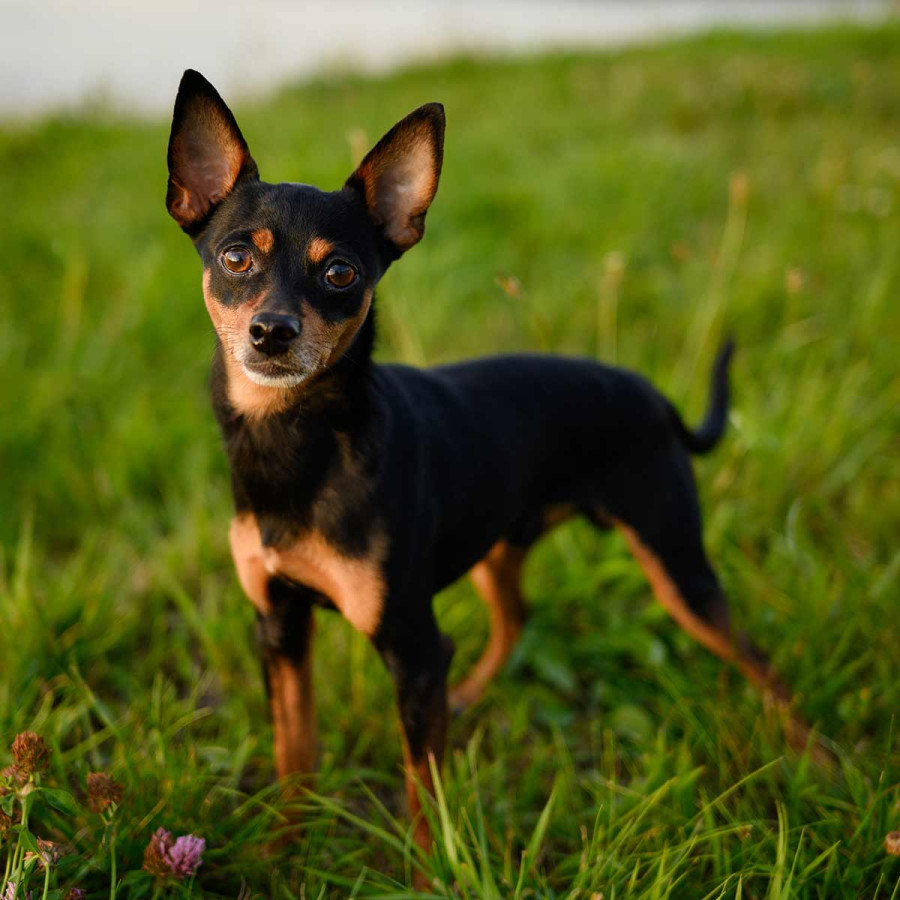
Miniature Pinscher Dog Breed
Miniature Pinschers are little dogs with big personalities and even bigger hearts!
Miniature Pinschers are little dogs with big personalities and even bigger hearts!
Miniature Pinschers are usually just under a foot tall and weigh between three or four kilos. Despite their small stature, they have big personalities!
Originally bred to catch rats in German barns and stables, this bold and energetic breed is often mistaken for a mini-Doberman.
Miniature Pinschers make great little companions if you're ready to guide their boundless energy kindly but firmly.
Miniature Pinschers are lively, alert and very confident. They’re fearless and think they're much bigger than they actually are, which can be amusing but can also be hard work! Their high prey drive means they’re likely to chase anything that moves, and their determined personality can make it difficult to convince them not to! So early socialisation and careful management around other animals is key.
It’s also important to ensure your Miniature Pinscher mixes with well-socialised dogs, who won’t be rubbed the wrong way by their confident and assertive personality.
These clever little dogs are curious about almost everything and will likely follow you around the house, hoping to be part of whatever you're up to. They’ll be your bright, bouncy little shadow!
Disclaimer
While these breed traits give a general idea of what to expect from a specific type of dog, it's important to remember that every dog is unique. Just like people, each dog comes with their own distinct personality, quirks, and characteristics!
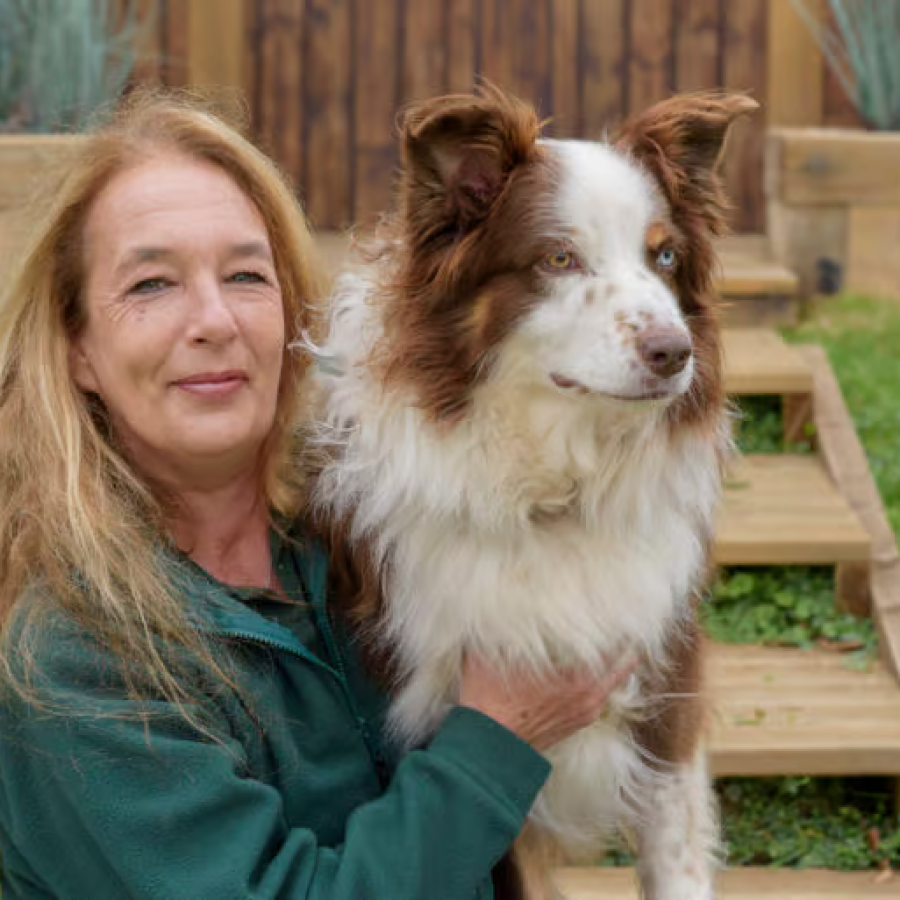
Miniature Pinschers can make good family dogs, especially for families with older children who know how to be gentle with small dogs.
They’re less suited to families with very young children, as their small, delicate bodies can be easily injured during rough play and, like any dog, they may snap if they feel overwhelmed or are handled incorrectly.
Miniature Pinschers are best for families who can provide them with lots of activity and steady training. They do well with owners who appreciate their quirky personalities and can channel their energy in positive ways.
These dogs can struggle with separation-related issues (like anxiety) and don't cope well if left alone for long periods. So, if everyone in your home is out at work or school all day, this might not be the breed for you.
Miniature Pinschers are adaptable and can live happily in flats or houses. They don't need lots of space, provided they have owners who can meet their exercise and mental stimulation needs.
Gardens or outdoor spaces need to be properly fenced as Miniature Pinschers are excellent jumpers and can squeeze through surprisingly small gaps.
These dogs feel the cold easily because of their short coats and low body fat, so be sure to give them coats for winter walks and a jumper for indoors during colder months.
Miniature Pinschers aren’t suited to long hours spent alone, they do best in homes where someone is around for most of the day.
Yes! Despite their feisty reputation, Miniature Pinschers are very loving and enjoy snuggling up with their favourite people.
Don't be surprised if your Miniature Pinscher tries burrowing under blankets or nestling into your lap whenever they can, they like to be as warm and cosy as possible!
Miniature Pinschers form strong bonds with their families, sometimes having one or two favourite family members who they bond more closely to.
Miniature Pinschers are very playful! Their high energy levels mean they’re almost always ready to play and particularly enjoy chasing toys, playing tug, or "attacking" soft toys!
However, their play style can be quite intense and they don't always know when to stop! You'll need to help them learn to settle and calm down, as they can be easily over-excited.
Miniature Pinschers can be quite vocal and make excellent watchdogs. They’re very observant and won't hesitate to sound the alarm when visitors arrive or if they notice something isn’t quite right.
Their bark can be surprisingly loud for such a small dog! Some Miniature Pinschers are more vocal than others, with some chattering away throughout the day.
They're not usually nuisance barkers if their needs are met. With proper training and mental stimulation, you can prevent them feeling the need to bark excessively.
Miniature Pinschers can struggle with separation-related problems and don't like being left alone for long periods. A bored, lonely Miniature Pinscher can become destructive and might channel their energy into chewing furniture or excessive barking.
Due to their rat-hunting roots, they have a strong prey drive and will chase small animals, cats, and anything that moves quickly. This can make walking them tricky and means they may never be safe off-lead in unfenced areas.
Miniature Pinschers are clever and determined, often finding ways to squeeze through gaps in fences or dart through open doors. Secure boundaries are a must to keep these little escape artists where they’re meant to be.
Some Miniature Pinschers can be possessive and may show guarding behaviours around their toys or food. Early training can help to manage this so it doesn’t become a nuisance.
Miniature Pinschers need around 30-60 minutes of exercise daily. This can be split into two or three shorter walks and play sessions.
Despite their small size, they're athletic little dogs who enjoy more than just a gentle stroll. They love exploring on walks, though their strong prey drive means you'll need to be careful about where they're allowed off-lead.
A mental work-out is just as important as physical exercise for this clever breed. Puzzle toys, scent work, and short training sessions will keep their minds active and satisfied.
Some Miniature Pinschers excel at dog sports like agility and hoopers. You could also try tapping into their working roots by taking them to barn hunting events. These activities are brilliant for burning energy whilst strengthening your bond.
Although Miniature Pinschers are quick learners, their independent streak can make them difficult to motivate and fairly challenging to train.
They respond best to positive reinforcement using treats, toys, and praise. Keep training sessions short, fun, and varied to hold their attention.
They can be hard to house-train as their small size means they need frequent toilet trips, accidents can be easily missed and reinforce bad habits. Consistency and patience are key!
Early socialisation is essential. Proper exposure to different people, dogs, and situations can prevent them becoming overly suspicious or reactive.
Miniature Pinschers benefit greatly from puppy training classes where they can learn manners and build confidence in a controlled environment. Help from a trainer experienced with small, strong-willed breeds can also be invaluable.
Training a reliable recall is challenging due to their high prey drive, but is essential to master given their escape-artist tendencies and inclination to chasing after things.
Miniature Pinscher’s short, smooth coat only needs occasional brushing with a soft bristle brush to keep it shiny and remove loose hair.
Although they shed, their hairs are short and less noticeable than longer-coated breeds. A weekly brush will help reduce shedding around the home.
The Miniature Pinscher’s coat naturally stays quite clean, so bathing is only needed when they get visibly dirty.
Nail trimming is important for this breed, especially if they're not walking on hard surfaces regularly. Start nail trimming early on to help them get used to having their paws handled.
Don't forget dental care! Small breeds like Miniature Pinschers are prone to dental problems, so regular tooth brushing is essential.
Because of their thin coat and minimal body fat, Miniature Pinschers feel the cold intensely. A warm coat for winter walks is a must, not a luxury! You may also want to consider a jumper for indoors during colder months.
Miniature Pinschers are generally healthy, long-lived dogs with a lifespan of 12-16 years. However, like all breeds, they're prone to certain health conditions.
Taking out pet insurance will help cover costs if your Miniature Pinscher develops health problems or has an accident.
Common health conditions in Miniature Pinschers:
• Patellar luxation: This is one of the most common issues in Miniature Pinschers, where the kneecap dislocates from its normal position. You might notice your dog skipping or hopping on one leg. Mild cases can be managed with medication and rest, whilst severe cases may need surgery.
• Legg-Calvé-Perthes disease: This condition affects the hip joint when blood supply to the thigh bone decreases, causing the bone to deteriorate. It usually effects young dogs and causes lameness and pain. Surgery is usually needed, but most dogs recover well.
• Progressive Retinal Atrophy (PRA): This inherited eye condition causes gradual sight loss and can lead to blindness. Reputable breeders should test their breeding dogs for this condition.
• Epilepsy: Miniature Pinschers can be prone to seizures. It’s important to seek vet advice if your dog has a seizure, even if it's a short one. Epilepsy can usually be managed with medication.
• Heart conditions: Some Miniature Pinschers develop mitral valve disease as they age, which can lead to heart failure if untreated. Regular vet check-ups can help to catch early signs of any heart conditions.
You can help your Miniature Pinscher stay healthy with regular vet visits, a good-quality diet, appropriate exercise, and helping them to maintain a healthy weight.
Don’t underestimate my energy levels! I need walks that let me explore and sniff. I also love short bursts of play and chasing toys
I need puzzle toys, training games, and plenty of variety to keep my brain active. Short, fun training sessions keep things interesting for me and make me keen to learn.
I need patient, consistent training from puppyhood. I can be strong-willed, but treats and praise can win me round to your way of thinking! Early socialisation is key to me learning to be calm around other dogs.
A Miniature Pinscher puppy from a reputable breeder will typically cost between £600 to £1,200, though prices can vary based on pedigree, health testing, and location.
Make sure any breeder you consider has carried out appropriate health tests, including checks for patellar luxation and eye conditions. Be wary of puppies advertised at unusually low prices or those claiming "rare" colours.
Initial costs for equipment — including a collar, lead, bed, toys, crate, and bowls — will be around £150 to £300.
Ongoing costs include:
• High-quality food: £20-30 per month
• Pet insurance: £20-40 per month depending on cover
• Regular vet check-ups and vaccinations
• Dental care
• Potential costs for training classes
• Coats and jumpers for cold weather
Miniature Pinschers are small dogs, so food costs are relatively low. However, it's important to give them high-quality food to keep them healthy.
Take our quiz to discover which breed is right for you
Take our quizPlease call our pet support line on 0300 303 9333 (7 days a week – 8.30am - 4pm)