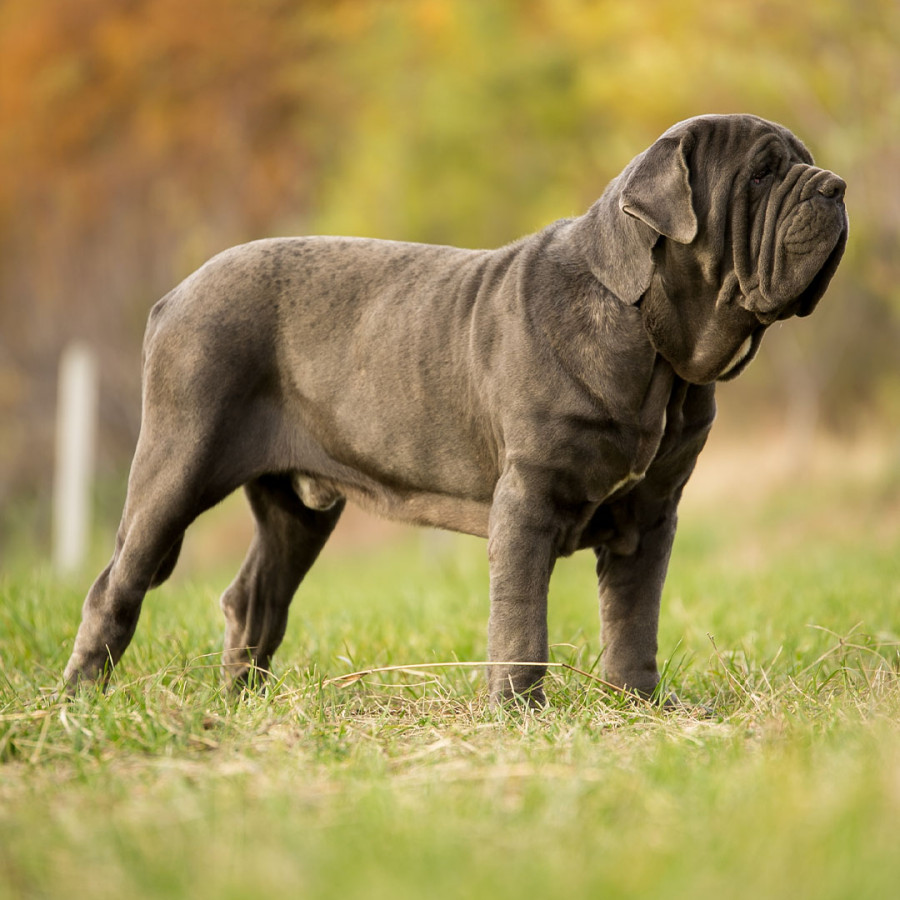
Neapolitan Mastiff Dog Breed
These easygoing gentle giants can make wonderful companions in the right home.
These easygoing gentle giants can make wonderful companions in the right home.
The Neapolitan Mastiff is a gentle giant with a lifespan of eight to ten years. Their loose, wrinkled skin, gives them a distinctive look that’s hard not to love!
This breed is known to be incredibly loyal to their family and easygoing at home, but suspicious of strangers.
Because of their size, drool and health needs, they’re best suited to experienced owners.
Living with a Neapolitan Mastiff, or Neo, can feel like sharing your home with a gentle, slow-moving giant. It’s fair to say they’re rarely in a hurry. You should expect plenty of drool and some loud snoring too!
Most of their day is spent relaxing near their human. Don’t be surprised to regularly find a heavy head on your lap or across your feet!
Neos were bred in southern Italy to guard homes and land. And that watchful nature is still part of who they are today. They're usually calm and loving with their family, but more reserved with people they don't know. They'll often observe quietly before deciding how they feel about them!
Disclaimer
While these breed traits give a general idea of what to expect from a specific type of dog, it's important to remember that every dog is unique. Just like people, each dog comes with their own distinct personality, quirks, and characteristics!
Neapolitan Mastiffs can make devoted family dogs when all their needs are being met.
They're usually gentle and patient with children they know well. But their size and weight mean they can easily knock over a small child by accident. So they’re better suited to families with older children.
It’s important to supervise your Neo around children. You should also make sure your four-legged-friend has a quiet space where they can go for a rest without being disturbed.
Their guarding instincts mean they may be suspicious of children’s friends who visit the home. Careful introductions and calm routines can help them feel settled.
With early socialisation, many Neos can live alongside other pets, although some are less tolerant of dogs of the same sex. Socialisation is teaching a puppy to interact in an appropriate way with people and other dogs.
Neapolitan Mastiffs need a home with plenty of space, both indoors and outdoors. Their large bodies and wagging tails can be hazardous – easily knocking items off low tables!
As a dog known to drool a lot, you can expect this to end up on walls, floors and furniture. A home with few stairs is ideal, especially for puppies. Climbing the steps can strain developing joints.
The perfect home for a Neo will have a secure garden with tall, strong fencing to allow space to potter around safely. They also need a cool, shady spot, as they struggle in hot weather.
Neos are a good match for calm households with experienced owners who are around for most of the day.
It also helps to have a large car and plenty of towels for drool cleanups! Make sure you also budget for food and potential vet bills.
Yes, Neapolitan Mastiffs are often very affectionate with their family. They can form close bonds and like to keep close, often following you room to room at a slow, steady pace.
Neos show their love in different ways. Sometimes, they might lean their full weight against people they trust. Although it’s done with love, it can easily knock you off balance!
Their affection is usually reserved for the people they know. With strangers, they can be quite aloof and may take a little time to warm to them. This is a perfectly normal part of their guarding background.
When it comes to introducing your Neo to new people, let them go at their own pace rather than forcing a greeting. This helps them stay relaxed during the interaction.
If you’re looking for a very sociable breed, the Neo probably isn’t the one for you!
Neapolitan Mastiffs are fairly playful, especially as puppies and young dogs. They typically enjoy short bursts of play, like a gentle game of tug or pushing a sturdy toy around the garden. Then it’s usually time to settle down for a long rest!
Most adult Neos prefer the quieter life. That means calm activities over high-energy games. Short, low-impact play suits them best. Jumping, twisting and rough play can strain their large frames and joints.
Scent games, such as hunting for treats in the garden, keep them busy without too much physical effort. Avoid energetic play in hot weather, as their size and heavy build mean they can overheat quickly.
Neapolitan Mastiffs aren’t usually big barkers. They typically watch quietly and save their deep, booming bark for when it’s really needed. You’re much more likely to hear it when an unfamiliar person approaches the home.
Their bark is loud enough to startle visitors or neighbours. You can minimise this by training them to respond more calmy when they hear the doorbell. Rewarding this quiet behaviour can help a lot too!
Neos can be noisy in other ways. Many will snore, snort and grumble while they rest.
Neapolitan Mastiffs were bred to guard. This means they can be protective of their home, people and belongings.
Without careful socialisation and habituation, the Neo can easily become wary or reactive towards visitors, unfamiliar dogs or new situations. Socialisation is teaching a puppy to interact in an appropriate way with people and other dogs. Habituation is teaching a puppy to ignore some people, other dogs, traffic, noises, livestock, etc.
Some Neos may also guard food, toys or resting spots. Their size means these behaviours can quickly become difficult to manage.
They can also experience separation-related issues if they're left alone for long periods. This can lead to destructive behaviour like chewing or restlessness. Building up their home-alone time gradually helps them feel secure.
If you're worried about your Neo's behaviour, call our free Pet Helpline for advice.
As a large and easygoing breed, Neos only have low to moderate exercise needs.
Most adults are happy with around one hour of gentle exercise a day, split into two or three shorter walks. Steady walks on soft ground are preferred over long runs.
Puppies will need extra care. Stick to short, gentle outings to help protect their growing joints. Long walks, jumping and stairs should be avoided until they're fully grown, which can take up to two years.
Neo’s don’t fair well in the heat. Make sure you walk them during cooler parts of the day, as they can overheat easily. Watch for signs of tiredness, including lagging behind or lying down, and let them rest whenever they need to.
Neapolitan Mastiffs are fairly hard to train. Whilst they’re intelligent, they can also be hard to motivate, often taking time to think before responding.
Calm, patient, reward-based training is the most effective for this breed. Harsh methods can damage their trust and make them less willing to engage.
Like all puppies, Neos need early socialisation so they learn to cope with people, dogs and new places. Habituation is just as important. This will help them get used to everyday sights and sounds, such as traffic and household noise. This work is especially important because of their guarding background, and it should carry on throughout their life.
Training shouldn’t stop at puppyhood. Many Neo dogs go through a challenging stage during adolescence, between around one and two years old. Common issues to watch for include pulling on the lead, wariness of visitors, and guarding food or toys. Reactivity towards other dogs and separation-related issues are also typical.
Neapolitan Mastiffs have a short, dense coat that’s pretty easy to care for. A weekly brush with a rubber mitt or soft bristle brush removes loose hair and keeps the coat healthy. They only shed a moderate amount all year.
Their skin folds need the most attention. Moisture, food and drool can collect in the wrinkles on their face and neck. This can lead to sore, infected skin, so wipe and dry the folds daily.
Keep a cloth handy to clean their mouth after meals and drinks. You should also check their eyes and ears weekly for redness or discharge, and trim their nails regularly.
Starting these routines when they're young will help them learn to accept handling early on, which is important for such a large dog as they grow.
Neapolitan Mastiffs usually live for around 7–9 years. Regular vet check-ups, a balanced diet and keeping their weight in check can help reduce the risk of some health problems.
This breed is Category Three on The Royal Kennel Club's Breed Watch, meaning some dogs have features that can cause health problems. Common health conditions include:
• Eyelid problems: loose facial skin can cause the eyelids to roll inwards (entropion) or outwards (ectropion), leading to sore eyes that may need surgery.
• Cherry eye: this is when a gland in the third eyelid slips out, showing as a red lump in the corner of the eye.
• Skin fold dermatitis: this is inflammation or infection in the skin folds, caused by trapped moisture and bacteria.
• Hip and elbow dysplasia: these are conditions where the joints don't form properly, causing pain and arthritis. Ask breeders for hip and elbow scores for both parents.
• Bloat (gastric dilatation-volvulus): this is a life-threatening emergency where the stomach fills with gas and can twist. Contact your vet straight away if you see a swollen belly, retching without bringing anything up, or restlessness.
• Dilated cardiomyopathy: this is a heart condition where the heart muscle becomes weak and enlarged.
• Osteosarcoma: a form of bone cancer.
I’m not a fan of runs. Steady strolls are more my sort of thing! Around an hour a day, split into gentle walks, keeps me fit. Please keep me cool, as I overheat quickly.
I enjoy calm brain games, like sniffing out treats in the garden or working on a puzzle feeder. Short, gentle tasks keep me content without tiring out my big body.
I learn quickest with patient, reward-based training from a human I trust. Please teach me to walk nicely on the lead early, because I'll soon be stronger than you!
Purchase or adoption cost:
Buying a Neapolitan Mastiff puppy from a responsible breeder typically costs between £1,500 and £2,500.
If you're considering adoption, rehoming fees from a rescue are usually around £200–£400 and often include initial health checks and vaccinations. We'd always encourage you to explore dogs available through Woodgreen or other reputable rescues first.
Start-up costs:
Before bringing your Neo home, you'll need to budget for essentials like a bed, crate, lead, collar, food and water bowls. Initial vet costs include vaccinations and microchipping. This all typically comes to around £300–£500.
Ongoing monthly costs:
Food: £80–£150 per month. Giant breeds eat a lot!
Insurance: £70–£150 per month. Premiums are high due to size and health risks.
Grooming: £40–£60 per session, every 8–12 weeks. Most care can be done at home.
Routine vet care: Flea and worming treatments, annual boosters and check-ups average around £300–£500 per year. Weight-based doses cost more.
Other costs: Budget for training classes, skin wipes and possible eye surgery.
Total estimated monthly cost:
£190–£390 per month, depending on your dog's individual needs, your location, and the products and services you choose.
Take our quiz to discover which breed is right for you
Take our quizPlease call our pet support line on 0300 303 9333 (7 days a week – 8.30am - 4pm)