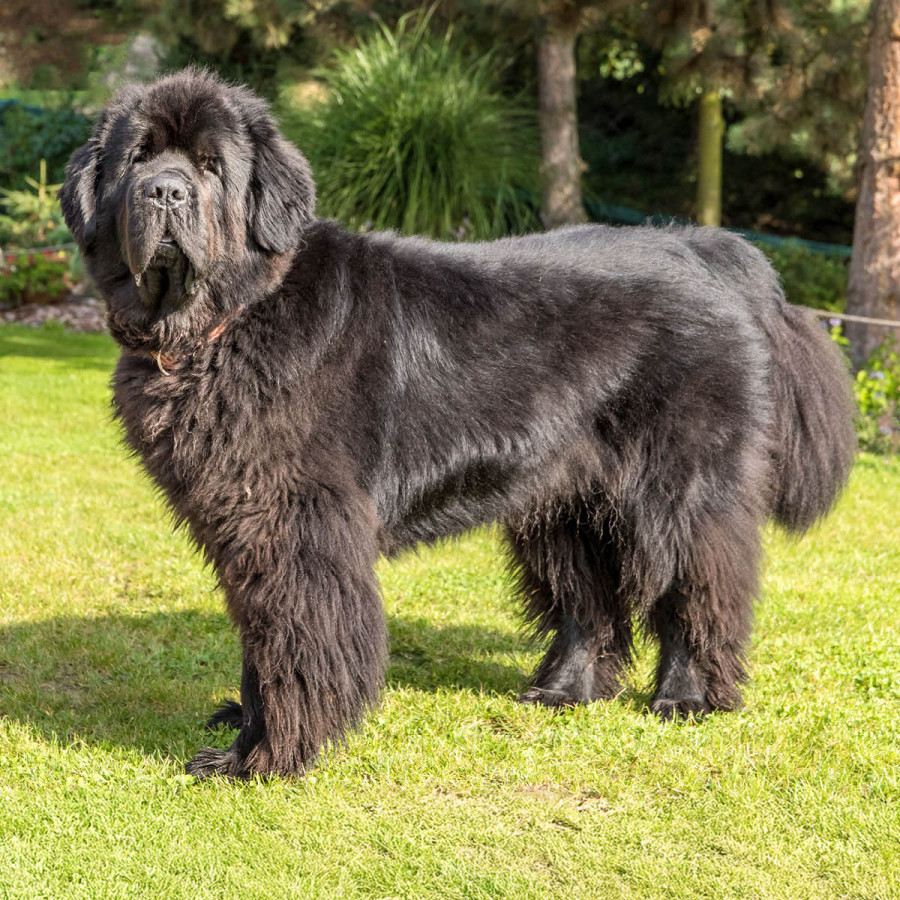
Newfoundland Dog Breed
The Newfoundland, also called the Newfie, is a gentle giant.
The Newfoundland, also called the Newfie, is a gentle giant.
Originally from Canada, they were bred to haul fishermen’s nets in, pull tackle carts and rescue drowning fishermen. This breed LOVES being in water, their webbed feet and double coat making them excellent swimmers. Newfie’s need plenty of space and someone who doesn’t mind cleaning up a considerable amount of drool!
Newfie’s are known to be friendly, patient, tolerant dogs that have a calm and gentle demeanour.
Whilst they make excellent watchdogs, a well-bred and socialised Newfie should be good with strangers.
All these traits have led them to be a popular choice for use as therapy dogs visiting care homes.
If you have the right environment then a Newfie can make a great companion. However, if you’re looking for a dog that can walk for miles and compete in high level dog sports, the Newfie may not be for you.
Disclaimer
While these breed traits give a general idea of what to expect from a specific type of dog, it's important to remember that every dog is unique. Just like people, each dog comes with their own distinct personality, quirks, and characteristics!
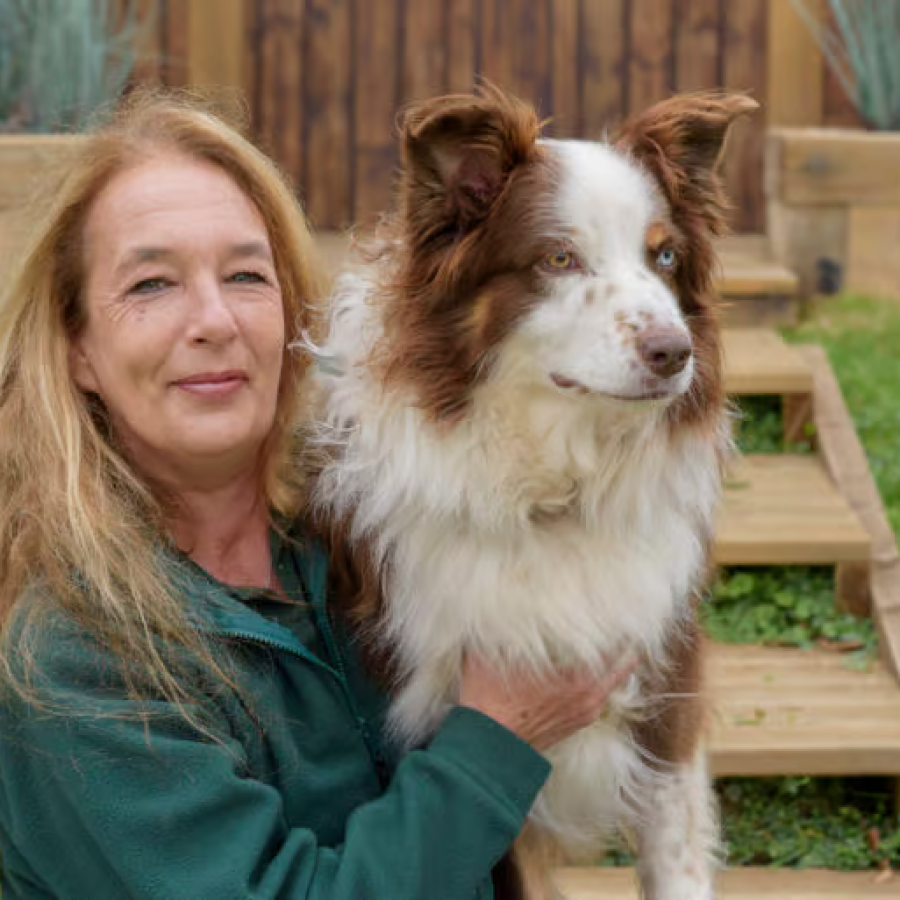
Newfies can make great family pets. Once they reach maturity, they are calm, affectionate, and loyal. If they have received the right level of socialisation, they can be a wonderful addition to your family. If you have very young/small children you must consider the size difference between your child and your dog. An adult Newfie can weigh more than 50kg, so can easily knock a child over or accidently hurt them if they stand on them. Their excessive drooling may be a drawback for some parents as it will undoubtedly come in to contact with toys and clothing.
Another thing to consider is their life expectancy, like all giant breeds, reaching double figures is never guaranteed and this can be hard for children to understand.
Being a giant breed, the Newfie obviously needs space. They take up a lot of room, especially when they are stretched out on the sofa. They’re also prone to overheating, so having access to an enclosed garden is important during cooler months when we might have the heating on.
Training your Newfie to walk on a loose lead should be started from a very young age as they are incredibly strong once fully grown.
A home must have enough time to dedicate to daily grooming and exercise. Remember, Newfies LOVE to swim, but that means bringing home a very large wet dog....
With the right socialisation Newfies can live with other animals including other dogs.
Your financial situation should be carefully considered as a Newfie’s food, and veterinary bills will be much higher than smaller breeds.
Yes! This calm, gentle giant is affectionate. They’re snuggly, which can be a problem for such a big dog, they’re not really aware they aren’t lap-sized!
Their calmness means that they can make lovely, quiet companions.
They tend to overheat owing to their size and thick coats, so don’t be offended if they take themself away from you to cool down on a cold floor. A potential downside to their affectionate nature is their drooling. Owing to their loose lips and jowls Newfies drool A LOT!
It is recommended that small towels are always close to hand if you have a Newfie.
Newfies aren’t as playful as some breeds but they still enjoy playtime, especially as youngsters.
Their origins make them good retrievers, especially from water. Like all dogs they also like to use their nose to find hidden toys or treats.
If you’re looking for a breed that will play for hours, then the Newfie might not be for you. On the other hand, if you want a dog that’s happy with short and playful interactions, then you’ll be delighted with a Newfie.
Whilst Newfies will alert you to visitors to your home or potential intruders, they’re not known for excessive barking.
Like all dogs, they may bark if they feel frustrated or stressed due to their needs not being met.
Being such a large breed, their bark is deep and loud and may make some people jump when they first hear it.
Any breed can develop behavioural issues if their needs are not met. It’s essential that your Newfie receives adequate training as well as daily mental and physical stimulation to keep any potential issues to a minimum.
Things to consider when living with a Newfie are as follows:
• If they’re not trained to walk on a loose lead then providing them with their daily exercise will become a chore that will involve you being dragged down the road. Their tendency to overheat means they’re prone to digging under shrubs or trees to make a cool spot to lay in. Keen gardeners beware!
• Like all youngsters, Newfies can be quite boisterous until they reach maturity. Teaching them to keep all four feet on the floor is crucial, as jumping up is likely to result in someone being knocked over.
• Newfies were bred to use their mouth to hold and retrieve items. They can sometimes be mouthy in play and it’s not uncommon for them to gently take your hand or wrist in their mouth, like they would if they were rescuing you from water. Unfamiliar people may find this concerning, so be sure to carry a toy for them to hold in certain situations.
• Remember, Newfies are a giant breed. This means that most kitchen counters or tables are at head height, stealing food is a common issue which can be annoying for owners and potentially dangerous for the dog.
Newfies don’t require long hikes, but they do need regular daily exercise to maintain their physical fitness and prevent them becoming overweight.
Care should be taken when exercising Newfies before they have reached physical maturity. Like all giant breeds, their bones, joints and growth plates can take 18 months to 2 years to fully form. Youngsters should be given gentle exercise of around 15 minutes three times a day.
An adult Newfie requires two 30 minute walks a day. They aren’t a breed that races around off-lead, but they do enjoy the opportunity to stretch their legs at least once a day.
What Newfies really love is swimming and this provides a great low impact form of exercise. Be warned, if your Newfie is off-lead and they smell water, they may well make a beeline for it!
A note of caution, owing to their bulk and thick coat, Newfies can overheat very quickly not just in hot weather but warm weather too.
Another consideration around exercise is that, like all giant breeds, Newfies are prone to bloat. Exercise before and after eating can increase the risk of bloating.
Newfies are defined as a working breed, so they’re keen to learn new things. Early training is vital for this gentle giant because at even 6 months of age they’re incredibly strong.
It’s essential to start socialisation and habituation training as soon as you get your puppy home, so that your Newfie can cope with the sights and sounds they will be exposed to in everyday life.
Like all youngsters, they will be more excitable and boisterous throughout puppyhood and adolescence. Stay on top of their training and you will be rewarded with a calm, friendly, loyal friend.
Along with socalisation and habituation training, teaching your Newfie to walk on a loose lead is an essential life skill. Their size and strength could lead to them pulling you over if they get the sight or scent of something they want to get close to.
This breed was created to retrieve items, especially from water, so providing an outlet for this natural behaviour will help them feel emotionally fulfilled.
Newfies have a stunning, dense double coat. The undercoat is thick and woolly, the topcoat is heavy and coarse and water repellent. Both elements are required to keep them warm when doing the water work they were bred for.
They’re moderate to heavy shedders, so daily brushing is advised, with a more thorough groom once a week. You’ll need a slicker brush for the topcoat and a rake for the undercoat. Pay close attention to the hair on their chests, the back of their legs, and around their ears as these areas are prone to matting.
If your Newfie has access to water and/or you have the facilities to bathe your dog at home, purchasing a blaster to help dry their coats, and remove dead undercoat more easily, is advised.
Regular grooming sessions give you the opportunity to check your dog for lumps, cuts, parasites or small mats that you might otherwise miss.
Taking care of your Newfies coat will take time and dedication and it’s something that can’t be skipped.
As with all pedigree breeds, it’s important to select a breeder that carries out all the relevant health tests on their breeding stock.
Providing your Newfie with a quality diet, not allowing them to become overweight and giving them regular exercise will help keep them in tip-top form.
Newfies can be affected by a number of health issues, including:
• Hip dysplasia – malformed ball and/or sockets that can cause arthritis and pain.
• Elbow dysplasia – malformed joint that can cause arthritis and pain.
• Osteochondritis dissecans – abnormal maturation of Cartlidge causing painful joints.
• Panosteitis – inflammatory bone disease during growth.
• Cystinuria – Kidney defect
• Osteosarcoma – bone cancer
• Hypothyroidism – reduced production and release of hormones into the blood stream.
Owing to their size and weight Newfies are also prone to tearing their cruciate ligaments, these are the ligaments that support the knee joint.
Like all giant and/or deep chested breeds Newfies are also prone to Gastric dilation or torsion, also known as bloat. This is life-threatening condition that requires immediate veterinary attention.
I require two 30 minute walks a day to ensure that I don’t become overweight and can properly stretch my legs. I don’t need long hikes but I do love to explore.
I’m a working dog at heart so I need stuff to do. Retrieval games, especially those that involve water, will make me feel very content.
Owing to my size and strength I need to learn how to walk on a loose lead and to keep all my feet on the ground. I’d also love to take part in dock diving activities. I was born to excel in this sport!
You should expect to pay between £1000 and £2000 for a well-bred Newfoundland puppy.
The set-up costs for any puppy can be several hundred pounds. This includes food, bowls, toys, beds, baby-gates, collar, lead, harness, etc.
The ongoing costs include food, vaccinations, parasite control and insurance premiums.
Take our quiz to discover which breed is right for you
Take our quizPlease call our pet support line on 0300 303 9333 (7 days a week – 8.30am - 4pm)