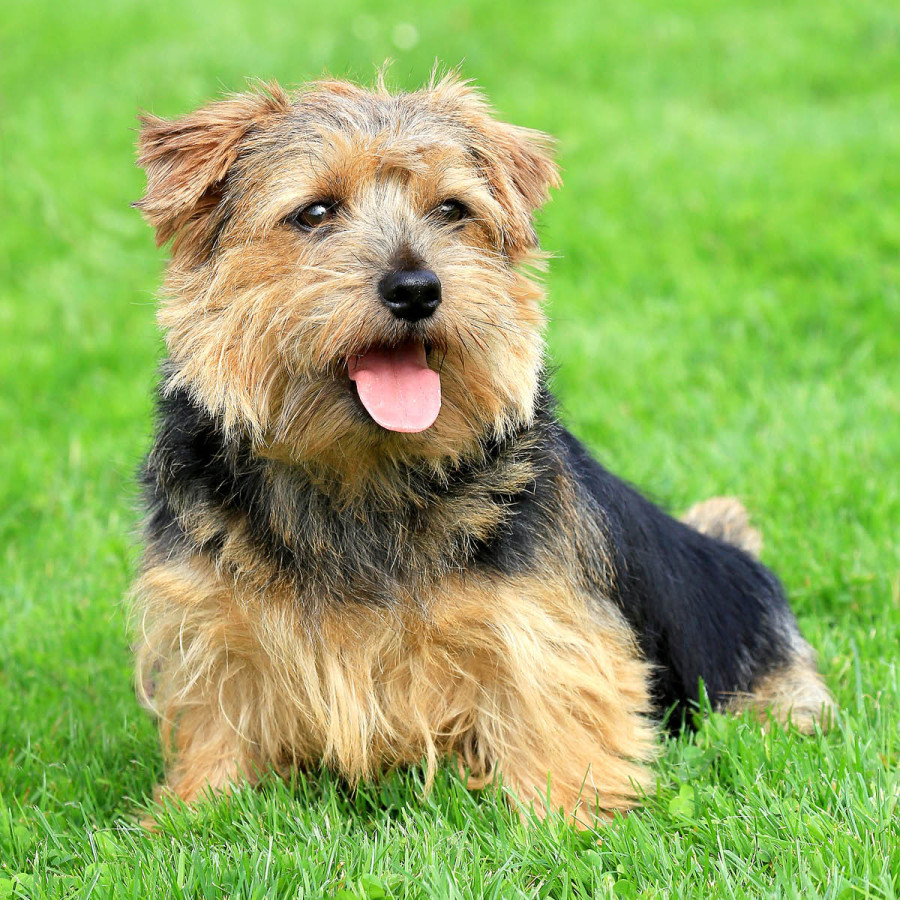
Norfolk Terrier Dog Breed
Don't let their size fool you – Norfolk terriers are bold, lively little dogs with big personalities.
Don't let their size fool you – Norfolk terriers are bold, lively little dogs with big personalities.
Norfolk terriers are known for being friendlier and more easy-going than many terrier breeds but they’re just as full of energy and need plenty of activities to keep their curious brains busy. As long as you can keep up, they make brilliant family pets.
Norfolk terriers are cheerful, curious, and always ready for an adventure. Originally bred in East Anglia to hunt rats and help with fox hunts, they've got a terrier's spirit through and through – brave, determined, and full of enthusiasm. Unlike some terriers, they're known for having a gentler, more easy-going side.
Norfolks love people and enjoy being part of whatever's going on at home. They'll happily join you on a walk, play in the garden, or curl up with you on the sofa. They're also more sociable with other dogs than many terrier breeds tend to be.
That said, they're independent thinkers and can be difficult to motivate. They also have a strong prey drive, so small pets like rabbits or guinea pigs may not be safe around them. Their terrier instincts are never far from the surface!
Disclaimer
While these breed traits give a general idea of what to expect from a specific type of dog, it's important to remember that every dog is unique. Just like people, each dog comes with their own distinct personality, quirks, and characteristics!
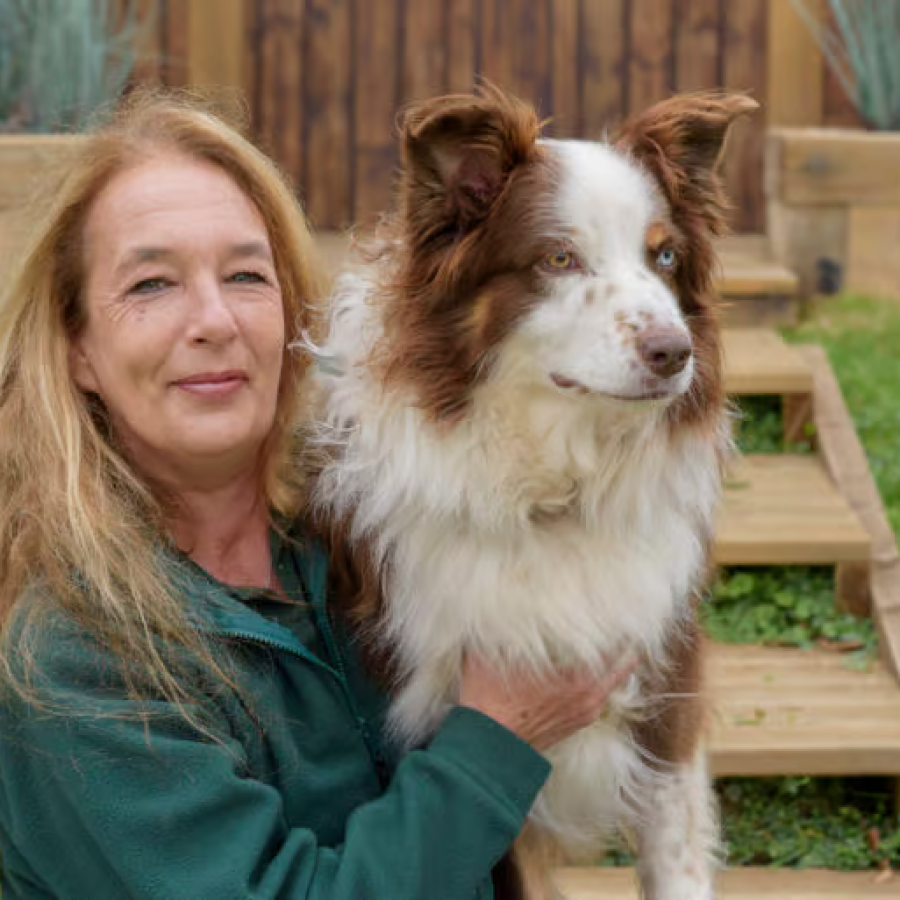
Norfolk terriers are known for being one of the best terrier breeds for families. They're gentle and patient with children and will calmly accept snuggles, which might surprise people who assume all terriers are intolerant to handling!
As with all dogs though, children and Norfolk terriers should always be supervised when together. Even the most gentle dog can react if they're handled roughly or startled. Teaching children how to interact with dogs respectfully is just as important as training the dog to interact with children properly.
The good news is that Norfolks tend to enjoy the company of all ages and will happily join in with family life. They cope well with a busy household and love being part of the action. Just be ready for a dog who wants to be involved in everything!
Norfolk terriers are adaptable and can do well in a range of homes, from houses with gardens to flats, as long as they get enough exercise and outdoor time each day.
That said, if you do have a garden, it needs to be secure. Norfolk terriers are curious and determined – they will sniff out any gap in your fence!
Norfolks do best in homes where someone is around for much of the day. They enjoy company and don't cope well with long periods of time on their own.
They're a great match for active families or active retired people who enjoy walks and outdoor time, and are happy to include their dog in daily activities.
Very! Norfolk terriers love their people and thrive on attention and company. They bond closely with their families and will often follow their favourite people from room to room so they don't miss out on anything.
They're loyal little dogs who enjoy a snuggle after a busy day. While they may take a moment to warm up to strangers, they're generally friendly and welcoming once they've had a chance to say hello on their own terms.
These dogs thrive when they’re close to the people they love. Their happiest place to be is right by your side.
Absolutely! Norfolk terriers have bundles of energy and love to play. They enjoy games like fetch and tug, and – true to their terrier roots – they have a real passion for digging! If you have a garden, you should expect a few holes. Giving them their own designated digging spot is a great way to save your flower beds!
Norfolks are quick learners and love showing off new skills. Short, fun training sessions will keep their active minds engaged. They can also do really well at dog sports like agility and scent work, so consider how you can incorporate these elements into their lifestyle.
You can be assured that their playful side stays with them well into adulthood. If you want a fun, energetic companion who'll keep you on your toes, a Norfolk could be a great match.
Norfolk terriers are alert little dogs and will let you know when someone arrives at the door or when something catches their attention. Their bark can sound bigger than you'd expect for such a small dog!
They're not the yappiest of breeds, but they can become noisy if they're bored or under-stimulated. Making sure they get enough exercise and mental stimulation each day will help keep unnecessary barking to a minimum.
With the right training from an early age, you can teach them when it's okay to bark and when it's time to settle down. They're not guard dogs by any means – they're much too friendly for that.
Like all dogs, Norfolk terriers can develop behavioural challenges if their needs aren't being met. Here are a few things to be aware of.
Their prey drive is strong. They were bred to chase and catch small animals, so if there are small pets in your home, a Norfolk may not be a good match. Even on walks, they can be easily distracted by squirrels, birds, or anything that moves quickly!
They can be escape artists. Norfolks love to dig and explore, so a secure garden with an escape-proof fence is a must. Never let them off the lead somewhere that isn't properly enclosed.
They're sociable souls. These people-loving dogs don't enjoy being left alone for long stretches of time. Without enough company and stimulation, they can become destructive or start barking more than usual.
Norfolk terriers need around an hour of exercise every day. This doesn't have to be one long walk – splitting it into two outings works well for most dogs.
This lively breed will enjoy sniffing, exploring, and playing as much as they enjoy a steady walk. Mixing things up keeps them happy and stimulated, so make things varied to keep your Norfolk happy. Dog sports like agility, scent work, and hoopers (obstacle courses without jumps) are a great fit for this breed – they thrive when they have a job to do!
Mental stimulation matters just as much as physical exercise. Puzzle toys, training games, and hide-and-seek activities help tire out their busy minds. A Norfolk terrier that gets enough physical and mental exercise each day is a much calmer, happier dog at home.
Norfolk terriers are generally willing to learn and respond well to kind, reward-based training. They enjoy working with their owners, which makes them easier to train than many other terrier breeds.
That said, they can have an independent spirit, so they need an owner who's consistent and patient. Keeping sessions short, fun, and full of tasty rewards is the key to success.
Recall can be tricky. Once a Norfolk has spotted something interesting, their instincts can take over. Training a solid recall is really important, and letting them off the lead should only happen in securely fenced areas.
All puppies need early socialisation and training to help them grow into confident, well-mannered adults. Training has to continue past puppyhood as behavioural challenges can crop up at any age, particularly during adolescence. Common issues to watch out for include excessive barking, pulling on the lead, digging, chasing, and jumping up.
Norfolk terriers have a short, wiry, weather-resistant double coat that's relatively easy to maintain at home. They’re light shedders, so you won’t find fur all over your furniture!
A brush and comb through once or twice a week will keep their coat at an appropriate length and help to remove any loose, dead hair. A Norfolk terrier should also get their coat clipped about three times a year. Clipping a dog’s coat takes a lot of skill, and although you may feel up to the task, we recommend taking your Norfolk to a professional groomer who will have experience working at the dog’s pace and can ensure they look great.
Don't forget regular nail trims, ear checks, and teeth brushing to keep your Norfolk in great shape overall.
Norfolk terriers are generally healthy and robust, often free from many of the health issues seen in other breeds. Taking out a pet insurance policy from day one is still a good idea, so you're covered if anything does crop up.
Health conditions to be aware of in Norfolk terriers include:
• Luxating patella: The kneecap slips temporarily out of place, which can cause a skipping gait or a brief limp. In mild cases, this may not cause any pain. More serious cases can be uncomfortable and may need treatment.
• Hip dysplasia: Where the hip joint doesn't develop as it should, which can lead to arthritis over time.
• Eye conditions: Including cataracts (cloudiness of the lens), glaucoma (increased pressure in the eye), and lens luxation (where the lens of the eye moves out of position).
Regular vet check-ups, a healthy diet, and keeping your dog at a good weight all help to support their long-term health.
I love to be on the go! I need around an hour of exercise each day, which can be split into a couple of walks. I enjoy sniffing and exploring just as much as running around.
My terrier brain needs to stay busy! Puzzle toys, training games, and learning new tricks will keep me happy. Without things to do, I'll make my own entertainment – and you might not like the results!
I'm bright and keen to learn, but I have a mind of my own! Reward-based training with food and toys works best for me. Start early, keep it fun, and I’ll learn quickly.
Norfolk terriers are a rare breed in the UK, with only a few hundred registered each year. Because of this, they can be hard to find and waiting lists with responsible breeders are common. According to the Norfolk Terrier Club of Great Britain, you should expect to pay around £2,000 for a Kennel Club registered puppy. Be cautious of much higher or much lower prices – these can be a sign that health testing or proper breeding practices have been skipped.
You'll also need to budget for starter equipment such as a collar, lead, bed, crate, and toys. This will typically cost around £150 to £200.
Here's a rough idea of ongoing monthly costs to expect with a Norfolk terrier:
• Food: Norfolk terriers are inexpensive to feed. Expect to pay around £20 to £30 a month for good quality food.
• Pet insurance: Lifetime cover for a small, healthy terrier typically costs around £20 to £35 per month, though this will increase as your dog gets older.
• Grooming: Clipping from a professional groomer costs around £50 to £65 per session and is needed roughly three times a year. Regular at-home brushing will keep costs down between appointments.
• Vet care and vaccinations: Routine vet costs, including annual boosters and flea and worm treatments, are worth budgeting around £10 to £30 a month for.
• Training classes: Puppy classes typically cost £50 to £100 for a course and are well worth the investment.
Take our quiz to discover which breed is right for you
Take our quizPlease call our pet support line on 0300 303 9333 (7 days a week – 8.30am - 4pm)