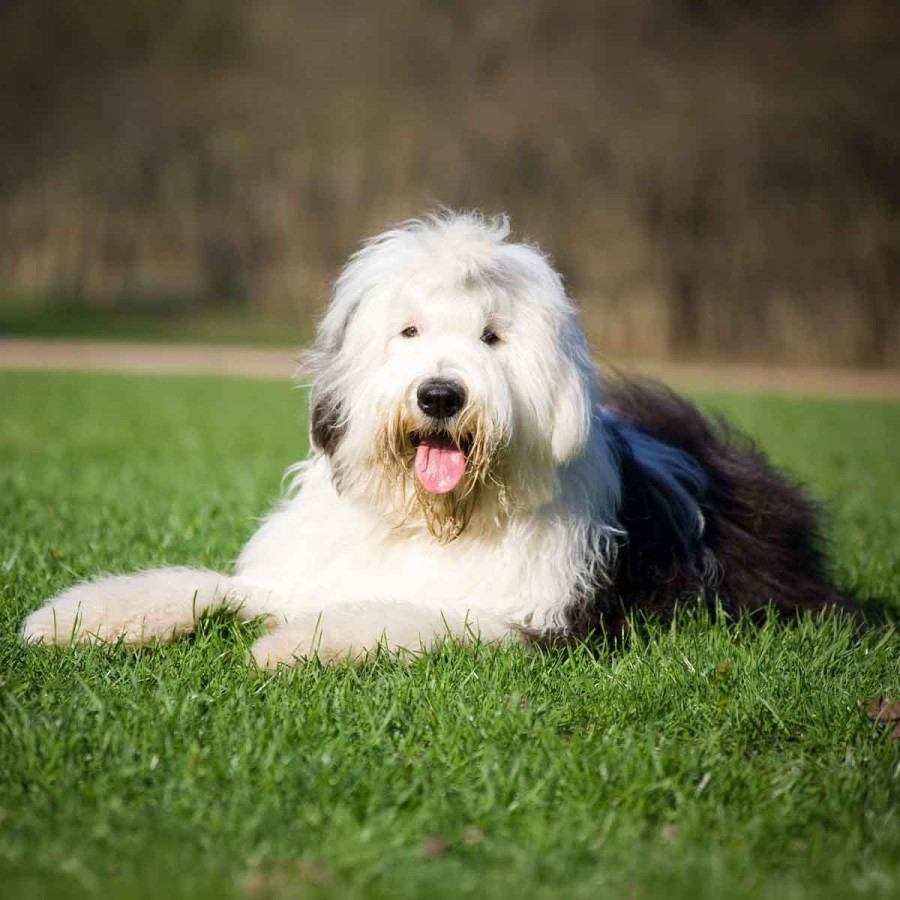
Old English Sheepdog Dog Breed
The Old English Sheepdog is best known their beautiful shaggy coat. They’re also a good-natured breed with bags of character!
The Old English Sheepdog is best known their beautiful shaggy coat. They’re also a good-natured breed with bags of character!
As devoted family dogs, Old English Sheepdogs love company and keeping active. While their coat a big selling point, it’s important to consider the time and attention needed to keep it in tip top shape.
This is a sociable breed which adores being part of a family. Playful, affectionate and loyal are just some of their many great traits. This means they’re a good match for a busy household looking for a four-legged-friend.
Back in the day, these dogs were used for herding livestock. So their natural instincts will often take over around small pets and even young children as they go into ‘round-up’ mode, which can include nipping. This is something to keep in mind for children less experienced with dogs.
These dogs are always on full alert and they aren’t afraid to ‘speak up’ when the occasion calls for it. This makes them pretty good watchdogs (without being aggressive).
As a sociable breed, they don’t cope well on their own for long periods. They also need plenty of daily activity to stay settled and content. Whatever’s going on around them, they’ll want to get involved!
Disclaimer
While these breed traits give a general idea of what to expect from a specific type of dog, it's important to remember that every dog is unique. Just like people, each dog comes with their own distinct personality, quirks, and characteristics!
Old English Sheepdogs can make good family dogs. They’re patient, playful and generally fine with children of all ages.
But their size and enthusiasm levels can be hazardous when it comes to interactions with very young children. Sheepdogs aren’t ones for special awareness and accidents can happen, so always make sure you’re around to supervise these interactions.
They’re an excellent match for active families who are at home regularly and can meet their needs for exercise, grooming and company. The more involved in family life they are, the happier they will be!
As a large breed, these dogs need plenty of space. A home with a securely fenced garden is strongly recommended – both for their daily exercise needs and to give them somewhere to let off steam safely. Due to their size and energy levels, they’re not well suited to living in a flat. It’s important they get daily free running exercise and lots of mental stimulation.
This breed generally gets on well with other dogs and can live alongside cats, but introductions should ideally be made from an early age! They suit households where someone is around for most of the day.
If you’re not sure whether this breed is right for you, why not try our dog breed explorer quiz?
This breed isn’t shy about showing affection towards the people they love. They enjoy physical closeness and are rarely far from their family’s side. While they can be fairly reserved around new people, they will usually warm up quickly.
Their loyalty runs deep, and most Sheepdogs will seek out a lap – or at least a spot close to their owner – whenever the opportunity presents itself (despite their size!). They don’t cope well when left alone for long stretches.
These dogs are better suited to the role of family companion rather than a guard dog.
Old English Sheepdogs are famously playful – even holding onto a puppy-like enthusiasm well into adulthood!
They enjoy a wide range of activities – from a good run in the garden to interactive games and training challenges. Whatever they’re doing, these dogs bring oodles of energy and humour, which makes things extra fun for their humans!
As a breed which thrives on company, it may not surprise you to know they mostly love games that involve movement and engagement with their owners. Without enough play and exercise, they can easily become bored.
Old English Sheepdogs can be fairly vocal dogs. Whether it’s alerting their owners to something, getting excited during play, or simply something catching their attention, they’ll make themselves heard.
It’s fair to say their bark is loud and deep for a domestic breed. This may come as a surprise if you’re not used to it! Lack of exercise or mental stimulation can also cause them to bark out of sheer boredom.
The good news? With consistent training from puppyhood, barking can be managed. If you’re thinking about getting a Sheepdog, you should be prepared for life with a dog who isn’t afraid to ‘speak up!’.
Any breed can develop behavioural issues if their needs aren’t met, and the Old English Sheepdog is no exception. Their herding instincts can show up as ‘rounding up’ behaviour around children or other pets. This needs gentle redirection from an early age.
These dogs can also experience separation-related issues if regularly left alone. Lots of company is key to their happiness.
Without enough exercise and mental stimulation, these dogs can engage in destructive behaviour and excessive barking. With the right training, early socialisation and habituation, these tendencies can be effectively managed. Socialisation is teaching a puppy to interact in an appropriate way with people and other dogs. Habituation is teaching a puppy to ignore some people, other dogs, traffic, noises, and livestock, etc.
These dogs were originally bred to move cattle and sheep over long distances, so they really need a lot of daily physical activity. This should include at least one to two hours of exercise, split across walks and active play. So you’ll need to be fit enough to keep up with them!
Mental stimulation is equally important. A bored Sheepdog will find ways to get into mischief, no matter how much walks they’ve been on! Like all dogs, they benefit from regular access to green space for sniffing, exploring and free movement.
Old English Sheepdogs are intelligent and keen learners. But they can be stubborn and lack motivation. So they need patient, consistent handling.
Positive reinforcement works well with this breed. It’s best to start early – a Sheepdog that misses out on basic guidance as a puppy will quickly learn their own rules!
Unpicking these habits once they’re fully grown can be a lot harder. Challenges often crop up during adolescence, so consistent reinforcement throughout their first two years is important.
Five common behavioural issues to watch out for :
• Herding behaviour – nudging or circling children, smaller pets or even adults.
• Pulling on the lead, which becomes a significant problem given the breed’s size and strength.
• Excessive barking when bored, under-exercised or left alone.
• Separation-related distress if not gradually introduced to alone time from puppyhood.
• Selective recall, especially when off lead and something has caught their attention.
The Old English Sheepdog’s coat is beautiful, but there’s a lot of work involved to maintain it! The thick, double coat can mat quickly without regular care. Daily brushing is strongly recommended to keep it free from tangles and debris.
We also advise professional grooming every six to eight weeks to keep the coat in good condition. Many owners go for a shorter trim as this can massively reduce the daily grooming commitment, while also keeping their dog comfortable.
The coat around the eyes should be kept trimmed or tied back to ensure clear vision. If you’re getting a Sheepdog puppy, get them used to grooming and handling from day one. This can make it easier for them as they grow.
A nutritious diet, exercise and regular vet check-ups all play an important role in keeping an Old English Sheepdog healthy.
Responsible breeders carry out health tests on their breeding dogs – always ask for evidence before taking on a puppy. Conditions this breed can be prone to include:
• Hip dysplasia – abnormal development of the hip joint, which can lead to pain and arthritis. The BVA/Kennel Club Hip Dysplasia Scheme is available for screening.
• Gastric dilatation-volvulus (GDV/bloat) – a life-threatening condition where the stomach fills with gas and can twist. This needs veterinary attention.
• Hereditary cataracts and eye conditions – including multiocular defects (MOD) and progressive retinal atrophy (PRA), which can affect vision.
• Congenital deafness – linked to coat colour genes; puppies can be tested from six weeks of age.
• Cerebellar abiotrophy (hereditary ataxia) – a progressive neurological condition affecting coordination and balance. DNA testing is available.
So, here’s the thing: I need one to two hours of exercise every single day! Without it, I get restless and bored. And you won’t like that because I’ll probably redecorate your home in ways you won’t appreciate!
I’m a smarty pants with a working background, so please keep my brain busy. Training games, puzzle feeders and interactive play are my sort of thing. And please mix it up because I like variety.
I’m keen to please but I also have a stubborn streak and I can be hard to motivate! So keep sessions short, fun and full of rewards. Oh, and start my training early – I grow into a big dog fast!
Buying an Old English Sheepdog puppy from a responsible breeder in the UK typically costs between £1,000 and £2,500. Rehoming from a rescue is usually around £150–£250.
We encourage you to check the dogs looking for a home at Woodgreen or other reputable rescues first.
Start-up costs for essentials typically come to around £300–£500, though grooming tools for this breed need to be considered too.
Ongoing monthly costs include food (£50–£70 for a large breed), insurance (£35–£60), and professional grooming every six to eight weeks (£60–£100 per session – one of the higher grooming costs of any breed). Routine vet care, including vaccinations, boosters and parasite control, averages £150–£250 per year. The total estimated monthly cost is £150–£230.
Take our quiz to discover which breed is right for you
Take our quizPlease call our pet support line on 0300 303 9333 (7 days a week – 8.30am - 4pm)
