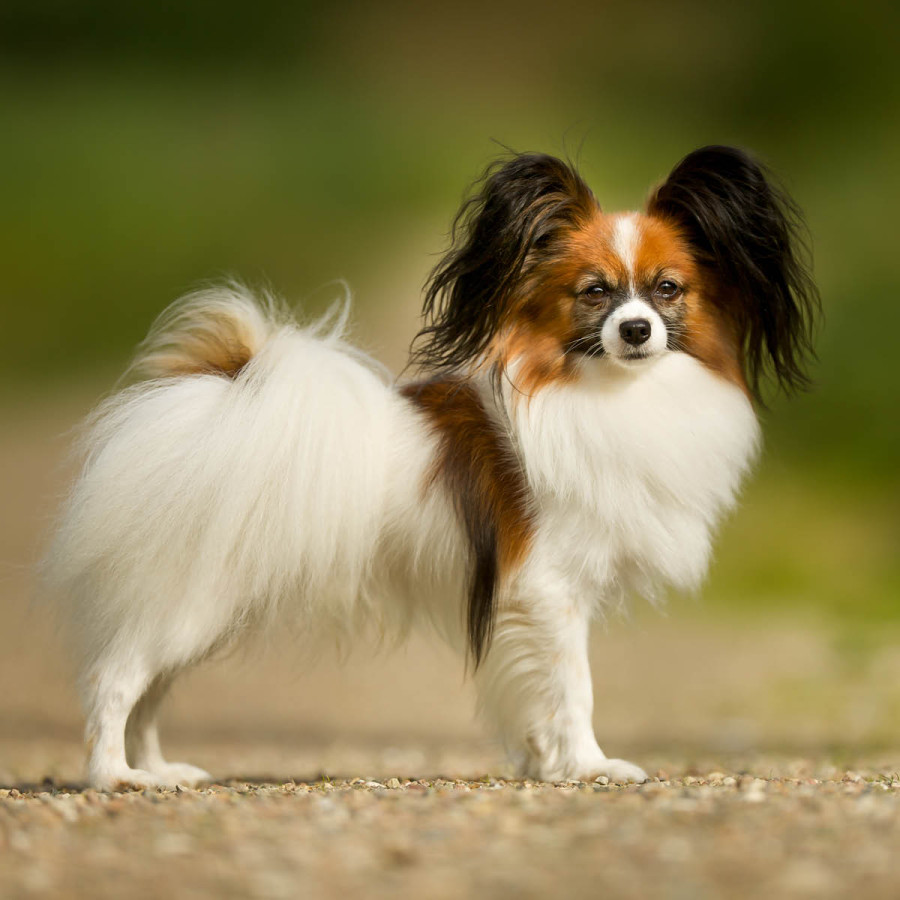
Papillon Dog Breed
Papillons are small dogs with big personalities!
Papillons are small dogs with big personalities!
As a smaller dog, Papillons are a member of the ‘toy’ dog breed family. The breed is named after the French word for butterfly – rooted in their unique high-set ears that look like butterfly wings.
These dogs were originally bred for companionship, and it’s no surprise given how friendly they can be! They’re also great little watchdogs for your home.
The Papillon is typically a happy, outgoing, highly intelligent breed. They’re incredibly affectionate and happiest when involved in family activities or snuggling on the sofa.
As a dog that’s been bred for the role of companionship, they’re not suited to hours of social isolation. They’re also keen watchdogs and will sound the alarm if needed. But their friendly nature may not prove to be the best deterrent for unwanted visitors!
They may be small, but these dogs are very active. They need 30 to 60 minutes of physical exercise every day, along with mental stimulation for their busy brains.
If you’re looking for a dog you can leave at home alone all day, or you don’t have much time for exercise and play, we think the Papillon is probably not for you.
Disclaimer
While these breed traits give a general idea of what to expect from a specific type of dog, it's important to remember that every dog is unique. Just like people, each dog comes with their own distinct personality, quirks, and characteristics!
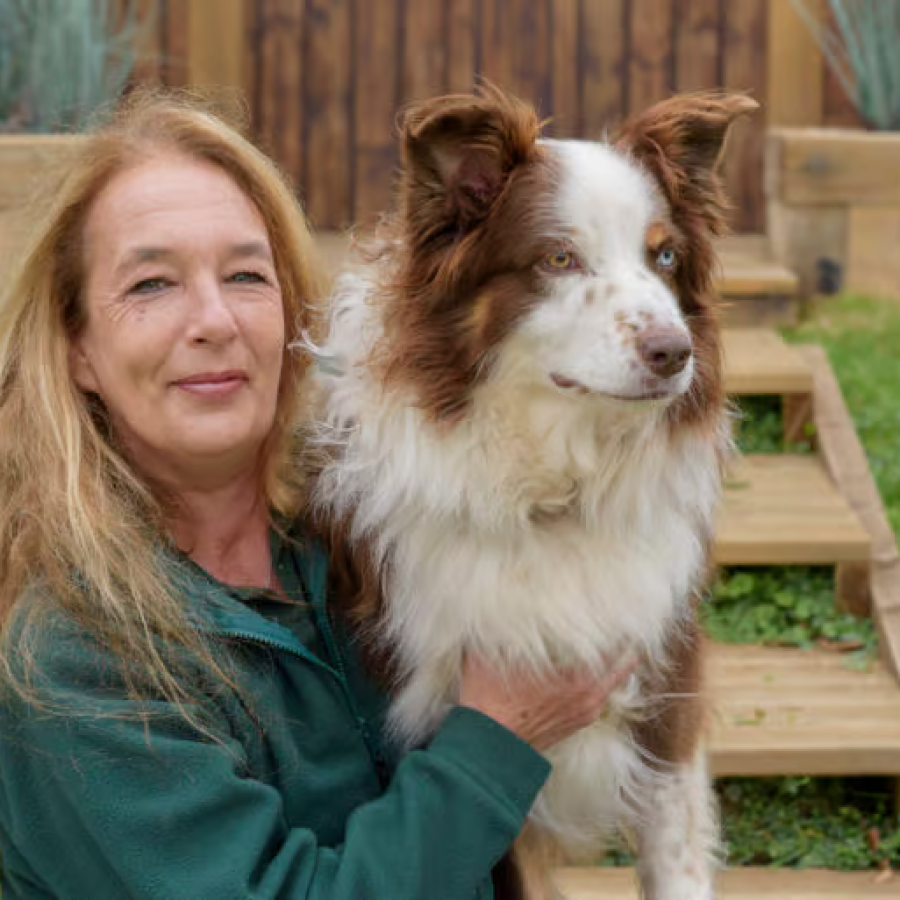
The Papillon can be a great family dog. They’re affectionate, playful, entertaining, and love to be involved in everything the family do. Naturally, they adore their ‘walkies’ too!
While this breed loves playing with young children, be aware of their petite and delicate frames. This can make them prone to injury if accidentally trodden or fallen on by a child. Make sure you closely supervise time between your dog and your little ones.
These dogs can be partial to a bit of barking. So they’re not the best choice for families with babies and toddlers – especially if you want to avoid their sleep being disturbed.
They’re much better suited to homes with slightly older children who can get involved in play and training sessions. They’ll also enjoy snuggling down with their little humans for some chillout time.
As long as their needs are met, Papillon dogs can make a wonderful canine companion for families.
The Papillon is a versatile little breed. They can fit seamlessly into any domestic setting, if their needs are met.
They are in no way a ‘couch potato’ kind of dog. They need a home with an owner who can dedicate time to daily exercise, play sessions and mental stimulation.
Papillons love to learn new things. So if you’re interested in obedience, trick or agility training, this breed could be your perfect match.
With the right socialisation, Papillons can live with other dogs – ideally small breeds as they can easily get accidentally injured by much bigger or heavier breeds. Good socialisation can also make it possible for this little breed to live happily with cats and other small pets, too.
Yes, the Papillon can be incredibly affectionate – if they’re getting everything they need, of course! Their love for attention means they’ll often follow you around like a little shadow.
Lap dogs through and through, they love to snuggle with their humans on the sofa. They also make great ‘hot water bottles’ in bed on a cold night.
Their affection extends to people outside the home. They’re the life and soul during gatherings – these social butterflies adore being the centre of attention.
Fun fact: did you know this breed was originally bred to be companions for royalty? One of the most famous being Marie Antionette!
The Papillon is a very playful, lively, intelligent breed. Their need for play must be fulfilled to keep them happy. You’ll be rewarded with their fun-loving antics!
As fun as this sounds, it does mean you need enough time to dedicate to daily sessions of fetch, tuggy, hide and seek and playful activities on walks.
Their playfulness makes them a great choice for families. They love getting involved in whatever’s going on – providing endless fun for older children.
If you work from home, scheduled time for play breaks with your Papillon is non-negotiable!
Papillons are moderate barkers. The good news is they’re excellent little watchdogs. So you’ll definitely know when someone approaches your property.
They may also struggle to contain themselves when excited, so be prepared for some joyful yapping too.
These are highly intelligent, active little dogs that need daily physical exercise and mental stimulation. If they miss out, they’ll certainly let you know by voicing their boredom or frustrations!
If you’re sensitive to high-pitched yapping, you may want to consider a breed that’s a bit quieter.
Like all dogs, if a Papillon’s needs aren’t met they can become problematic. They’re busy little dogs with high intelligence, so it’s essential they get enough daily physical and mental stimulation.
They’re also highly curious and love to learn new things. But, without guidance, they can quickly pick up unwelcome habits too!
If you fail to keep your Papillon satisfied, there are usually two main ways they’ll let you know they’re unhappy. Firstly – nuisance barking, which can be very challenging if you struggle with the high-pitched variety. Secondly, you may find your Papillon turning into a professional ‘thief’ – stealing and chewing their new possessions beyond repair!
A Papillon’s main role is to be a companion dog. This means unless their home alone training is built up slowly and carefully, they can be prone to separation related issues.
Despite their small size, Papillon dogs have big amounts of energy and love being active. They need a minimum of 40 minutes of exercise every day. This should be a mixture of on and off-lead activities.
As a dog that’s fast and agile, they especially enjoy time in open green spaces where they can chase toys. But they’re prone to clambering over and under fallen trees, so keep a close eye!
When it comes to exercising your Papillon, it’s not just their body that needs a workout. You also need to stimulate their brains – otherwise they’ll really struggle. Puzzle feeders, activity toys, play sessions, and training are great for keeping your Papillon mentally satisfied.
If you’re considering a Papillon, think about whether you have the time to dedicate to their mental and physical stimulation.
Papillons are in the top ten most intelligent breeds. When it comes to brain power, these inquisitive dogs are right up there with the Border Collie and the Poodle.
As with any breed, they respond best to kind, fair, reward-based training methods.
Like all dogs, it’s best to start training when they’re young puppies. Socialisation and habituation training is essential to build a solid foundation for further obedience-style training. Socialisation is teaching a puppy to interact in an appropriate way with people and other dogs. Habituation is teaching a puppy to ignore some people, other dogs, traffic, noises, livestock, etc.
Papillons can be very rewarding to train as they pick things up very quickly. But remember, if not channelled in the right way, they might develop habits that you don’t want them to learn, like barking or stealing things!
Adolescence can be challenging for both dogs and their owners. Hang in there – your patience and persistence will pay off in the end.
Papillons can excel in obedience, trick training and agility. If you’re looking to train up a little champion, the Papillon could be the one for you!
Papillons have a silky single-layered coat that is longer on their legs, tail and ears. These areas need regular attention to ensure that they don’t knot or matt.
They’re moderate shedders, which means they need grooming a couple of times a week. The use of a metal comb on their longer hair is recommended, whereas a pin brush is suitable for their main body.
Regular grooming also gives you the opportunity to check your dog’s body for any cuts, lumps or unwanted parasites that might need attention.
Like all pedigree breeds, Papillons can be prone to certain health conditions. It’s always advised that you buy a puppy from a breeder that carries out all the relevant health checks on their breeding stock.
Some conditions that can affect this breed include.
• Luxating patellas – slipping kneecaps.
• Progressive retinal atrophy – causes vision loss.
• Mitral valve disease – can cause heart failure.
• Collapsing trachea – difficulty breathing as they age.
• Hypoglycaemia – low blood sugar.
If you provide your Papillon with a nutritious diet, regular exercise, mental stimulation, and regular veterinary check-ups, you’ll help them live well into their teenage years.
I may be small but I’m full of energy! I need a minimum of 40 minutes of exercise every day in a place I can run and play to my heart’s content.
I’m not being big-headed but I’m really brainy. I love to learn new things, but if your time is tight, I also love activity toys and puzzle feeders.
I absolutely love learning new things. Obedience and tricks are my speciality. I’m also fast and agile, so I’d love to have a go at agility training!
You should be prepared to pay between £1,000 and £2,000 for a Papillon puppy.
Set-up costs for any puppy can be several hundred pounds. This includes, food, bowls, beds, toys, collar, lead, harness, and baby-gates. The ongoing costs include, vaccinations, parasite control, food, insurance premiums, etc.
Take our quiz to discover which breed is right for you
Take our quizPlease call our pet support line on 0300 303 9333 (7 days a week – 8.30am - 4pm)