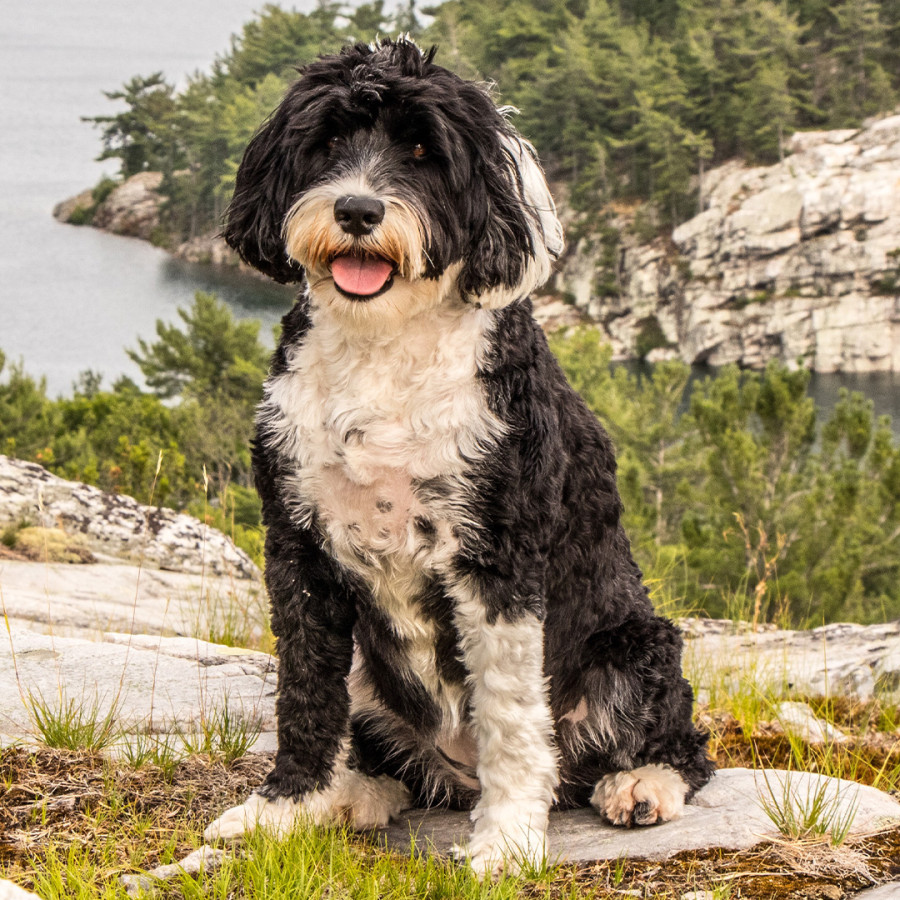
Portuguese Water Dog Dog Breed
Portuguese Water Dogs are intelligent and athletic. There were originally bred to work alongside fishermen.
Portuguese Water Dogs are intelligent and athletic. There were originally bred to work alongside fishermen.
Portuguese Water Dogs form close bonds with their family and need lots of daily exercise. Their coat is non-shedding but needs to be professionally groomed regularly. They're best suited to active owners who have the time and confidence to dedicate to this clever, energetic breed.
Spirited and intelligent, The Portuguese Water Dog has a great work ethic behind their fun-loving exterior. They’re eager to join in with daily activities while following their favourite people.
Their working background means they are tireless and strong, rarely needing a break before their owner.
They are determined and quick-thinking, so they need clear, confident guidance, or they'll do things their own way. They're sensitive towards a person's voice and respond better to calm, encouraging prompts over a sharp or impatient tone.
Early socialisation will help this watchful breed settle confidently around new people and situations.
Disclaimer
While these breed traits give a general idea of what to expect from a specific type of dog, it's important to remember that every dog is unique. Just like people, each dog comes with their own distinct personality, quirks, and characteristics!
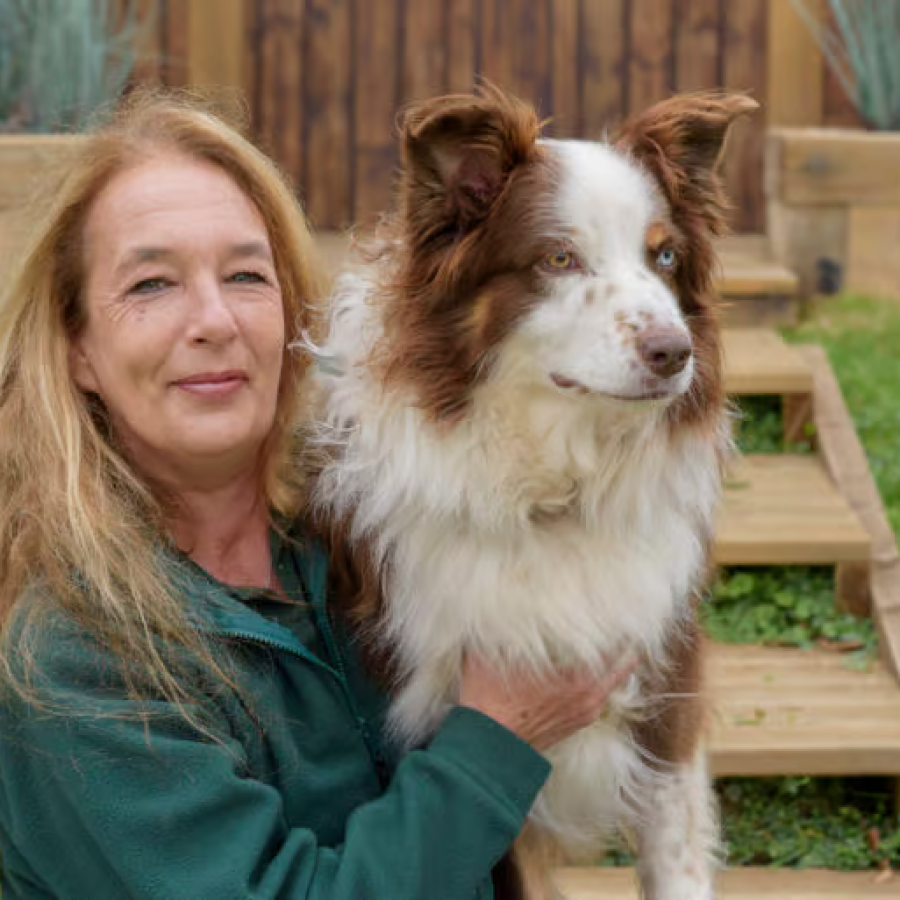
Portuguese Water Dogs make excellent family dogs, especially if they're living with active people who can meet their need for physical activity and mental challenges.
This breed can be good with children when introduced from a puppy. Of course, supervision is always recommended during interactions between dogs and children.
Their high energy and intelligence make them a good match for energetic families who enjoy getting outdoors and spending time near water, rather than calm households looking for an easy-going companion.
Portuguese Water Dogs need a secure garden for space and safety. Their working instincts mean they may roam if there's an opportunity. They suit homes where someone is around for much of the day.
They generally get on well with other dogs and cats when raised together. Smaller pets like rodents or birds should be kept out of reach.
Due to their energy levels and exercise needs, they're not well suited to apartments.
If you’re exploring which breed best suits your home and lifestyle, try the Discover the Right Dog for Me quiz to find your match.
Portuguese Water Dogs are warm, affectionate dogs that get easily attached to their family. They genuinely want to be part of daily life and close to their owners.
Their loyalty and desire for company mean they struggle being left on their own for long periods of time. Once they've formed a bond with you, they're devoted, loving companions who give back as much attention as they receive.
Portuguese Water Dogs are playful and energetic with a desire to get involved in outdoor activities and water play. Many enjoy swimming and retrieving. This reflects their roots, working alongside Portuguese fishermen.
They're always up for physical games and ones that involve problem-solving, such as retrieving games, agility or interactive puzzle toys. Their intelligence means they learn new games quickly and need lots of variety including a mix of play and training activities.
Historically, Portuguese Water Dogs were valued for their loud, deep bark so they could alert fishing boats to each other’s location in foggy conditions.
They will typically bark to let their owners know when they have visitors or if anything unusual is happening outside. This makes them effective watchdogs, but because of their size, they don't make the best guard dogs.
Boredom or lack of exercise can lead to more barking, but with consistent training and plenty of daily activity, barking can be controlled.
Like with any breed of dog, they can develop behavioural issues if their needs are not met.
The Portuguese Water Dog can easily notice any gaps in their daily routine or training. Without clear boundaries, they will pick and choose when to obey commands.
This breed thrives in the companionship of their owners and can experience separation-related issues if they're left alone.
Without enough physical and mental stimulation, they may show destructive behaviour such as chewing or digging. With confident, consistent training and early socialisation, these habits can be well managed.
The Portuguese Water Dog was originally bred to herd fish into nets and retrieve lost tackle, so this breed has natural stamina.
They need quality daily exercise for at least an hour to ninety minutes a day. This should ideally involve some retrieving work or swimming, which this breed particularly enjoys.
Mental stimulation is just as important for this intelligent breed. Like all dogs, they benefit from regular access to green space, alongside safe opportunities for water-based play whenever possible.
Portuguese Water Dogs are eager to please you. They're quick learners too, especially when training is interesting and consistent.
Training should start as early as possible, as this clever breed will spot any changes in routine.
Training is an ongoing commitment rather than something that's done when they're a puppy. Many owners find this breed testing boundaries during adolescence, so they need consistent reinforcement.
Five common behavioural issues to watch out for:
• Selective obedience if training lapses or inconsistency creep in.
• Separation-related distress if left alone without a gradual introduction to alone time.
• Destructive chewing or digging if exercise and mental stimulation needs aren’t met.
• Excessive barking when bored or alerting to visitors.
• Roaming or escaping if garden boundaries aren’t secure, given their working history.
The Portuguese Water Dog has a single-layer coat, either tightly curled or wavy, that does not shed but needs considerable maintenance.
A good brush at least twice a week is needed to prevent matting and tangling, and professional grooming every six to eight weeks is recommended. This helps keep the coat manageable, usually clipped in either a shorter all-over style or the traditional 'lion clip'.
Ears should be checked regularly, particularly for dogs that swim often, as trapped moisture can lead to irritation or infection. Getting puppies comfortable with grooming and handling at an early age makes the process far easier as they grow.
A healthy lifestyle, good nutrition, and regular vet check-ups all support a long, active life for this breed. Responsible breeders carry out relevant health and DNA tests on their breeding dogs – always ask for evidence before taking on a puppy. Conditions this breed can be predisposed to include:
• Hip and elbow dysplasia – abnormal joint development that can lead to pain and arthritis over time.
• Progressive retinal atrophy (PRA) – an inherited eye condition causing gradual vision loss, sometimes starting as night blindness, eventually leading to total blindness.
• Juvenile dilated cardiomyopathy (JDCM) – a serious inherited heart condition affecting young puppies. DNA testing of breeding dogs helps identify carriers and significantly reduce the risk.
• GM1 gangliosidosis – a rare but fatal inherited storage disorder affecting puppies. DNA testing of breeding stock has greatly reduced its prevalence in well-bred lines.
• Addison's disease – a hormonal condition affecting the adrenal glands, which can cause symptoms such as lethargy, vomiting and weight loss, but is manageable with lifelong medication.
I need at least an hour or two of exercise every day, ideally including a swim! Without it, I'll get bored and may start chewing or digging instead.
I’m clever and fast-thinking, so please keep me busy! A mix of Retrieving games, puzzle toys and training challenges all help to keep the boredom at bay.
I’m eager to please, but I’m a sucker for routine and will spot any gaps! I respond best to calm, confident, and consistent guidance, so please show me kindness and patience.
Buying a Portuguese Water Dog puppy from a responsible breeder in the UK typically costs between £800 and £1,500, reflecting the breed’s rarity. Rehoming from a rescue is usually around £150–£250. We’d always encourage you to explore dogs available through Woodgreen or other reputable rescues first.
Start-up costs for essentials typically come to around £300–£500.
Ongoing monthly costs include food (£35–£50), insurance (£30–£50), and professional grooming every six to eight weeks (£50–£70 per session – a notable ongoing cost given their non-shedding coat).
Routine vet care averages £150–£250 per year. Total estimated monthly cost: £100–£170.
Take our quiz to discover which breed is right for you
Take our quizPlease call our pet support line on 0300 303 9333 (7 days a week – 8.30am - 4pm)