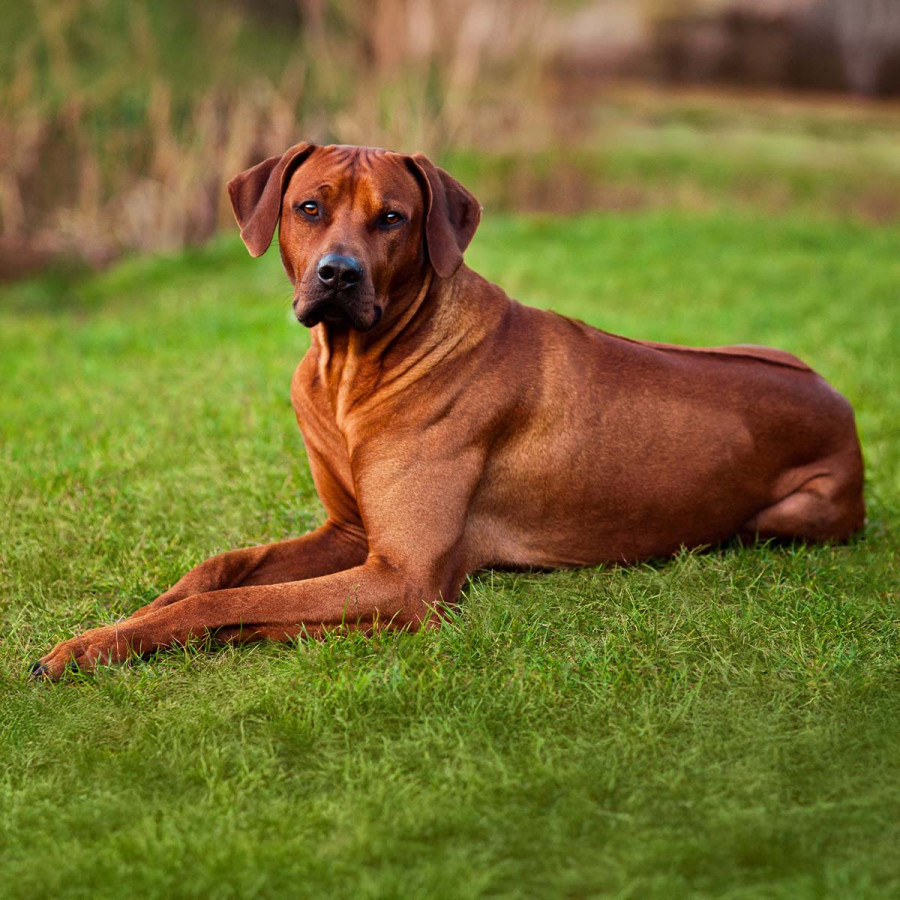
Rhodesian Ridgeback Dog Breed
The Rhodesian ridgeback is a powerful, athletic breed.
The Rhodesian ridgeback is a powerful, athletic breed.
Originally from Africa, Rhodesian Ridgebacks are known for the distinctive ridge of backwards-growing hair along their spine. Ridgebacks are loyal, intelligent, and protective of their families.
However, they're strong-willed and need owners who've had dogs before to provide confident, consistent leadership. With the right training and plenty of exercise, they make devoted companions who'll be by your side through thick and thin.
Rhodesian ridgebacks are dignified, confident dogs with a strong sense of themselves. Originally bred in Africa to hunt lions and protect homesteads, they're brave, alert, and incredibly loyal to their families.
Don't let their regal appearance fool you – they can be playful and silly with people they trust! Ridgebacks tend to be reserved with strangers, watching and assessing before deciding if someone is welcome. This isn't unfriendliness, it's just their natural cautiousness coming into play.
These dogs are independent thinkers who like to make their own decisions. They're not the type to blindly follow commands, they need to understand why they should do the thing that’s being asked of them.
Despite this independent streak, Ridgebacks are sensitive and can pick up on their owners' emotions. They're devoted companions who form incredibly strong bonds with their families. With proper training and socialisation, they're calm, well-mannered dogs who can fit in well with family life.
Disclaimer
While these breed traits give a general idea of what to expect from a specific type of dog, it's important to remember that every dog is unique. Just like people, each dog comes with their own distinct personality, quirks, and characteristics!
Rhodesian ridgebacks can make excellent family dogs for the right household. They're generally patient and tolerant with children, especially those they've grown up around. Many Ridgebacks form particularly close bonds with children in their family and can be very protective of them. However, their size and strength mean it’s essential to supervise any interactions they have with children, especially younger ones who might get knocked over accidentally.
Ridgebacks do best with older children who understand how to interact respectfully with dogs.
This independent breed need families who can provide consistent training and clear rules from puppyhood. They're not suited to first-time dog owners as their size and strong-willed nature require confident handling. Active families who enjoy outdoor adventures and have time to dedicate to training and exercise will find Ridgebacks to be loyal, loving companions.
Rhodesian ridgebacks need space! They're large, athletic dogs who do best with access to a secure garden where they can move freely and burn off energy. Flats aren't ideal for these big dogs, unless they're particularly spacious. Ridgebacks need active homes with people who have time to dedicate to their exercise and training. They're best for people who've had dogs before as first-time owners might find their size and strong-willed nature overwhelming.
Ridgebacks do best when they're with their families regularly. They don't cope well with being left alone for long hours. To be happy, Rhodesian ridgebacks need 1-2 hours of vigorous exercise daily, brain games and training, a secure garden, time with their families, and confident, consistent leadership.
Rhodesian ridgebacks are deeply devoted to their families. Once they've bonded with you, they're incredibly loyal and loving. Many Ridgebacks love being close to their people and will follow you from room to room. Despite their size, they can think of themselves as lap dogs and may gallantly try to curl up on the sofa with you!
However, Ridgebacks are not typically overly affectionate or clingy. Their affection is calm and steady rather than bouncy and excitable. Ridgebacks tend to be reserved with strangers and won't rush up to everyone for attention. But with their families they're gentle, devoted companions who love quiet time together.
Ridgebacks are definitely playful, especially in their younger years. They love games with their families and can be surprisingly silly and fun-loving. Many Ridgebacks enjoy fetch, tug-of-war, and seek and find games with their favourite people.
They're athletic and enjoy activities that let them run and stretch their legs.
As they mature, Ridgebacks often become calmer and more dignified, but they still enjoy play sessions. Their play style can be quite physical and boisterous, so they might be too rough for very young children or smaller dogs.
Because they're so athletic, Ridgebacks excel at dog sports like lure coursing, agility, and canicross (running with your dog). Without enough physical and mental activity, they can become bored and potentially destructive. A well-exercised Ridgeback is a happy, content companion.
Rhodesian ridgebacks aren't usually excessive barkers. They're quite selective about when they use their voice, often only barking to alert you to visitors or unusual sounds. Their watchdog nature means they take their role seriously and will let you know if something seems wrong. Their bark is deep and powerful – fitting for their size!
Most Ridgebacks are relatively quiet dogs who prefer to watch and observe rather than make a fuss. However, without proper training and enough exercise, they can develop excessive barking. If a Ridgeback is bored, anxious, or not getting their needs met, they might bark more than usual. With consistent training from puppyhood and making sure they get plenty of mental and physical exercise, you can raise a well-mannered Ridgeback who barks appropriately.
Like all dogs, Rhodesian ridgebacks can develop challenging behaviours if their needs aren't met. Their hunting heritage means they have a strong prey drive and they may chase cats, small dogs, rabbits, and other small animals if their needs aren’t being met. This can be dangerous if not managed carefully. Their size and strength mean that even minor behavioural issues can become serious problems.
A Ridgeback pulling on the lead or jumping up can be difficult to manage.
Without proper socialisation and habituation, some Ridgebacks can become overly wary or reactive towards strangers or other dogs. Getting puppies used to different people, dogs, and everyday sights and sounds from an early age is crucial to avoiding this behaviour. Separation-related issues can also develop if they're left alone for long periods of time. With consistent, positive training and meeting their exercise needs, most issues can be managed. If you're struggling, our free behaviour helpline is here to offer advice and guidance.
Rhodesian ridgebacks are athletic dogs with impressive stamina. They need at least 1-2 hours of vigorous exercise every day. This should include walks, but also more active pursuits like running, hiking, or playing fetch. A gentle stroll around the block won't be enough for most Ridgebacks – they need proper physical activity to stay happy and healthy.
Keeping their minds busy is equally important. These intelligent dogs get bored easily without challenges. Training sessions, puzzle toys, scent work, and learning new skills help to keep their brains active. Ridgebacks excel at various dog sports including lure coaching (chasing a mechanical lure), agility, and canicross (running with dogs). Without enough physical and mental activity, Ridgebacks can become frustrated and develop unwanted behaviours like destructiveness or excessive barking. A well-exercised Ridgeback is a calm, content companion.
Rhodesian ridgebacks are intelligent and can learn quickly, but they're not the easiest breed to train. They're independent thinkers who like to make their own decisions. Unlike breeds who live to please their owners, Ridgebacks need to see the point of what they're being asked to do. This means training requires patience, consistency, and creativity. Because of this, Ridgebacks are best for people who’ve had dogs before and can provide confident, experienced leadership.
Positive, reward-based training works best. Use treats, praise, and play to motivate them. Harsh methods don't work with Ridgebacks – they'll simply shut down or become “self employed” (only doing as they see fit!).
Early socialisation and habituation are crucial for Ridegbacks. Puppies need to meet different people, dogs, and animals in positive ways. They also need to get used to everyday sights and sounds like traffic, household appliances, and busy environments. Training doesn't stop at puppyhood either, with adolescence often being a particularly challenging time for this bold and outgoing breed. Common behavioural issues include pulling on the lead, jumping up, reactivity to other dogs, an overactive prey drive, and separation-related problems.
Rhodesian ridgebacks have short, sleek coats that are relatively easy to care for. They shed moderately year-round, with slightly heavier shedding periods twice a year. A weekly brush with a rubber curry brush or hound glove will remove loose hair and keep their coat looking healthy and shiny. Start grooming routines when they're puppies to help them learn to tolerate being brushed and handled throughout their lives.
They don't need frequent bathing – only when they're genuinely dirty or have rolled in something unpleasant! Ridgebacks are naturally clean dogs without much of a “doggy smell”.
Regular nail trimming won’t be necessary if they’re getting enough exercise, needing to clip your Ridgeback’s nails could be a sign they need more physical activity. Check and clean their ears weekly to prevent infections, and brush their teeth regularly or provide them with dental chews.
Rhodesian ridgebacks typically live 10-12 years. Like all breeds, they're prone to certain health conditions, so be sure to take out insurance to help cover vet costs throughout your dog's life.
Common health conditions include:
• Dermoid sinus: a tube-like opening in the skin that can become infected and requires surgery to remove. This condition is specific to Ridgebacks and and responsible breeders should carefully check puppies for signs of Dermoid sinus at birth.
• Hip dysplasia: where the hip joints don't develop properly, leading to arthritis. Breeding dogs should be hip-scored through the BVA/KC scheme.
Elbow dysplasia: a similar problem affecting the elbows. Breeding dogs should be tested for this condition.
• Juvenile myoclonic epilepsy (JME): an inherited form of epilepsy causing seizures. DNA testing is available, and responsible breeders should test for this condition.
Hypothyroidism: where the thyroid doesn't produce enough hormones, causing weight gain and lethargy. This condition is manageable with medication.
• Bloat: a life-threatening condition where the stomach fills with gas and twists. Large, deep-chested dogs like Ridgebacks are most at risk from bloat.
Regular vet check-ups, a good diet, appropriate exercise, and maintaining a healthy weight all help to keep your Ridgeback healthy and content.
I need an active lifestyle with daily adventures like running, hiking, and play that let me stretch my body and use my natural athletic energy.
I need plenty of mental stimulation, like training games, scent work, and puzzle toys, or I can become bored and start making my own (less helpful) decisions
I need at least 1–2 hours of vigorous activity every day to stay happy, balanced, and relaxed at home.
When considering cost, it’s important to note that price doesn't always equal quality. What matters most is finding a responsible breeder who health tests their dogs (especially for dermoid sinus and JME), raises puppies in a home environment, and breeds for temperament as well as health. We have guidance on finding a responsible breeder on our website, and you can also refer to the Puppy Contract to help ensure you're getting a healthy, well-bred puppy.
You could also consider adoption or rescue. Rescuing a Rhodesian ridgeback is often much more affordable than buying a puppy, and many rescue dogs are already trained. Plus, you'll be giving a dog in need a loving home!
Rhodesian ridgeback puppies typically cost between £1,200 and £2,500, depending on health testing and pedigree. Initial costs for essential equipment (beds, leads, collars, toys, crate) will be between £150 and£300. Ongoing costs include food (£50-£80 monthly), pet insurance (£40-£70 monthly), regular vet care, training classes, and toys. Ridgebacks are relatively affordable to maintain compared to giant breeds.
Take our quiz to discover which breed is right for you
Take our quizPlease call our pet support line on 0300 303 9333 (7 days a week – 8.30am - 4pm)