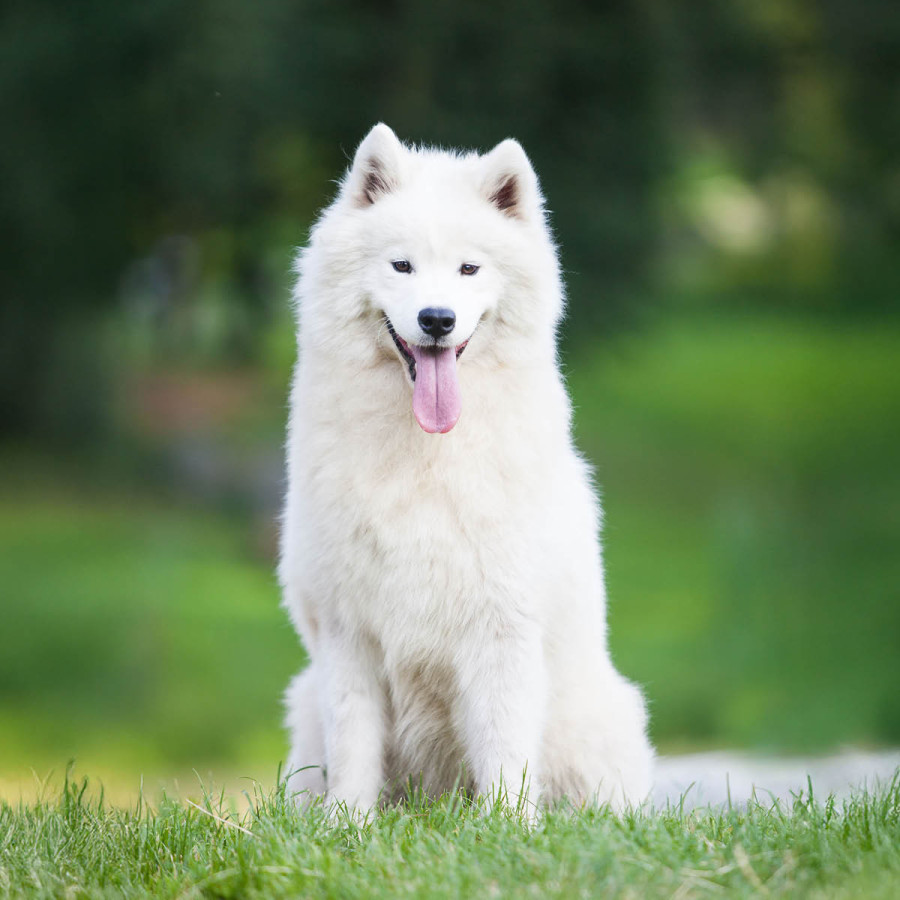
Samoyed Dog Breed
The Samoyed (also known as the Sammy) is a fluffy, friendly breed famed for their distinctive “Sammy smile”.
The Samoyed (also known as the Sammy) is a fluffy, friendly breed famed for their distinctive “Sammy smile”.
Samoyeds love being part of a busy family who can provide them with plenty of exercise and company. They suit experienced owners who can meet their considerable exercise and grooming needs.
Samoyeds are one of the friendliest breeds you'll find. They were bred to live closely with people in harsh conditions, which is why they love being part of everything you do. They'll follow you from room to room, join you on walks, and want to be involved in every family activity.
Samoyeds are bright, independent thinkers that historically worked as herders, hunters, sled pullers, and watch dogs. That said, they can be a little mischievous, sometimes deciding they know better than you, so you’ll need to do lots of reward-based training to motivate them! They're also naturally vocal – so expect some chatting, howling, and a loud announcement when someone knocks at the door. They're loyal and loving dogs, but they do need patient, experienced owners who understand how to confidently lead a clever, free-spirited breed.
Disclaimer
While these breed traits give a general idea of what to expect from a specific type of dog, it's important to remember that every dog is unique. Just like people, each dog comes with their own distinct personality, quirks, and characteristics!
Samoyeds can be wonderful family dogs. They're gentle, patient, and love being around people of all ages. They tend to do very well in active households where someone is home for most of the day.
They usually get on well with children and can cope happily with the noise and activity of a busy family home. However, like any dog, interactions with young children should always be supervised to ensure both parties are behaving safely and respectfully. Samoyeds are medium-to-large dogs, and their enthusiastic greetings could accidentally knock over a small child.
Samoyeds’ herding history means they may try to "round up" younger children by nudging or circling them. This is natural behaviour and not aggression – but it's something to be aware of and manage with training. With proper guidance, Samoyeds can be patient and loving companions for the whole family.
Samoyeds do best in active homes where someone is around for most of the day. They love being part of family life and can become destructive if left alone too often.
A fully secure garden is essential as they're natural explorers and will find any gap in a fence! Their thick coats mean they can struggle in the heat, so shaded outdoor space and careful exercise on warm days are important too.
Due to their heritage as working dogs, Samoyeds need a lot of physical as well as mental exercise. They’re great for people who have active lifestyles, or who are interested in trying out dog sports like canicross (running with dogs) or bikejoring (where dogs pull a mountain bike as if it were a sled). You can even give them a backpack on hikes to mimic hauling heavy sleds.
If you're looking for a lower-maintenance breed, our 'Find the right dog for me' quiz can help point you in the right direction.
Very! Samoyeds are known for their warm and loving nature. They bond closely with the people they live with and love nothing more than being close to their family. Don't be surprised if your Sammy tries to climb onto the sofa (or your lap!) for a snuggle session.
Unlike some breeds, Samoyeds are generally friendly with strangers too. They'll often greet new people with a wagging tail and that famous smile. Their good naturedness and winning grin makes them adorably easy to socialise with, though it does mean they won't win any prizes as a guard dog!
Their affectionate nature also means that they really don't like being left alone for long periods. They thrive on human company and can become unsettled if left on their own too often.
Samoyeds are playful and fun-loving dogs who stay puppy-like well into adulthood. They enjoy games, toys, and activities that get them moving and thinking. Fetch, tug, and games in the garden are all popular with this breed.
They do best when playtime has a purpose. Puzzle feeders, scent games, and learning new tricks will keep a Sammy happy and out of mischief. A bored Samoyed is a creative one – and if their needs aren’t met, you might come home to a “redecorated” garden or a chewed-on sofa!
Their playful side also means they can be a little boisterous. Their size and enthusiasm can be a lot for very young children or smaller dogs to handle, so it's best to manage play sessions to ensure everyone is safe and happy.
Samoyeds are vocal dogs. They were bred to work in teams and to communicate – and they haven't stopped! They'll bark to let you know about visitors, interesting smells outside, or simply because they're excited. Some Samoyeds will also howl, yodel, or make a range of amusing sounds when they want attention. Although your neighbours might not find their chatter as charming as you do!
Sammys’ outspokeness is a natural part of who they are, but it can become a problem if they're bored, under-exercised, or left alone too often. With good training and plenty of exercise, you can help your Sammy learn when it's okay to be vocal and when they need to settle down.
They're alert dogs who will notice things going on around them. They'll let you know if something seems off, but they're not guard dogs – most Samoyeds would happily greet an intruder with their tail wagging!
Samoyeds are intelligent, people-focused dogs who can struggle when their needs aren't met. As a breed that has always lived closely with people, they can experience separation-related issues if they are regularly left alone for long periods. Separation-related issues can include excessive barking, digging, or destructive chewing. Building up alone time gradually from puppyhood can help a great deal to avoid separation-related problems from developing.
Their natural instinct to herd means they may try to round up children, other pets, or even moving objects. This is a breed trait and should not be thought of as aggression, but it does need to be managed with consistent training.
Samoyeds also have a strong prey drive and a love of exploring. It’s best not to let them off-lead in unsecured areas unless you’ve put a lot of work into their recall around distracting and fun things. Otherwise, they may take off after a scent and not look back! A securely fenced garden is a must for Sammy households.
Samoyeds are active dogs who need at least one to two hours of good exercise every day. This should be a mix of proper walks as well as time to run, sniff, and explore. A quick walk around the block won't be enough for most Samoyeds.
Samoyeds are bred for endurance in tough conditions, so they love outdoor adventures. Longer hikes, off-lead runs in a secure area, and swimming are all activities Samoyeds enjoy. They're also well suited to dog sports such as canicross, bikejoring, rally obedience, hoopers (obstacle courses) and agility.
Mental stimulation matters just as much as physical exercise. Puzzle feeders, scent work, and short training sessions help to keep a Sammy's curious mind productively occupied. Without enough to do, they'll find their own entertainment – and you may not like what they come up with!
Samoyeds are intelligent and pick things up quickly, but they're independent thinkers who may decide they know better than you! Patience and a sense of humour go a long way when training a Sammy!
Positive, reward-based training works best – they respond well to food, praise, and play. Harsh methods won't work and can damage your bond. Early socialisation is key, and training should continue well beyond puppyhood, as Samoyeds can test boundaries during adolescence.
Common issues to watch for include excessive barking, pulling on the lead, jumping up, and digging. Getting support from a professional trainer early on is a really good idea for this breed.
The Samoyed's beautiful white coat is one of their most striking features – but it requires some serious upkeep! Their thick double coat needs brushing several times a week, and daily brushing during their heavy seasonal moults in spring and autumn. Their white fur will find its way onto every surface in your home, so a good vacuum is essential.
Despite what you might think, they don't need to be bathed all the time to keep their snow white coat pristine! A Samoyed’s coat naturally repels dirt, so you only need to bath them once or twice a year to help remove any old undercoat in shedding seasons.
Professional grooming every six to eight weeks is recommended. Never shave a Samoyed's coat, even in warm weather, as their double coat is essential for regulating their temperature. Regular nail trims, ear checks, and dental care are also important. Getting your dog used to being groomed from puppyhood will make grooming them later on much easier.
Samoyeds are generally a healthy breed, but like any dog, there are some conditions they can be more prone to. Taking out pet insurance will help to ensure they're covered for illness and injury throughout their life.
Common health conditions in Samoyeds include:
• Hip dysplasia: a condition where the hip joints don't fit together as they should, which can cause pain and mobility problems over time. Reputable breeders should have their dogs scored under the BVA/KC hip scheme before breeding.
• Progressive retinal atrophy (PRA) and other eye conditions: inherited conditions that can affect vision. DNA testing is available and responsible breeders should test for these before breeding.
• X-linked hereditary nephritis (XLHN): a serious inherited kidney condition that can affect Samoyeds. Responsible breeders should DNA test for this.
• Diabetes mellitus: Samoyeds are considered a higher-risk breed for diabetes. Regular vet check-ups can help with early detection.
• Sebaceous adenitis: a skin condition that affects the coat and skin. It can be managed but requires ongoing care.
You can help keep your Samoyed in good shape with regular vet visits, a good diet, and plenty of exercise. Always buy from a breeder who carries out the recommended health tests.
I need at least an hour or two of real exercise every day – not just a stroll! I love long walks, off-lead runs in a secured space, and even swimming. Keep me moving and I'll be a very happy dog.
I'm a clever dog with a lot going on upstairs! Short, fun training sessions, puzzle toys, and scent games keep my brain busy. Without something to think about, I'll find my own fun – and you might not like the results!
I'm smart, but have an independent streak! Kind, reward-based training from a young age keeps me motivated and helps me learn to be calm and well-mannered. I need help with things like staying close on walks and learning to settle when you're busy.
A Samoyed puppy from a responsible, KC-registered breeder typically costs between £1,000 and £3,000. Always make sure your breeder has carried out the recommended health tests and can show you the puppy with their mum. Be cautious of unusually cheap puppies, as these can sometimes come from poor breeding situations. You can find guidance on finding a responsible breeder on our website.
Setting up your home for a new dog (including a bed, crate, collar, lead, food bowls, and toys) will typically cost between £150 to £300.
Ongoing monthly costs include food (around £50 to £80 a month for a good quality diet), pet insurance (typically £40 to £80 a month for this breed), and regular vet care. Professional grooming sessions can cost £60 to £100 each, and with appointments every six to eight weeks this can add up quickly – so it's essential to consider this cost from the start. Training classes and hiring a secure field for off-lead exercise are also worth budgeting for.
Take our quiz to discover which breed is right for you
Take our quizPlease call our pet support line on 0300 303 9333 (7 days a week – 8.30am - 4pm)
