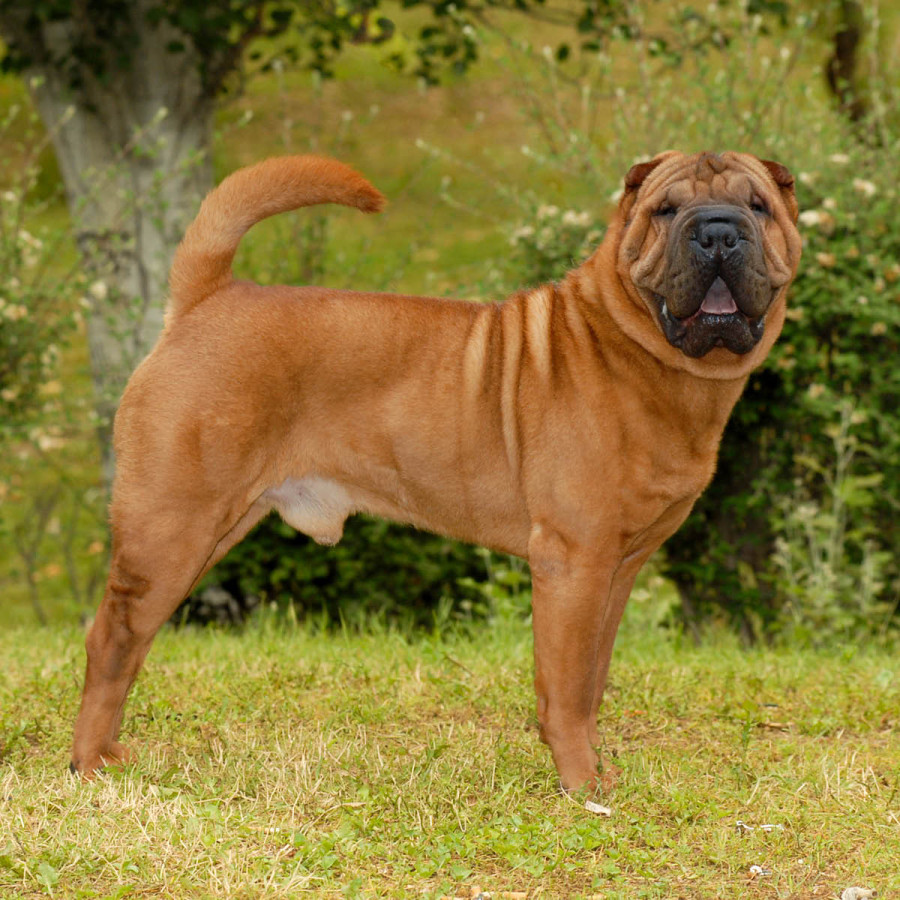
Shar Pei Dog Breed
The Shar Pei is a medium-sized breed from China with wrinkled skin that gives them a very distinct look!
The Shar Pei is a medium-sized breed from China with wrinkled skin that gives them a very distinct look!
Stop and think before getting a brachycephalic flat-faced dog
Breeds like this have extreme conformation, including exaggerated body features or a flat face and shorter nose (brachycephalic). These characteristics can negatively affect their health and welfare, and you may face higher insurance and veterinary costs. For these reasons, we wouldn’t recommend buying this type of dog. See here for more information.
If you decide to go ahead, please consider rescuing a dog in need rather than buying a puppy.
Shar peis were originally used for guarding, herding, hunting, and, sadly fighting. They’re a powerful, independent, breed that are devoted to their humans.
These dogs need experienced and dedicated owners, so they’re not recommended as a first-time dog.
Shar Peis are a calm, independent, breed. They’re affectionate with close family members and friends, while being aloof and suspicious of strangers.
Once they hit maturity, the Shar Pei isn’t as playful as many other breeds. Their hunting and fighting background means they can’t be trusted around other pets, unless they’ve been thoroughly socialised when young. Being a strong-willed dog, these dogs can come across as stubborn when it comes to training.
Like most dogs, Shar Peis need regular exercise, but they’re not suited to long hikes, so you might want to consider another dog if that’s your sort of thing!
The Shar Pei is a serious watchdog and highly suspicious of strangers, so care should be taken when new people visit your home.
Disclaimer
While these breed traits give a general idea of what to expect from a specific type of dog, it's important to remember that every dog is unique. Just like people, each dog comes with their own distinct personality, quirks, and characteristics!
The Shar Pei can be a devoted family pet, but they’re not a good match for homes with young children.
They’re not particularly playful and their independent nature means they like a lot of alone time. So allowing any children into the home can make them uncomfortable.
As dogs with small ears, a wrinkled face and short nose, their body language can be hard to read. So it’s a good idea to learn what your dog likes or dislikes.
Shar Peis are suited to a single person, mature couple or a family with children who aren’t looking for a dog to have lots of fun with. They should also be old enough to understand and live with this breed’s nature and temperament.
The Shar Pei can live happily in any size accommodation, but access to a garden is highly recommended. They’re not a breed that’s suited to off-lead exercise, so an outdoor space of their own is handy.
Living in a flat can be a challenge for this breed as noise may set off their barking (depending on how much they hear). This could potentially lead to complaints from your neighbours.
The Shar Pei can cope with being left home for a few hours, as long as it’s built up slowly and their needs are being met. This can make them a good match for part-time workers. And it’s great for fitting in social commitments too!
If you’re thinking about getting a Shar Pei, it’s best they’re the only pet in your home – unless they’re introduced to other dogs at a young age. Their high prey drive can make them unsuitable for living with cats and small pets.
Shar Peis need owners who understand exactly what to expect from them – and the responsibility involved.
Shar Peis can be affectionate with their close family. These devoted and loyal dogs show this by following you around to keep an eye on you, laying at your feet, and even snuggling on the sofa.
There’s a good chance your Shar Pei will pick and choose when to share their affection, so don’t be upset if they aren’t always up for a snuggle when you want one!
Being naturally aloof with strangers, a Shar Pei is never going to be the life and soul of the party. If you’re looking for a social butterfly, we think the Shar Pei probably isn’t the dog for you.
Shar Peis love to play, but it isn’t always at the top of their to-do list.
Like all puppies, they’re at their most playful when young – but that doesn’t mean they don’t like a bit of fun in their older age!
When the mood strikes, they’ll be up for chasing toys and playing tuggy. But it’s important to properly teach them the rules of games like ‘take it’ and ‘leave it’. They’re a strong breed with a powerful jaw, and don’t realise their own strength!
As the Shar Pei reaches maturity, their playfulness is likely to reduce. You may still see them showing you they want to play. But don’t expect them to get excited every time you initiate a game.
While play may take a backseat in older age, they’ll still enjoy things like puzzle feeders that help stimulate their brain without physically tiring them out.
The Shar Pei is a calm and relatively quiet breed. But that doesn’t mean they don’t bark, and when they do you need to pay attention. They take their role as home protector very seriously!
Like all breeds, they may bark if their needs aren’t being met. For example, when they’re not getting enough exercise, or they’re simply bored. It’s not uncommon from them to also bark in reaction to seeing other dogs they don’t like. So be prepared for this while out and about on walks.
It’s vital to socialise your Shar Pei puppy. This will reduce the risk of behavioural issues associated with the breed.
Solid foundation training, exercise and mental stimulation will give you the best of chance of keeping any tricky behaviour under control.
Shar Peis are extremely territorial and take protecting their home very seriously. This can pose a threat to unknown visitors, including home maintenance workers or delivery people. Always ensure that your Shar Pei is secured before allowing unknown people into your home or garden.
They can also be very protective of their family when out walking. This can include barking at strangers who approach you, which is another reason for dedicated socialisation and habituation training.
Socialisation is teaching a puppy to interact in an appropriate way with people and other dogs. Habituation is teaching a puppy to ignore some people, other dogs, traffic, noises, livestock, etc.
This breed can have a low tolerance for other dogs, especially male to male. They’re highly unlikely to ever back down from any kind of confrontation.
As a breed with an independent and strong-willed nature, you might find they don’t always listen to you. This can be challenging, especially when out in public. With training, you can cope better with these situations.
As well as access to a garden, Shar Peis need between 30 to 60 minutes of exercise a day.
These dogs love lead walks in green spaces and woodlands where they can sniff and explore. Their independent and strong-willed nature, along with their high prey drive, makes teaching a reliable recall almost impossible.
Being a short-nosed breed, they can struggle in warm temperatures, so avoid walks or play when the weather is hot. If you can, consider hiring an enclosed field for half an hour, two or three times a week. This will give your Shar Pei some freedom to exercise safely.
If you’re looking for a dog who enjoys long hikes, running through the countryside, or even competing in agility, we think the Shar Pei is not the dog for you.
Shar Peis are renowned for their independent and wilful nature. They’re not the easiest of breeds to train, but this doesn’t mean they’re not intelligent. In fact, quite the opposite! What it does mean is they won’t always be the most cooperative – it’s just their way.
Like all breeds, A Shar Pei puppy's brain is like a sponge, so don’t waste any time with getting on with their training. It’s essential that socialisation and habituation training starts as soon as you get your puppy home. Ideally, the breeder will have already started this for you.
Your puppy needs to learn how to cope with all the sights and sounds they will encounter throughout their life. This will provide them with a solid foundation for any basic obedience you want to teach them.
Kind, fair, and effective training, using reward-based training, will help build a strong bond. It will also give you more control as they mature.
Adolescence is always a trying time for both dog and owner. Hang in there – your patience and persistence will pay off in the long run.
The Shar Pei has a very short, harsh coat that almost sticks out from their body rather that lying flat. It doesn’t need much maintenance. A brush with a zoom groom (rubber brush) twice a week should be enough.
When they go through their bi-annual moult, you may find they look a bit moth-eaten, but this is normal.
Grooming this breed can be time-consuming, depending on how deep their wrinkles are. It’s important to keep their folds clean and dry to prevent bacterial infection.
Like all breeds, Shar Peis can be prone to certain health issues. It’s always advised that you choose a breeder that carries out all the relevant health testing on their breeding stock. This gives you the best chance of getting a healthy dog.
Common issues that can affect this breed include:
• Amyloidosis – a build-up of protein in the liver and/or kidneys.
• Familial Shar Pei fever – fever with swollen hocks (joint on rear leg) or face.
• Glaucoma – a painful eye condition that can result in sight loss.
• Entropion – where eyelashes rub against the eye.
• Vit B12 deficiency – this will require life-long medication
• Elbow dysplasia – malformed elbow joint/socket.
• Hypothyroidism – under-active thyroid.
• Several skin conditions that will need medication.
A healthy lifestyle, exercise, nutritious diet and regular veterinary care will help to ensure your Shar Pei lives a long, happy life.
I don’t need to romp around for ages, but I do need two 30-60 minutes of walkies a day to keep my joints supple and give my nose a workout.
I’m not a great fan of training but I do love to use my brain. Puzzle feeders are a great way to get my tail wagging!
My hunting roots mean that I love to use my nose. Seek and find games, or anything that involves me following a scent are great fun.
You should expect to pay approximately £1,000 for a well-bred pedigree Shar Pei puppy.
The set-up costs for any puppy can be several hundred pounds. This includes, food, bowls, toys, collar, lead, harness, longline, baby gates, beds etc.
Ongoing costs include, food, vaccinations, parasite control, insurance premiums, and field hiring.
Take our quiz to discover which breed is right for you
Take our quizPlease call our pet support line on 0300 303 9333 (7 days a week – 8.30am - 4pm)