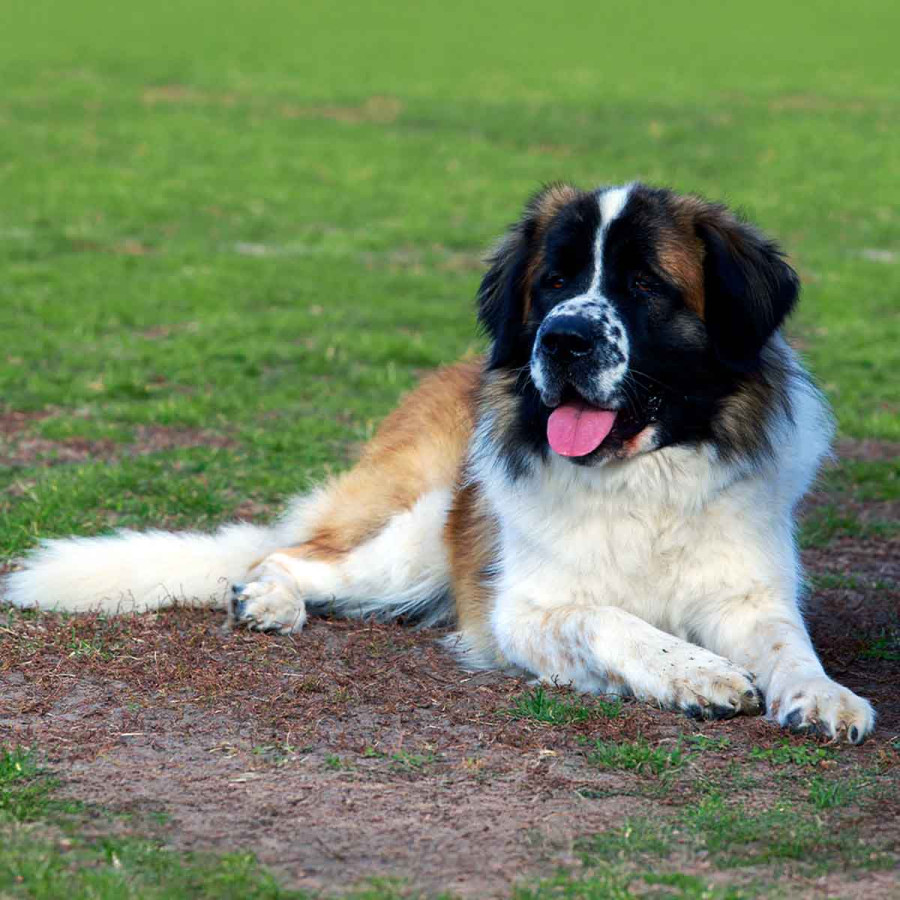
St Bernard Dog Breed
The St Bernard is one of the world’s most recognisable giant breeds.
The St Bernard is one of the world’s most recognisable giant breeds.
St Bernards are calm, gentle and devoted to their families. Because of their size, they need plenty of space, and lots of human company is essential.
These dogs need to follow a specific diet to keep their weight in check from puppyhood through to adulthood.
If you’re thinking about getting a St Bernard, you should be prepared for some of their slightly less desirable traits – drool, significant shedding and high monthly care costs.
A well-bred St Bernard is a placid, good-natured and warmly affectionate dog.
They’re devoted to their families and are usually gentle and tolerant. But when it comes to puppyhood and adolescence, they can be just as boisterous as any other dog. And this can be even more challenging due to their size!
These dogs mature slowly – both physically and mentally. So you should expect an extended puppyhood that can last well into their second year.
St Bernards are not a high-energy breed. They’re calm at home and adapt well to the routines and rhythms of family life. But their size makes early training and socialisation essential. A well-mannered giant breed is a joy to live with, but an untrained one can make life very difficult!
Disclaimer
While these breed traits give a general idea of what to expect from a specific type of dog, it's important to remember that every dog is unique. Just like people, each dog comes with their own distinct personality, quirks, and characteristics!
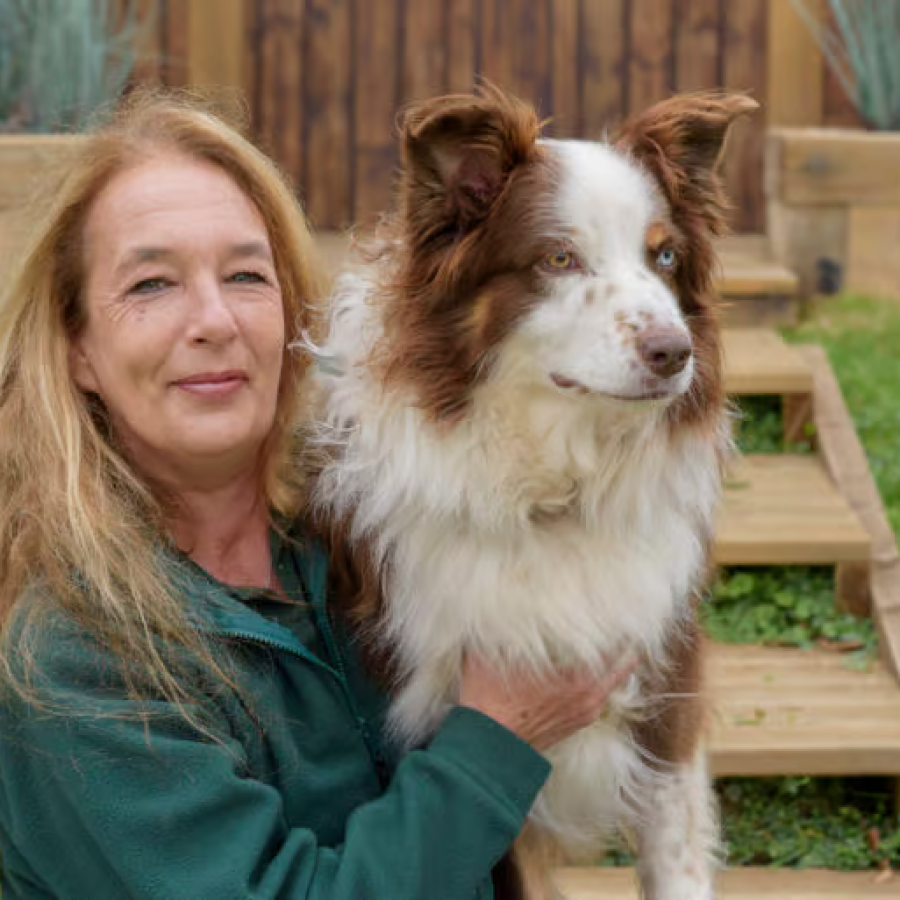
St Bernards can make wonderful family dogs. They’re patient, affectionate and generally good with children. But their sheer size means interactions with very young or small children should always be supervised. Even the gentlest St Bernard can accidentally knock over a young child, so it’s no surprise that many find them a bit intimidating!
These dogs are a good match for families who have plenty of space and time to invest in training. They form strong bonds and don’t like being left alone for long periods, so they need a home where someone is usually around to keep them company.
St Bernards need space – the more, the better! A large home with a securely fenced garden is a must. This gives them room to move comfortably and allows safe outdoor time.
Due to their size and weight (reaching 60kg or higher), they’re not suited to living in a flat. Everything from the sofa to the car needs to be able to accommodate them.
These dogs generally get on well with other canines. They can also live alongside cats as long as they’re introduced carefully.
They’re great for households with a calm atmosphere, where someone is around for most of the day.
If you’re not sure whether this breed is right for you, why not try our dog breed explorer quiz?
St Bernards are deeply affectionate dogs. They form solid bonds with their families and tend to stay close – often following their humans around like a shadow!
As well as being warm and friendly with people they know, they’re usually tolerant of strangers too. Their affectionate nature means they don’t cope well with lots of alone time.
St Bernards are playful – especially as puppies and young adults. Their enthusiasm is a joy to see, but their size can make this hazardous for anything, or anyone, in their space!
As they mature, most St Bernards will settle into a calmer approach to play. Short, interactive sessions work best. This also helps to build the bond with their human.
Play should always be appropriate for a dog’s age and size. For a young St Bernard who’s still growing, you shouldn’t engage in rough or overly physical games. This can stress their growing joints.
St Bernards are not known to be excessive barkers. In fact, they’re usually fairly quiet dogs who only make noise when they want to alert their owners to something.
When it comes to meeting strangers, or unwanted visitors to the home, their size should be overwhelming enough without the need for barking as well!
With consistent training from an early age, you should be able to keep barking under control. This makes them a sensible choice for owners who prefer a calmer, quieter household.
For the St Bernard, size is the most significant factor. Without the right training, they’ll struggle with walking nicely on a lead, greeting visitors calmly or responding to basic commands. So, start training early, before your St Bernard reaches their full size!
As a dog that thrives on company, it’s common for them to experience separation-related issues when left alone.
With good early socialisation, habituation and consistent positive training, these issues can be prevented or managed effectively.
Originally bred for mountain rescue in the Swiss Alps, the St Bernard is a working breed who are better known for their endurance rather than high energy.
As adults, they will need around 30–60 minutes of exercise a day (split across two walks). Puppies and young St Bernards should not be over-exercised. This is because their bones and joints develop slowly. Too much exercise before they’re fully grown can cause lasting damage.
Their heritage also means they’re not built for hot weather, so be mindful of this during exercise – they can quickly overheat.
Like all dogs, they benefit from regular access to green space for sniffing and exploring. When it comes to their exercise, the quality matters as much as the duration!
St Bernards are willing and generally responsive to training. But they can have an independent streak and are slow to mature, so patience is key!
Positive reinforcement works well and training must begin as early as possible. A St Bernard who reaches full size without basic manners in place can be very challenging.
Adolescence often brings renewed testing of boundaries, so consistent reinforcement throughout the first two years is super important.
Five common behavioural issues to watch out for:
• Pulling on the lead – critical to tackle early, given the breed’s eventual size and strength.
• Jumping up at people – enthusiastic greetings from a giant breed can be dangerous, particularly around older people and children.
• Separation-related distress if left alone without a gradual, positive introduction to alone time.
• Selective recall outdoors once the dog has found something interesting.
• Excessive drooling, and coat care management – not a behavioural issue, but something you need to prepare for from day one.
St Bernards come in both short-haired and long-haired varieties, and they both need regular attention. Their thick double coat sheds a lot, especially in spring and autumn. Brushing two to three times a week helps to manage loose hair and prevent matting in the longer-coated variety.
St Bernards are known for drooling. Their facial folds and jowls should be cleaned regularly to prevent skin irritation. Ears should also be checked and cleaned to reduce the risk of infection.
Getting puppies used to handling and grooming from an early age can make it significantly easier as they grow.
A nutritious diet, careful management of exercise during growth, and regular vet check-ups all help to reduce the risk of health problems.
Responsible breeders carry out health tests on their breeding dogs – always ask for evidence before taking on a puppy. Conditions this breed can be prone to include:
• Hip and elbow dysplasia – abnormal joint development that can lead to pain, lameness and arthritis. The BVA/Kennel Club Hip and Elbow Dysplasia Schemes are available for screening.
• Gastric dilatation-volvulus (GDV/bloat) – a life-threatening emergency in which the stomach fills with gas and can twist. Immediate veterinary attention is required. Feeding smaller meals and avoiding vigorous exercise around mealtimes can help reduce the risk.
• Dilated cardiomyopathy (DCM) – a heart condition in which the heart muscle weakens and loses its ability to pump blood effectively. Annual cardiac screening is recommended.
• Osteosarcoma – bone cancer, which is more common in giant breeds and often shows as lameness or swelling around a limb.
• Entropion – where the eyelid rolls inward, causing the lashes to irritate the surface of the eye. This can be painful and may need surgical correction.
I need around 40–60 minutes of gentle exercise each day. Without regular walks, I can get bored quickly. Be sure no to overdo it when I’m young – my delicate joints are still growing!
I’m usually calm but I still need things to engage my brain! Short training sessions, sniffy walks and interactive games are right up my street. Boredom leads to mischief!
Please start my training as soon as you can – I grow very fast and a giant dog with no manners is hard work. I respond well to kindness and patience. Keep it consistent and I’ll do my best – deal?
Buying a St Bernard puppy from a responsible breeder in the UK typically costs between £1,000 and £2,500. Rehoming from a rescue is usually around £150–£250. If you’re not sure whether this breed is right for you, why not try our dog breed explorer quiz?
Start-up costs for essentials – which need to be giant-breed sized throughout – typically come to around £400–£600.
Ongoing monthly costs include food (£80–£100 due to their size), insurance (£60–£120 – premiums are higher given the health issues they’re prone to), and routine vet care including vaccinations, boosters and parasite control. This breed’s grooming costs are moderate (depending on the service used) and will be a regular expense. The total estimated monthly cost is £150–£250.
Take our quiz to discover which breed is right for you
Take our quizPlease call our pet support line on 0300 303 9333 (7 days a week – 8.30am - 4pm)
