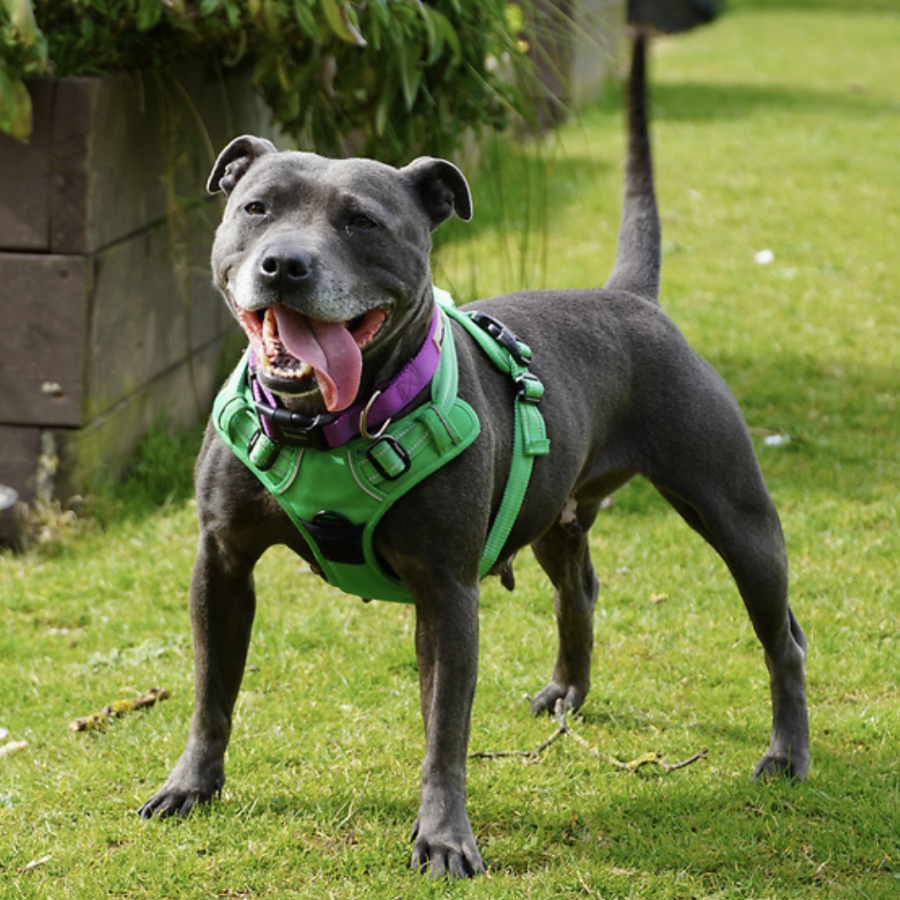
Staffordshire Bull Terrier Dog Breed
Staffies might be small but they’ve got big hearts. If you like affectionate dogs, they could be the breed for you!
Staffies might be small but they’ve got big hearts. If you like affectionate dogs, they could be the breed for you!
Gentle and intelligent, Staffordshire Bull Terriers (also known as Staffies) make good family dogs if you manage them carefully around other dogs and small pets.
Despite this breed’s history in dog fighting and other blood sports, they’re loyal and highly affectionate pets.
Staffies are very affectionate, both with people they know well and people they don't! It’s not unusual for them to seek extra attention when out and about, which can sometimes make walkies a bit tricky if you like to go at a steady pace!
They’ll even sit on a stranger's feet for strokes. And if you make eye contact with one in the street... you must follow up with some attention!
Whilst they enjoy snuggling up on the sofa with you, they’re also active and agile little dogs. It’s fair to say they excel at multiple different dog sports with the right training. Staffies approach every day with an infectious kind of enthusiasm. They love getting involved in whatever their humans are up to!
It’s important to know that Staffies can struggle to get on with dogs they don’t know – needing careful introductions and management. They may also not cope well with large groups of dogs running around off-lead.
Disclaimer
While these breed traits give a general idea of what to expect from a specific type of dog, it's important to remember that every dog is unique. Just like people, each dog comes with their own distinct personality, quirks, and characteristics!
Well-bred Staffies are known for their affectionate nature, especially with children. This might surprise some people!
But, as with all dogs, interaction with children and dogs should always be supervised. Despite their gentleness, they can still react badly to inappropriate play or interactions, just like any other dog.
Highly sociable with people, Staffie’s enjoy family gatherings – it’s even more people to meet and love! But they’re easily excited, so you may need help to manage this. It can be like having a small bowling ball rolling around the room!
Staffies are adaptable and will happily live in many different types of homes. They can cope without a garden if they get regular exercise, and they don't need a huge amount of space. As long as you don’t mind sharing your personal space, they’ll be happy!
When it comes to family activities, Staffies love to get involved – whatever’s going on! They enjoy a long hike as much as a chill-out session on the sofa.
If you can, it’s useful to hire a secure field to give your dog the chance to run free without the bother of other dogs.
Staffies can become destructive and demanding if you don’t meet their needs for exercise and mental stimulation.
These guys are one of the most affectionate breeds out there. They would even get inside your clothing with you if given half a chance!
Sometimes, the enthusiastic affection they show can be a bit painful (although they don’t mean it!). They’re pretty strong, muscular dogs, with ridiculously hard heads.
Staffies have huge hearts, and this breed will get under your skin like no other. Despite their tough reputation, they can be soft and loving.
As a breed of Terrier, these guys are very playful, liking nothing more than ripping up cuddly toys! They also enjoy chasing a ball, playing tuggy and wrestling with a football (and probably bursting it!).
Staffies are extremely enthusiastic and can get obsessed with playing ball or tugging. So it’s important to manage and train these dogs to enable them to switch off and control themselves!
Their play style can be rambunctious, to say the least, which can lead to problems with other dogs who don’t enjoy this. So, it can often be a better idea for them to get stuck into battling a large cardboard box, or a big dog toy, instead.
Staffies are not generally yappy dogs, but they can be vocal. This can be a mix of yodelling, growly, rumbly sounds, which may seem alarming at first but it’s usually just them ‘chatting’.
They are partial to a bark when visitors arrive, or if there’s something odd happening outside.
If you’re looking for a guard dog, they’re not the best match. They’re welcoming towards visitors and generally happy to meet people anywhere!
These guys love their people and can struggle to be left alone for long periods of time. So, if you work full-time, they may not be the breed for you. A lonely, bored Staffie can be very destructive!
As a historic cross between Bulldogs and Terriers, Staffies can show a tendency to grab and hold and have a high prey drive (hunting instinct). They can also become very excited very quickly and will need help and training to manage this.
Staffies can find it hard to cope with meeting dogs they don’t know, and some extra training may be needed.
Some Staffies are athletic and need a good 30-minute off-lead run each day, while others are happy with a moochy walk around your local area.
Staffies enjoy solving problems and tackling food puzzles and games with enthusiasm. Toys will need to be tough, though. Staffies really enjoy destroying stuff!
They’re adaptable and enjoy learning new things. Some will like sports such as agility, hoopers (obstacle course), scent work and even Barn Hunt, which involves searching for a scent in bales of straw – great fun!
Staffies can adapt to life in a flat or a home without a garden, as long as their exercise needs are met.
Staffies are generally easy to train – it’s all about finding their motivation. They’ll thrive with kind, positive training methods. Oh, and the use of food and toys!
Like many Terriers, they can be strong-willed and determined. Treating these dogs with kindness and having fun with them is the key to training success. Stick with it and they’ll excel at many canine sports and activities.
Staffies need careful introductions to other animals, and some will never be social butterflies. Without taking the right measures, they’re prone to causing trouble with other dogs – and they don’t back down easily.
Getting support from a professional to help with training at a young age will be valuable. All dogs need help with learning to be calm and relaxed in everyday situations. For example, travelling and interacting politely with other dogs and people.
A bit like an adult who doesn’t want to grow up, Staffies take a long time to fully mature. On the flip side, they’re fun and energetic companions. But they may test your patience at times!
As a short-coated breed, the Staffie needs very little coat care. We recommend a regular brush with a soft bristle brush to keep their coat gleaming.
They may need their nails clipping regularly, depending on where you walk them. Start introducing this at a young age and be careful not to cut them too short!
Whilst Staffies aren’t the furriest of dogs, they do shed – and their little stiff hairs will stick into most soft furnishings!
Because of the Staffies’ thin coat, they feel the cold easily. So a nice warm coat for winter walks is a must. And if your house is a bit chilly, they’d benefit from a thin indoor jumper too.
Staffies are generally healthy dogs, but like any dog there are various conditions they’re prone to. Taking out an insurance policy will ensure you’re covered for illness and injury.
Common health conditions in Staffies:
L-2-HGA hydroxyglutaric aciduria: this is a rare condition which can be inherited. Any Staffie dog that’s used for breeding should be clear as they will have been tested. A dog who is infected will show behavioural changes, anxiety attacks, unsteady gait (walking issue), tremors and muscle stiffness.
Hereditary cataract: this is another inherited condition that can cause a dog to go blind at a young age. Dogs can be tested for this illness, and reputable breeders should be making sure their dogs are clear.
Luxating patella: this is when the kneecap moves out of position and causes a limp, or a skipping gait (walking issue). Sometimes this condition is painful and will need veterinary treatment.
As a breed which is mildly brachycephalic (having a shortened nose), these dogs can find it difficult to cope in the heat. So owners should take a careful approach to exercise on hot days.
You can help keep your dog in tip-top shape with regular health checks, a good diet and exercise.
I need to stretch my little legs at least twice a day. This could be a 20-minute stroll to sniff and explore, or a good run in a safe area.
Because of my Terrier heritage, I enjoy solving puzzles and challenges. Short, fun training sessions, as well as enrichment games, will keep my mind busy.
I need careful training at a young age, like learning how to stay calm around other dogs and pets. I love learning new things and working on new skills. It’s great for stimulating my brain!
A Staffie puppy will set you back between £500 to £3,000 pounds. Be wary of ‘rare’ colours when buying a pup – breeders tend to charge more and may not have carried out the necessary health tests. With any Staffie, you should make sure the breeder has done all of the tests needed.
Buying all the bits and bobs you need, such as a collar, lead, bedding, chew toys, stairgates/pens and a crate will cost several hundred pounds.
Ongoing costs include vet care, food, training classes and pet insurance. Also, the hire of a secure field for off lead exercise, if you can.
Take our quiz to discover which breed is right for you
Take our quizPlease call our pet support line on 0300 303 9333 (7 days a week – 8.30am - 4pm)