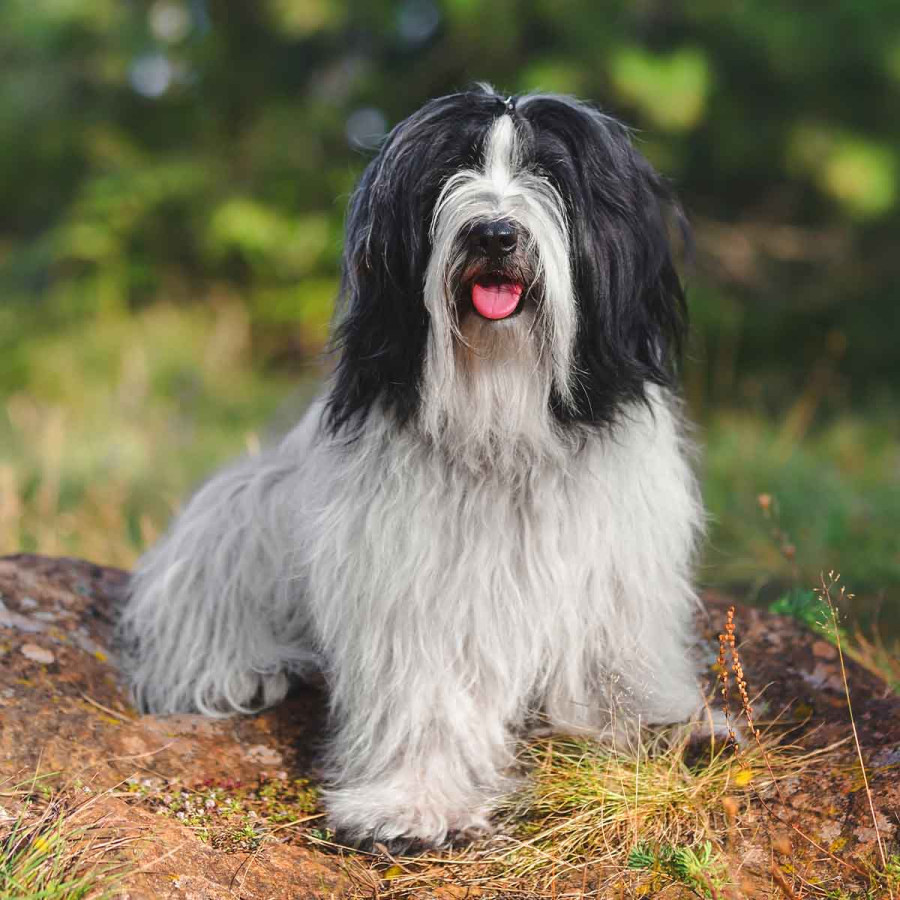
Tibetan Terrier Dog Breed
The Tibetan Terrier is loyal, sensitive and intelligent. And despite the name, they’re not actually a true Terrier!
The Tibetan Terrier is loyal, sensitive and intelligent. And despite the name, they’re not actually a true Terrier!
The Tibetan Terrier breed was originally kept in Himalayan monasteries. They bond deeply with their families and can experience separation related issues, so they suit people who have plenty of time, patience and company to offer.
Their beautiful coat needs daily attention to keep it looking fabulous.
Tibetan Terriers are sensitive souls. They’re also devoted, affectionate, and people-focused. They thrive on being included in daily life and form close attachments to their families.
Whilst these dogs are gentle and affectionate at home, they're also watchful of nearby goings-on. And they’re not shy about barking when something alarms them! This is a trait that comes from their history as monastery guardians. Although they’re naturally outgoing, they tend to take time to warm up to new people.
This breed is playful and spirited, with a sharp intelligence. They’re very observant and get bored without enough to do. Despite being intelligent, they need motivation through rewards to do what you ask, so lots of training is key!
Disclaimer
While these breed traits give a general idea of what to expect from a specific type of dog, it's important to remember that every dog is unique. Just like people, each dog comes with their own distinct personality, quirks, and characteristics!
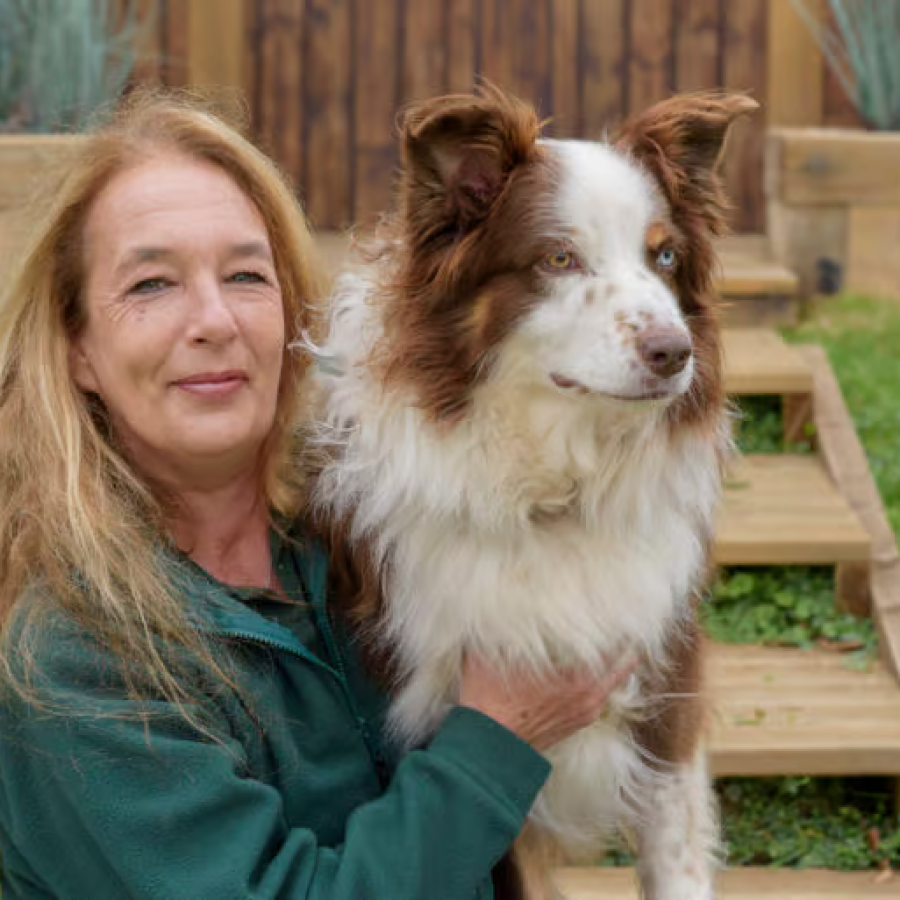
Tibetan Terriers can make good family dogs in the right household. Because of their gentle nature, they usually get on well with children when socialised from an early age.
But it’s important to know they can be sensitive to noise and rough handling. They’re also prone to guarding special food and toys.
This means they suit families with older or calmer children who understand their needs and will keep their own toys out of reach.
These dogs form strong bonds with their owners and prefer not to be left alone for long periods.
Tibetan Terriers are a good match for homes where someone is around for most of the day. They bond closely with their families and can struggle when left alone for long periods.
Access to a garden is useful but not essential. They’re able to adapt to smaller homes, as long as they get enough daily exercise and mental stimulation.
This breed can live with other dogs and, if introduced carefully from an early age, with cats too. They usually suit calmer households rather than very busy or noisy environments.
If you’re not sure whether this breed is right for you, why not try our dog breed explorer quiz?
Tibetan Terriers are deeply affectionate with the people they know well, but it would be a stretch to call them cuddly! Whilst they enjoy being petted, they’ll often walk away when they’ve had enough.
They show affection in more subtle ways like following their humans around like a shadow – from curling up with you on the sofa to keeping you company while you go about your day.
It’s common for them to be more reserved with strangers, and some take time to build trust with new people. But once that trust is established, they can be warm, loyal companions.
Tibetan Terriers have a playful, lively streak that often surfaces at unexpected moments.
As an agile and energetic dog breed, they enjoy games that get them moving and thinking. Activities like agility, scent work and interactive play sessions really get their tails wagging!
Their intelligence means they learn games quickly and need variety. Doing the same thing day after day can easily make them bored. Play activities do them the world of good. This channels their energy and keeps their minds busy.
Tibetan Terriers are typically alert and vocal. If something catches their attention, they’ll probably let you know about it!
This instinct comes from their history as watchdogs, and it means they’re quick to notice changes in their environment. Boredom and separation-related distress can also increase their barking.
With consistent training from an early age, you can keep their barking at a reasonable level.
If you’re thinking about getting a Tibetan Terrier, you should be prepared for a dog that likes to communicate with their voice!
Tibetan Terriers form strong bonds with their humans. They can experience separation-related issues if left alone regularly or for extended periods. Boredom and under-stimulation can also lead to excessive barking or destructive behaviour.
The breed is known to be more likely to resource guard (showing aggression towards people or other pets when protecting their food, toys, or a comfy resting spot).
It’s important to monitor them around other pets, respect their space, and teach them early on to drop and swap items when asked. Doing this in a positive way will help them feel safe and prevent aggression issues.
Being intelligent means they pick up habits – both good and bad – quickly, so early training and consistent boundaries are important. With good socialisation, habituation and positive reinforcement training, most of these tendencies can be well managed. Socialisation is teaching a puppy to interact in an appropriate way with people and other dogs. Habituation is teaching a puppy to ignore some people, other dogs, traffic, noises, and livestock, etc.
Tibetan Terriers were bred to work in the mountains of Tibet. This involved herding flocks, retrieving things from mountainsides, and guarding monasteries in extreme terrain. Their heritage means they’re more active than their calm indoor manner might suggest!
Around an hour of exercise a day is the sweet spot for this breed – ideally split across two walks, with opportunities for free movement and sniffing.
Like all dogs, they benefit from regular access to green space. Mental stimulation is equally important – physical exercise alone is unlikely to be enough to keep a Tibetan Terrier settled and content.
Tibetan Terriers are intelligent and will usually respond well to training. But their independent nature means they can sometimes be hard to motivate!
Positive, reward-based methods work best. All puppies need training from the start – without early guidance, habits such as excessive barking or pulling on the lead can become deeply ingrained and much harder to tackle.
Training should be ongoing. Challenges often resurface during adolescence and need consistent reinforcement throughout their first two years.
Five common behavioural issues to watch out for:
• Excessive barking, particularly when bored or when strangers approach.
• Separation-related distress if left alone without a gradual, positive introduction to alone time.
• Resource guarding – e.g. showing aggression towards people or other pets when protecting their food, toys, or a comfy resting spot.
• Selective recall, especially in environments with interesting distractions.
• Destructive behaviour at home if mental stimulation and exercise needs aren’t met.
The Tibetan Terrier has a long, thick double coat that needs consistent care to stay in tip top condition.
Daily brushing is recommended to prevent tangles and matting. This becomes especially important as the adult coat comes in, usually between 12 and 18 months of age.
Regular bathing every few weeks helps keep this breed’s coat clean and free from dirt. Many owners go for a shorter trim to reduce the grooming commitment, which means a trip to the groomer every 6-8 weeks.
It’s a good idea to get puppies comfortable with brushing and handling from an early age. This makes a huge difference to the grooming experience throughout their life.
A healthy lifestyle, good nutrition and regular vet check-ups are key to reducing the risk of health problems.
Responsible breeders carry out health tests on their breeding dogs. Always ask for evidence of relevant tests before taking on a puppy. Conditions this breed can be prone to include:
• Progressive retinal atrophy (PRA) – a hereditary eye condition that causes gradual deterioration of vision, which can progress to blindness.
• Primary lens luxation (PLL) – dislocation of the lens of the eye, which can be painful and may require surgery.
• Cataracts – cloudiness of the lens that can affect vision; some cases are hereditary.
• Hip dysplasia – abnormal development of the hip joint, which can lead to pain and arthritis over time.
• Luxating patella – where the kneecap slips out of position, causing discomfort or lameness.
I need around an hour of exercise every day. Without it, I can get bored and restless. And that could get me into all sorts of mischief you won’t appreciate!
I’m sharp and I pick things up fast – so please keep my brain busy! Scent games, puzzle feeders and varied training sessions are ideal. Doing the same thing every day? Not for me!
I learn quickly but I have a sensitive side, so please be kind and patient. Positive, reward-based training works best for me. Start early and keep it consistent, please – I’ll repay the effort!
Buying a Tibetan Terrier puppy from a responsible breeder in the UK typically costs between £800 and £1,500. Rehoming from a rescue is usually around £150–£250. We encourage you to check the dogs looking for a home at Woodgreen or other reputable rescues first.
Start-up costs for essentials such as a bed, crate, lead, collar, grooming tools and initial vet care typically come to around £300–£500.
Ongoing monthly costs include food (£25–£40), insurance (£25–£45), and grooming – either professional sessions every six to eight weeks, or allow for the cost of home grooming tools. Routine vet care, including vaccinations, boosters and parasite control, averages £150–£250 per year. The total estimated monthly cost is £100–£180.
Take our quiz to discover which breed is right for you
Take our quizPlease call our pet support line on 0300 303 9333 (7 days a week – 8.30am - 4pm)
