Lisa asks
Why is my dog barking at other dogs?If your dog is scared of traffic or tries to chase cars, you’re not alone! These behaviours are more common than people realise. They can feel frightening, frustrating, or even embarrassing, but it's usually rooted in instinct or fear rather than disobedience.
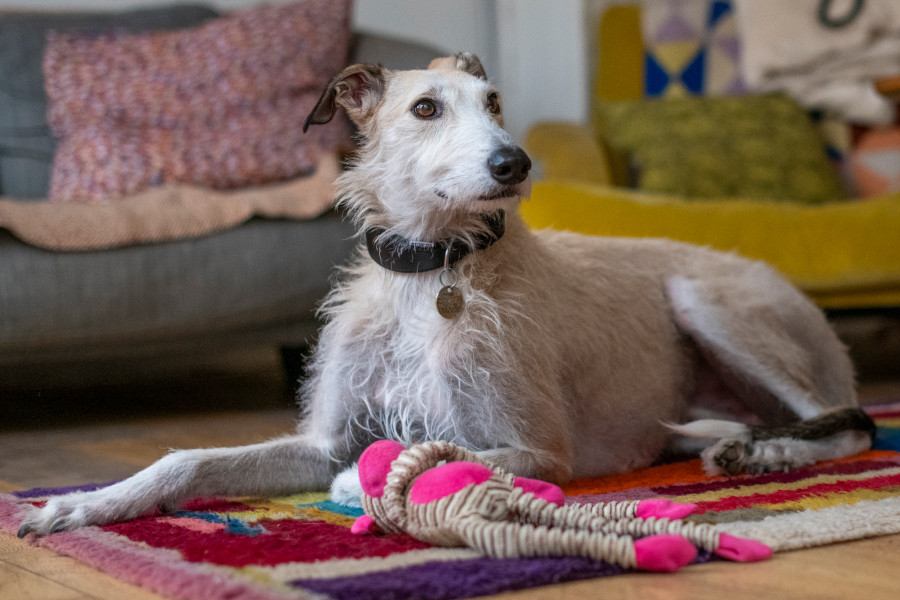
Dogs who chase cars are often responding to fast movement. For some breeds, like Border Collies, Terriers, and Greyhounds, moving vehicles can trigger the same part of the brain as a small animal they would hunt or chase. For other dogs, they might lunge at cars because they’re anxious and afraid.
When something feels overwhelming, barking or chasing can be a way for your dog to make it go away. Annoyingly for us, when your dog barks at a car it will almost always go away, which encourages them to do the same thing the next time.
Dogs who are scared of traffic might freeze (go stiff and still), pull away, shake, refuse to walk, or try to run away. Busy roads are loud, unpredictable, and full of sudden movement. For some dogs this is just too much.
The first step is always safety. A dog chasing cars or panicking near traffic is at real risk of injury. Use a well-fitting harness or collar and strong lead. Don’t let your dog off-lead anywhere near roads. If your dog lunges suddenly, try using a double-ended lead attached to both their collar and harness for extra control while you work on training.
Why dogs chase cars
Car chasing isn’t about being ‘naughty’. It is usually caused by one of these:
Some breeds are more likely to chase because of what they were bred to do – hunting and catching small animals or herding livestock. However, any dog can learn this habit if they practise it often enough.
If your dog chases, or barks and pulls, and the car drives away, the behaviour rewards itself. Your dog thinks, “I made that thing leave and now I feel better.” That makes it more likely to happen again.
Why dogs become scared of traffic
Some dogs didn’t see or hear much traffic when they were young. Others may have had one bad experience, such as a loud horn or a car passing very close.
Fear of traffic often builds slowly. You might notice your dog slowing down, looking around more, or wanting to turn back earlier on walks.
These are early warning signs. Helping your dog at this stage is much easier than waiting until they’re very afraid.
How to help a dog scared of traffic noise
It's common to think that if your dog is scared of traffic, you should get them used to it. Like spending more time near busy roads to show them that everything is fine. But in reality, pushing a scared dog closer to traffic can make the fear stronger.
Instead, start near quiet, low-speed roads, far enough away from the road that your dog can notice cars but still take treats and respond to you. Each time a car passes, calmly say “yes” and give a treat. This helps your dog learn that cars mean good things happen.
Over days or weeks, you can slowly move a little closer. Let your dog set the pace. If they stop taking food, freeze, bark a lot, or try to escape, you are too close. Move further away and make it easier again.
Short, calm practice sessions work better than long, stressful walks. It can also be good to practice at the edge of shop car parks, where traffic is really slow and predictable.
How to stop a dog chasing cars
Start with management. Try to avoid situations where your dog is likely to chase cars so that they don’t practise chasing while you’re training. Walk at quieter times of the day. Choose routes away from busy roads. You might even drive somewhere calmer for a while.
Teach skills that help you interrupt chasing. For example, you can teach your dog to touch your hand with their nose so you can move them away easily, look at you when you say their name to get their focus off of cars and onto you, or turn quickly with you when you change direction so you can get further away when needed.
Reward calm choices near roads. If your dog sees a car and then looks back at you instead of lunging, say “yes” and reward straight away. Over time, this builds a new habit.
Be consistent. Every calm response makes the next one easier.
When to seek professional help
If your dog is strong enough to pull you towards traffic or has broken free from you before, or nearly has, it’s a good idea to get extra help.
Look for a trainer who uses kind, reward-based methods and is accredited by organisations like the Animal Behaviour and Training Council (ABTC). They can coach you through managing and changing this behaviour on your usual walks, and make suggestions to make things easier, safer, and less stressful for both you and your dog.
In more serious cases, your vet and a clinical animal behaviourist may also need to be involved. Getting help early can stop the problem becoming harder to change.
Walk in a quieter area at quiet times for now, so your dog doesn't practise chasing or panicking near traffic.
Reward your dog every time they notice a car and stay calm, even from far away. Bonus points if they notice it and look at you instead of barking or chasing!
Practise a simple hand touch or quick turn at home, where your dog can focus more easily, so you can use it on walks to interrupt your dog.
Lisa asks
Why is my dog barking at other dogs?
Emily asks
How can I stop my dog from running away?
Priya asks
How to stop my dog barking at the doorbellI was struggling with my dog's anxiety, especially when we had to leave the house. Thanks to Woodgreen's advice, I've made some changes that have worked wonders. By sticking to a consistent routine, my dog knows what to expect each day, which has significantly reduced her anxiety.
This advice really helped me and my new pup! I tried teaching recall without your guidance and struggled. Woodgreen's step-by-step dog training videos break each action down for you and I'm happy to say we finally made progress!
Give us your feedback and we'll send you advice and tips on caring for your pets. We'd also love to send you updates about Woodgreen, including heart-warming pet stories and ways you can support us.
Please call our pet support line on 0300 303 9333 (7 days a week – 8.30am - 4pm)