Priya asks
How to stop my dog barking at the doorbell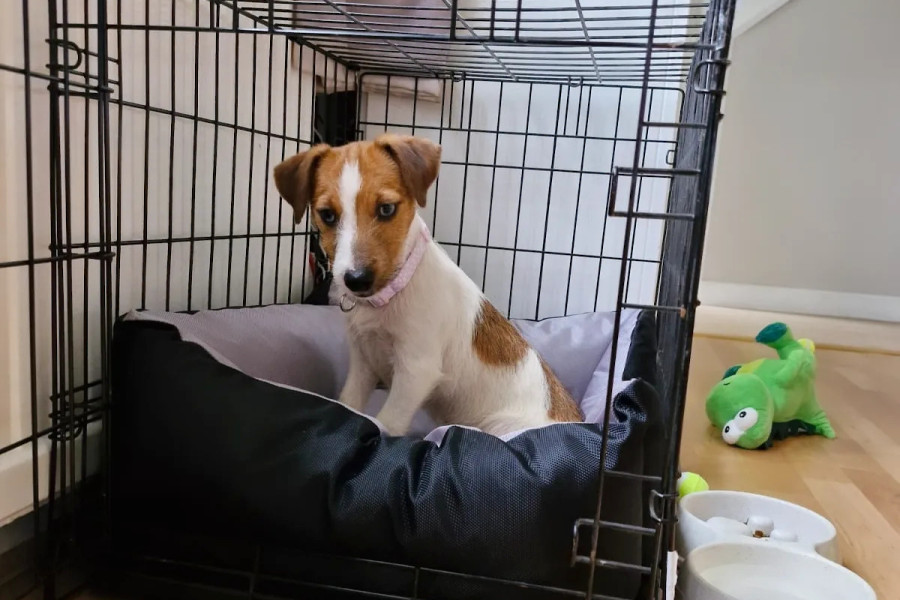
Choosing the right crate for your puppy
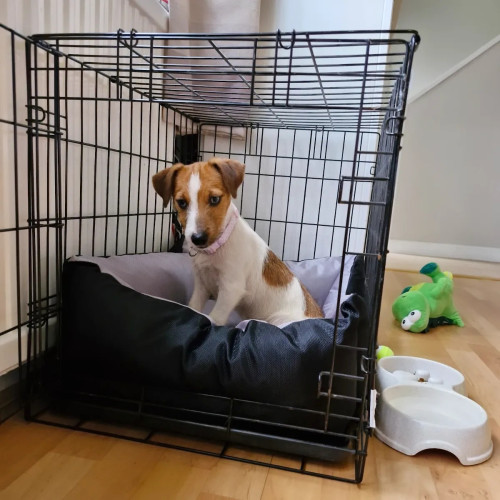
Before you start crate training, it helps to have the right crate. There are three main types: wire crates, which are the best choice for most puppies as they offer good ventilation, fold flat for storage, and usually include an adjustable divider panel so you can start with a smaller space and expand as your puppy grows; plastic or moulded crates, which suit dogs who prefer a darker, more enclosed space and are also the standard for airline travel; and furniture-style crates, which blend into a living room but are not suitable for puppies who chew. Crate training is also sometimes called cage training - they are the same thing.
What size crate does my puppy need?
Your puppy should be able to stand up fully, turn around, and lie down comfortably. To find the right size, measure from the tip of your puppy's nose to the base of their tail, and from the floor to the top of their head, then add 10-15cm to each measurement. If you are buying a crate large enough for your puppy's adult size, use a divider panel to reduce the space for now - a crate that is too large can encourage a puppy to toilet in one corner and sleep in the other, which slows toilet training.
Call your dog and throw a treat inside the crate. As they move towards it, say “yes!”, toss them an extra treat, and praise them. Then entice them away from the crate and repeat this until you’re confident they’ll go straight in each time you throw a treat.
Introduce the crate to your dog slowly. Make it as enticing as possible by using food to show them it’s a great place to be and turn it into a cosy ‘den’ with warm blankets.
Say "In your crate!” before you throw the treat in. After a few successful tries, say “In your crate!” and then pretend to throw a treat. When your dog goes in the crate, say “Yes!” and give them the treat, like before.
It’s important to leave the crate door open to allow your dog to come and go as they like. If they like it enough, they may start to sleep there.
Next, send your dog to their crate and serve their meals inside it. The first few times you do this, don’t shut them in to eat or they may get spooked.
Initially, aim for just a few seconds of quiet between finishing their meal and letting your dog out. Gradually increase the wait before they’re let out. If they whine or bark, this likely means your dog is finding it too hard, so next time make your quiet time shorter so they succeed.
Once your dog happily eats in the crate on their own, you can start closing the door while they eat and let them out when they finish, before they get restless or whiny. Repeat this for every meal.
Each mealtime, encourage them to spend slightly longer in their crate by giving them a long-lasting chew or Kong to work at, and waiting slightly longer after they finish before letting them out again.
When choosing a crate for your dog, make sure there's enough room for your dog to comfortably stand up, turn around and lie down. Don’t forget space for a water bowl. You might even want to consider getting a crate in the next size up for your growing dog!
Adding a piece of clothing that smells like you, or a blanket from your puppy's previous home, can help them settle faster - familiar scent is particularly reassuring in the first few nights. A stuffed Kong or safe long-lasting chew is also a good addition once the door is closed. For overnight use, place the crate right next to your bed for at least the first week - being able to hear and smell you makes a real difference to how quickly your puppy settles. If you'd rather not have your puppy in the bedroom, a camp bed downstairs next to the crate for the first week or so - until they're settled into a good routine - offers the same reassurance. Always take your puppy for a final toilet trip just before bed.
If I’ve not been taught what my crate is, I might find being shut inside annoying or frustrating because I can’t play and spend time with you like I’m used to. Once you’ve shown me what it is, the crate is my safe place to chill out and relax!
Comfort is key when it comes to crate training. It’s worth spending time making it a cosy, squishy and inviting space.
Serve meals to your dog in the crate and throw in tasty chews. Allowing your dog to relax with something they enjoy while in the crate will create positive associations.
If you’re hoping to use your crate as a safe area for your puppy to sleep, have it in your bedroom so they know you’re there for comfort. If that's not an option, sleeping on a camp bed downstairs next to the crate for the first week or so, until your puppy settles into a routine, works just as well.
Priya asks
How to stop my dog barking at the doorbell
Graham asks
What can I do to stop my dog getting bored?
Amelia asks
How to give a dog a tabletI was struggling with my dog's anxiety, especially when we had to leave the house. Thanks to Woodgreen's advice, I've made some changes that have worked wonders. By sticking to a consistent routine, my dog knows what to expect each day, which has significantly reduced her anxiety.
This advice really helped me and my new pup! I tried teaching recall without your guidance and struggled. Woodgreen's step-by-step dog training videos break each action down for you and I'm happy to say we finally made progress!
Give us your feedback and we'll send you advice and tips on caring for your pets. We'd also love to send you updates about Woodgreen, including heart-warming pet stories and ways you can support us.
Please call our pet support line on 0300 303 9333 (7 days a week – 8.30am - 4pm)