What can I do to stop my dog getting bored?
Lindsay Arliss, Dog Behaviour and Training Specialist

"My dog sits by the table every time we eat and stares at us until we give in. Lately he's started pawing at my leg and even barking if we ignore him for too long. It's got worse since he learned that whining works. How do I stop my dog begging for food, and is it too late to break the habit?"
Begging is one of the most common things owners ask us about, and it's an easy habit for a dog to fall into. Food is one of the strongest motivators for a dog, so if begging has worked even once, they'll definitely try it again. The good news, it's rarely too late to turn things around, whatever your dog's age.
Why do dogs beg for food?
Begging happens because dogs have learned that it works! Food is easily one of the strongest motivators for a dog. If all their staring, whining, pawing or nudging has ever been acknowledged and rewarded with even a scrap of food, they're bound to try it again. It's something they've learned rather than just having bad manners. It can develop in dogs of any age, though it often starts in puppyhood when a curious dog first discovers that mealtimes can be shared.
How to stop a dog begging for food
- Stop all rewards for begging, including from visitors. Ask everyone in the household, and any regular guests, to avoid giving your dog anything from the table or their own plate. Even the occasional scrap is enough to feed the habit!
- Feed your dog beforehand. Giving your dog their own meal, or a long-lasting chew, just before you sit down, can reduce their interest in yours.
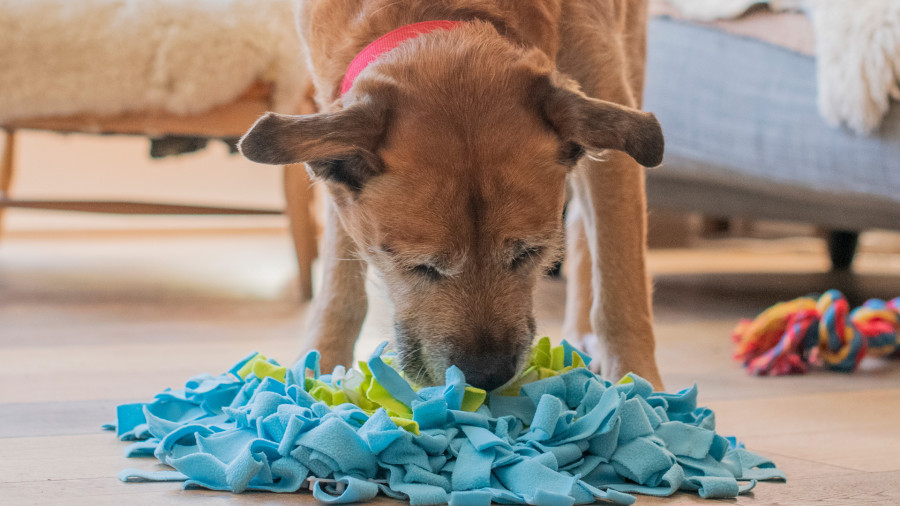
- Give them something else to do. A puzzle feeder or stuffed Kong in their bed or a separate room gives your dog a rewarding alternative to focus on during your meal.
- Teach an alternative behaviour. Asking your dog to settle on a bed or mat a short distance away gives them a clear, rewarded alternative to begging.
- Stay consistent and calm. Try not to respond to begging at all, whether that's telling your dog off or giving in, since both reactions still count as attention. It can take a little while for the behaviour to fade once you stop reinforcing it, so try to be patient.
Is it too late to stop an older dog begging?
It's rarely too late to make a change, even if begging has been going on for years. Older dogs can still learn new habits, though a well-established behaviour may take a little longer to fade than a newer one. The key is consistency. As long as begging no longer gets your dog what they want, most dogs will gradually stop trying.
If begging is proving difficult to manage, book an appointment with our team for tailored support.
I was struggling with my dog's anxiety, especially when we had to leave the house. Thanks to Woodgreen's advice, I've made some changes that have worked wonders. By sticking to a consistent routine, my dog knows what to expect each day, which has significantly reduced her anxiety.
This advice really helped me and my new pup! I tried teaching recall without your guidance and struggled. Woodgreen's step-by-step dog training videos break each action down for you and I'm happy to say we finally made progress!
Give us your feedback and we'll send you advice and tips on caring for your pets. We'd also love to send you updates about Woodgreen, including heart-warming pet stories and ways you can support us.
Please call our pet support line on 0300 303 9333 (7 days a week – 8.30am - 4pm)