Understanding your dog's body language
Dogs cannot tell us how they are feeling in words, so they rely on their body to do it instead. Understanding what your dog's body language means helps you respond to their needs, keeps you and others safe, and builds a stronger bond between you. Below, our expert explains what to look out for and what it usually means.
What to look at
A dog's mood shows up across several parts of their body at once, so it helps to look at the whole picture rather than one feature alone.
Taking all of these together gives a much clearer picture of how your dog is feeling than any single signal on its own.
A relaxed and happy dog
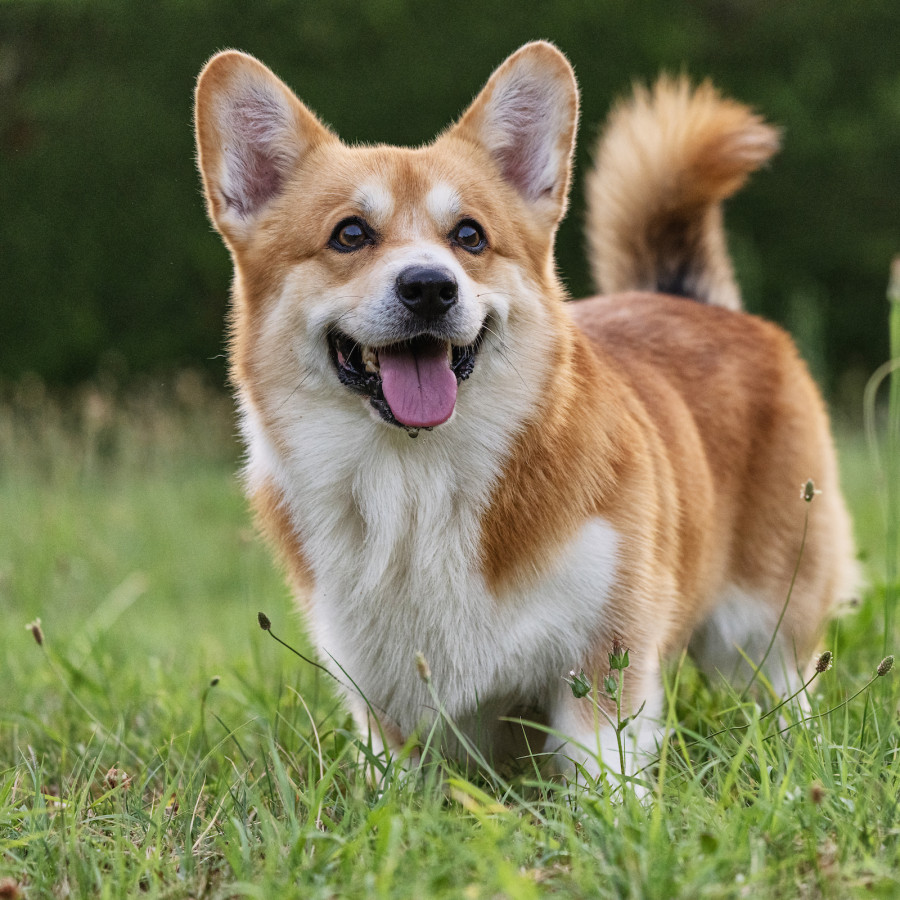
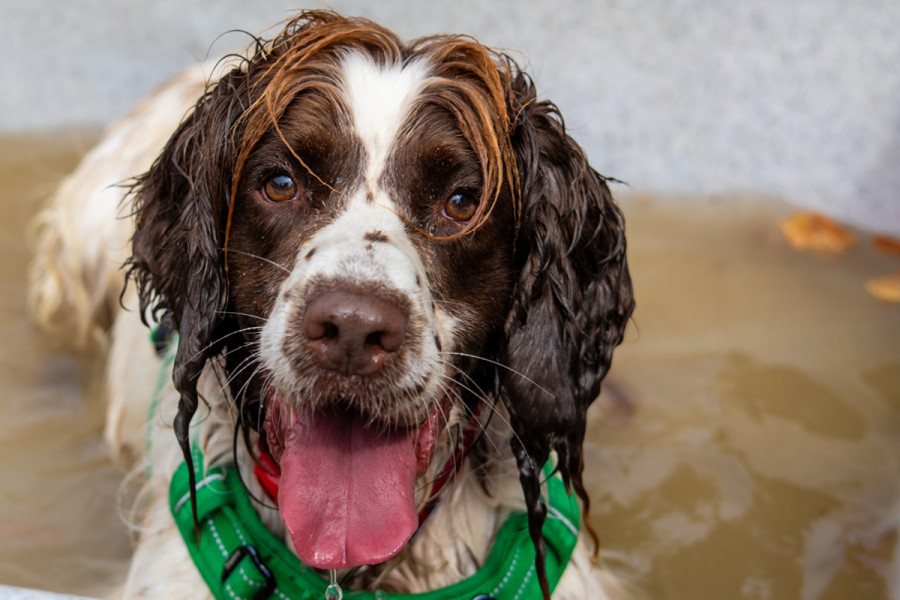
A relaxed dog has a loose, wiggly body and a smooth coat. Their mouth is open and relaxed, sometimes described as a soft, gentle smile, and their eyes are a normal, soft shape. Their ears sit in their natural position and their tail wags in a loose, sweeping motion. A dog who is inviting play may lower the front of their body while raising their bottom in the air, sometimes called a play bow, often paired with excited barking or short bursts of movement.
A worried or anxious dog
A worried dog shows very different signals from a relaxed one. Their body and head are often held low, their tail is tucked under, and their ears are pulled back. They may avoid eye contact, turn their head away, lick their lips, or yawn outside of tiredness. Some dogs raise a front paw or shift their weight backwards, away from whatever is worrying them. These are all ways of telling you they feel uncomfortable and would like some space.
An unhappy or aggressive dog
A dog who feels threatened or very unhappy shows signals aimed at making a threat go away. Their body may look stiff, with their weight pushed forward and hair raised along the back. Their tail may be held high and stiff, or, in a more fearful dog, tucked tightly between their legs while they cower. Their ears are usually pinned back and flat. Around the mouth, look out for a wrinkled nose, tightened lips drawn back, and teeth on show, sometimes with a low growl. A dog showing these signals needs space immediately, since they are close to their limit.
The dog communication ladder
These signals do not usually appear all at once. The communication ladder, developed by dog behaviourist Kendal Shepherd, shows how a dog's body language tends to build as they become more uncomfortable, starting with subtle signals and only moving towards growling or snapping if those are missed.
Signals on the ladder include, from the most subtle to the most obvious:
Not every dog will show every step, and some may not follow the exact order. A dog who feels their early signals are consistently ignored can learn to skip straight to growling or snapping, because the quieter signs have not worked before.
Can dogs read our body language too?
Dogs are highly tuned in to human behaviour. They can read our facial expressions, follow our gaze, and pick up on tone of voice and movement, which is one reason dogs often respond differently to a calm person compared with someone who is tense or loud. Staying calm and predictable around a worried dog can help them feel safer.
Teaching children to read dog body language
Children often misread dog body language, mistaking a stiff, still dog for a calm one, or seeing a tucked tail simply as shyness. Always supervise interactions between children and dogs, and use the signals above to teach children what to look out for. If a dog shows any signs of discomfort, encourage children to give them space rather than approach.
Body language can also flag health problems. A sudden change in posture, reluctance to move a certain way, or unusual stiffness can sometimes point to pain rather than a behavioural issue. If you are ever concerned about your dog's behaviour, speak to your vet first, since some changes have a medical cause. They can refer you to a clinical animal behaviourist if needed.
Look at ears, tail, posture and mouth together, rather than focusing on just one signal, to get a fuller picture of how your dog is feeling.
If your dog turns away, yawns or licks their lips, give them space. Responding early helps them feel heard without needing to escalate.
Show children and other family members the early warning signs, so everyone knows when to give your dog some breathing room.
I was struggling with my dog's anxiety, especially when we had to leave the house. Thanks to Woodgreen's advice, I've made some changes that have worked wonders. By sticking to a consistent routine, my dog knows what to expect each day, which has significantly reduced her anxiety.
This advice really helped me and my new pup! I tried teaching recall without your guidance and struggled. Woodgreen's step-by-step dog training videos break each action down for you and I'm happy to say we finally made progress!
Give us your feedback and we'll send you advice and tips on caring for your pets. We'd also love to send you updates about Woodgreen, including heart-warming pet stories and ways you can support us.
Please call our pet support line on 0300 303 9333 (7 days a week – 8.30am - 4pm)