What our expert says
Emily Norton
Veterinary Department Manager
What causes hotspots on dogs?
A hotspot can develop after any minor skin irritation, injury to the skin, cut, graze, insect bite, skin infection, allergy, or clipper rash. Self-trauma from over-grooming or licking can also cause hotspots.
Warmer weather can make a hotspot worse. A dog with very thick coat or matted or wet fur may develop a hotspot if air can’t reach their skin.
How to identify a hotspot on your dog
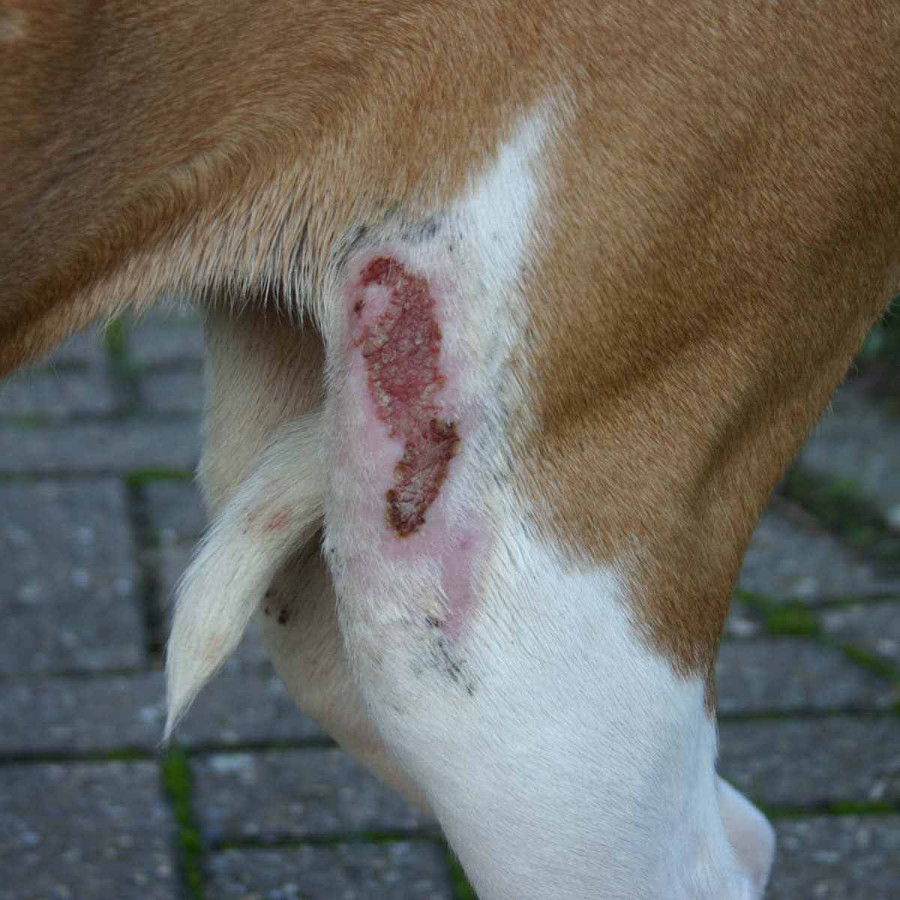
The affected area may look red or inflamed and feel warm. Skin or fur may appear wet or damp, due to any discharge. The skin might also form a scab.
Any fur around the hotspot can become matted, and you may notice hair loss. There may also be an unpleasant smell from the area.
Your dog will likely be very interested in the hotspot, and you may notice they want to lick, scratch or rub it.
How to treat hotspots in dogs
The first step is to contact your vet for advice on any hotspot treatment before an appointment.
They may advise gently clipping excess fur from around the area (taking care not to cause any clipper rash). Then gently cleaning the area by dabbing some cooled boiled water onto it.
Fresh air will help dry the area once it’s clipped and cleaned. It will be useful to help identify what caused the hotspot to prevent more.
Try to prevent your dog from interfering with the hotspot, so they heal quicker. A buster collar or light cotton item may be necessary.
Your vet will advise on any treatment or medication needed to clean the hotspot and help manage any pain, discomfort or infections.
Dog hotspot healing stages
When the hotspot first appears, you may notice redness, heat or swelling. There may also be discharge, moisture, smell and matting of fur.
Your dog will probably be very interested in the area and want to lick, scratch or rub it.
After treatment, the area of redness should start to decrease in size. There should also be less moisture, and your dog should not be as interested in the area.
A scab may form, which will decrease in size, and any hair loss should slowly regrow.
How to prevent hotspots from coming back
Hotspots can be difficult to notice in dogs that have long hair or very thick fur. So, regularly groom and brush your dog’s coat and check them all over. This will help with spotting any changes or abnormalities. You should also:
• Thoroughly dry your dog after washing or swimming.
• Clean their harnesses and collars if they become dirty before wearing them again.
• Check for any rubbing caused by equipment worn by your dog.
• Remove their collar to check around the neck area regularly.
• Keep any allergies under control and check for external parasites often.
Do puppies get hotspot?
Yes – puppies can get hotspots for the same reasons adult dogs can.