Is your canine friend normally a happy, lively dog whose suddenly lost interest in their food, become very quiet, dull or lethargic? Have they have vomited or passed watery diarrhoea (with possible blood in it)? These are some of the alarming signs they may have canine parvovirus, a potentially fatal disease.
If any of this looks familiar in your dog, please contact your vet immediately for advice –especially if you have a very young puppy or an unvaccinated dog.
In this article, we'll walk you through how to spot possible parvovirus, get your dog the help they need, and take steps to prevent it from happening in the first place.
What is parvovirus in dogs?
Canine parvovirus is a highly contagious viral disease that most commonly affects dogs and is especially dangerous for unvaccinated dogs and puppies. This is because their immune system is not yet fully developed.
Is parvovirus contagious?
Parvovirus is highly contagious. It can survive in the environment for many months – even years. The virus is passed on through contact with faeces, objects contaminated by faeces, or direct contact from an infected dog. This most commonly happens when puppies are with an infected parent dog. Dogs who have recovered may still pass on the virus up to three weeks after infection. This is one of the reasons why you shouldn’t mix puppies who’ve not completed their first vaccines with adult dogs whose vaccine status is unknown.
Parvovirus treatment for dogs
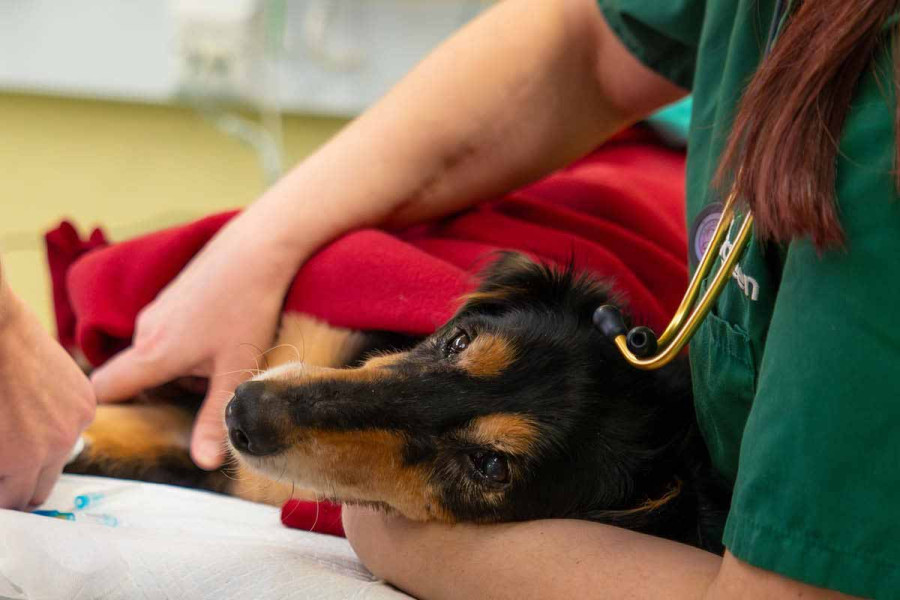
Most dogs will need to stay at the vets for treatment. This usually involves intravenous fluid therapy to replace lost fluids and electrolytes from the vomiting and diarrhoea. Treatment can also include medication to control the vomiting, antibiotics, and gastrointestinal support. For dogs who are unable or unwilling to eat, a feeding tube may be needed to give them regular, small meals to aid recovery. Due to the rapid onset of clinical signs, the virus can make the recovery outcome very uncertain. Veterinary teams will provide the support a dog needs whilst in a barriered environment.
How to prevent parvovirus
Regular vaccinations are the most effective way to prevent your dog from contracting parvovirus. Puppies should be kept separate from adult dogs who’ve been walked in the same areas as dogs with unknown vaccination history. When getting a new dog, it's important to find out their vaccination status as soon as possible. Vaccinations are continued/started from eight weeks of age.
Can humans get parvovirus?
Humans can’t get canine species-specific parvovirus. But they can spread the virus to other dogs if they don’t follow good hygiene techniques.
What to do if your dog is exposed to parvovirus
Prevent them from mixing with any other dogs, avoid taking them to public areas, and seek advice from your vet immediately. The best chance of survival is with early treatment in a veterinary clinic.
How to care for a dog recovering from parvovirus
Follow your vet’s instructions and advice after treatment. Feed your dog small amounts of bland food frequently, and encourage them to drink small amounts of water. You should also clean up any faeces and areas where your dog has been. Disinfect all bowls, bedding, toys, human clothing and shoes. Regularly wash your hands and follow strict hygiene rules.
If your dog is under six months of age, unvaccinated or immune compromised, they have a much greater risk of contracting parvovirus. This is a potentially fatal and highly contagious disease. So if you think your dog has symptoms, contact your nearest vet for advice urgently.
Keep in touch with local vets in your area to stay informed of any outbreaks of parvo.
Always pick up your dog’s poo and dispose of in correct bin, ensuring you wash your hands after their walk.
This is especially important if any unvaccinated dogs, young puppies or immune compromised dogs are living with you.
I was struggling with my dog's anxiety, especially when we had to leave the house. Thanks to Woodgreen's advice, I've made some changes that have worked wonders. By sticking to a consistent routine, my dog knows what to expect each day, which has significantly reduced her anxiety.
This advice really helped me and my new pup! I tried teaching recall without your guidance and struggled. Woodgreen's step-by-step dog training videos break each action down for you and I'm happy to say we finally made progress!
Give us your feedback and we'll send you advice and tips on caring for your pets. We'd also love to send you updates about Woodgreen, including heart-warming pet stories and ways you can support us.
Please call our pet support line on 0300 303 9333 (7 days a week – 8.30am - 4pm)