John asks
How do I calm my dog down?
Step one: Create a safe sleeping space
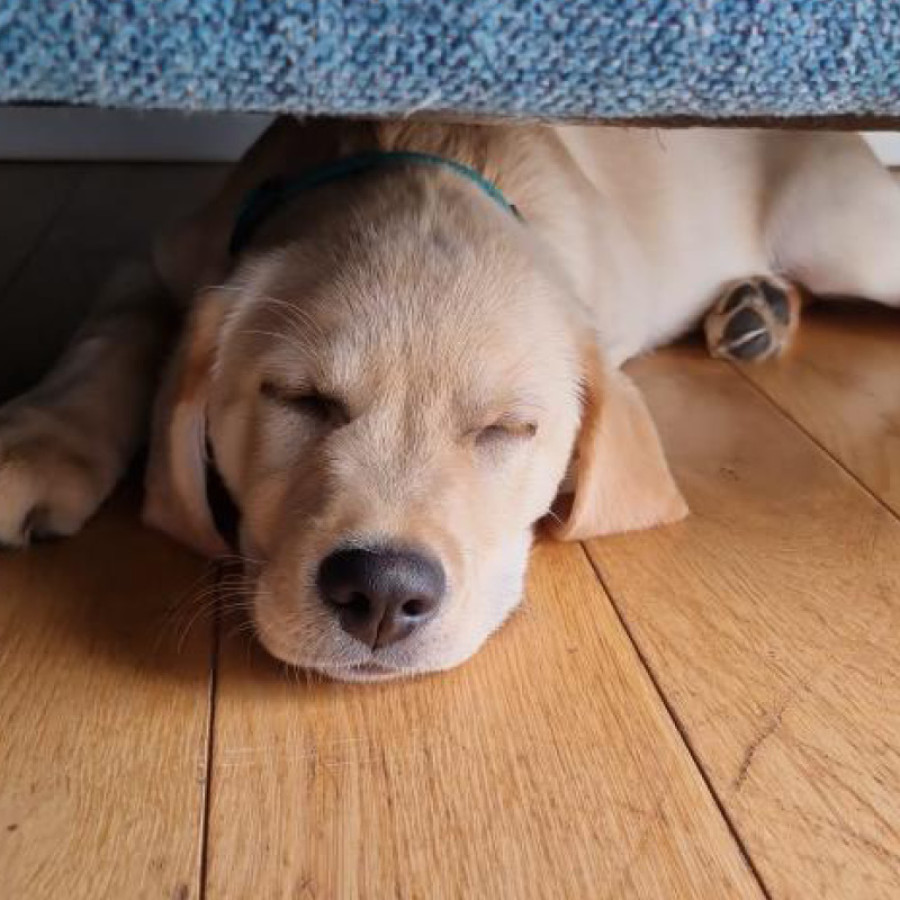
Your puppy needs a warm, comfortable place to sleep. A crate or puppy pen works well. The space should be just big enough for your puppy to stand, turn round, and lie down. There needs to be enough space for their water bowl too, but be mindful that if their crate or pen is too big, they might toilet in one corner and sleep in another.
Add soft bedding and a blanket that smells like you or their previous home. Some puppies like a soft toy to snuggle against. Place the crate right next to your bed for at least the first few nights. Having you nearby will help your puppy to feel safer. Read our crate training guide for more information.
Step two: Build a calm bedtime routine
Puppies respond well to routine as it helps them learn what to expect. Start your routine around the same time each evening.
Feed your puppy their last meal at least three hours before bed. Play with them earlier in the evening to tire them out, but avoid exciting games closer to bedtime.
About 30 minutes before sleep, start winding down by lowering your voice, dimming the lights, and having some quiet snuggle time.
Take your puppy outside for a final toilet break just before bed. Wait with them until they go and praise them calmly when they do. Then settle them in their sleeping space with a chew or toy and once they're playing quietly, you can leave them to drift off.
Step three: Respond to crying appropriately
When your puppy cries, they're telling you something. They might need the toilet, feel scared, or be uncomfortable. It’s very important that you don't ignore their cries – this creates stress and makes settling harder.
Go to your puppy calmly and take them outside for a toileting opportunity. Take them out quietly and without fuss, no chatting or playing - keep it boring so that they don’t become excitable and less likely to return to sleep. If they go, praise them gently, then put them straight back to bed.
If they don't need the toilet, they might just need some reassurance. Place your hand near their crate or give them a gentle stroke. Your calm presence will help them to settle. Some puppies settle faster if you sleep on the floor next to their crate for the first night or two, so consider this option if possible.
Step four: Handle night-time toilet breaks
Young puppies physically cannot hold their bladder all night, so owners should be prepared to get up once (maybe twice) a night for the first couple of weeks.
Set an alarm to wake you to check on your puppy and give them a toileting opportunity if they’re awake and seem unsettled. This prevents accidents, helps with toilet training, and stops them needing to cry in distress. Keep night-time toilet breaks functional, with no lights, no play, and no fuss. Take them straight out, let them toilet, then straight back to bed.
Step five: Gradually move towards independence
Once your puppy settles with you in the room, you can slowly move them to their long-term sleeping spot. Don't rush this, it might take a few weeks and patience is key!
Begin by moving their crate a little further away from your bed each night. Start with just a foot or two and if your puppy copes well, move it a little further the next night. If they struggle, stay at a distance they’re comfortable with for a few more nights before continuing to move them further away.
This gradual approach prevents setbacks, your puppy won't notice the slow separation because it happens at a pace they can handle.
Be as available as possible for your pup. The more you can comfort and care for them in the first few weeks, the more independent they will become as they develop. It’s very important not to rush, be there for them and have patience!
Most puppies sleep through the night by around 16 weeks, but every puppy is different. Larger breeds tend to develop bladder control faster than smaller ones. Don't worry if yours takes a bit longer –— consistency and patience is what matters most.
Everything is so new and strange. I miss the warm pile of my brothers and sisters snuggled around me. I feel scared when it gets dark and quiet, but when you come and speak softly to me, I know I'm not alone. Your smell and your voice help me to feel safe again.
Make sure your puppy's crate is in your bedroom. Add something that smells of you, like a worn t-shirt. This gives comfort and helps them feel less alone during those first crucial nights.
Decide what time you'll settle your puppy and stick to it. Ensure they have a final toilet break and some calm time with you. Routine helps puppies feel secure and know what's coming next.
Your puppy needs you. Be prepared to get up and outside for toileting opportunities or to sleep on the floor next to them for their first few nights.
I was struggling with my dog's anxiety, especially when we had to leave the house. Thanks to Woodgreen's advice, I've made some changes that have worked wonders. By sticking to a consistent routine, my dog knows what to expect each day, which has significantly reduced her anxiety.
This advice really helped me and my new pup! I tried teaching recall without your guidance and struggled. Woodgreen's step-by-step dog training videos break each action down for you and I'm happy to say we finally made progress!
Give us your feedback and we'll send you advice and tips on caring for your pets. We'd also love to send you updates about Woodgreen, including heart-warming pet stories and ways you can support us.
Please call our pet support line on 0300 303 9333 (7 days a week – 8.30am - 4pm)